

A new MIT study says AI can already replace one in eight work hours.
Is it the end of work -- and not in a good way.
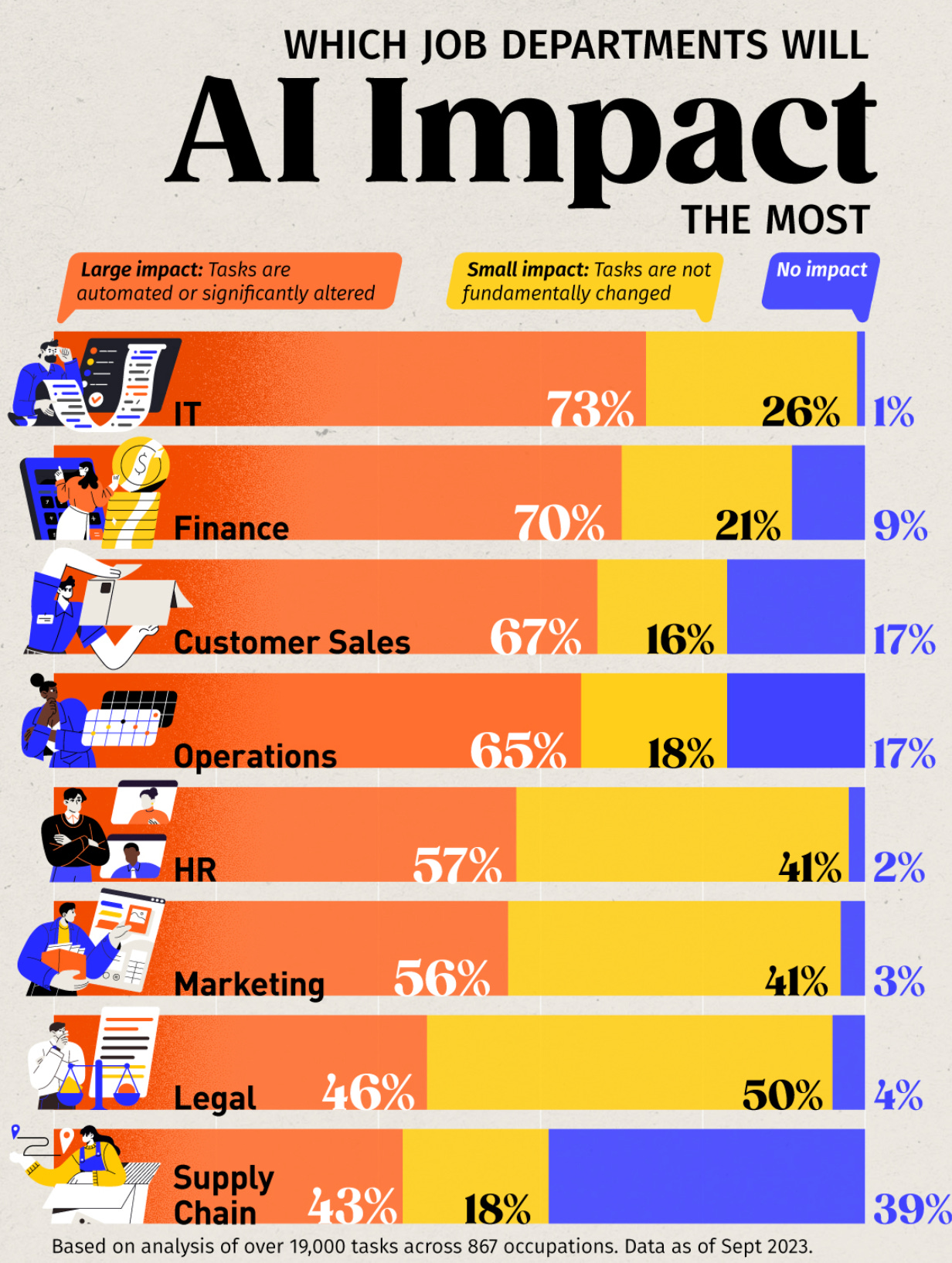
MIT’s “Iceberg Index”
The study is based on MIT’s so-called Iceberg Index that maps out 32,000 skills across 923 occupations and match it to AI capabilities.
Helpfully, they break jobs into minutes, not lump-sum, to reflect what percent of a given job can be automated.
Using this, they figure that while we’re seeing about 2% of jobs currently affected by AI in monthly job losses, six times that -- almost 12% of job-minutes -- can be replaced by AI today.
That represents roughly $1.2 trillion in wages.
According to MIT, the worst-hit jobs are IT, finance, health care administration -- which is a shockingly big employer.
And professional services -- think accounting, HR, call centers and data entry.
These collectively make up nearly 1 in 4 jobs in the US. And almost half of white collar jobs.

Young Workers on the Firing Line
Now, to say 12% of minutes can be replaced doesn’t mean they will be replaced -- at least not today.
Because the company has to restructure work-flows and skills to integrate the AI.
Meanwhile, the hallucination problem in AI means it’s still not ready for prime time when real money -- or real reputation -- is at stake.
Still, the writing’s on the wall.

And it’s most likely to hit the young. Because finding workers is very hard -- the rule of thumb in business is it costs 6 months salary to recruit, on-board, and train a new worker.
Meaning most companies won’t fire people. They just won’t hire new people.
Which is a problem if you just graduated college with no experience and a degree in psych.
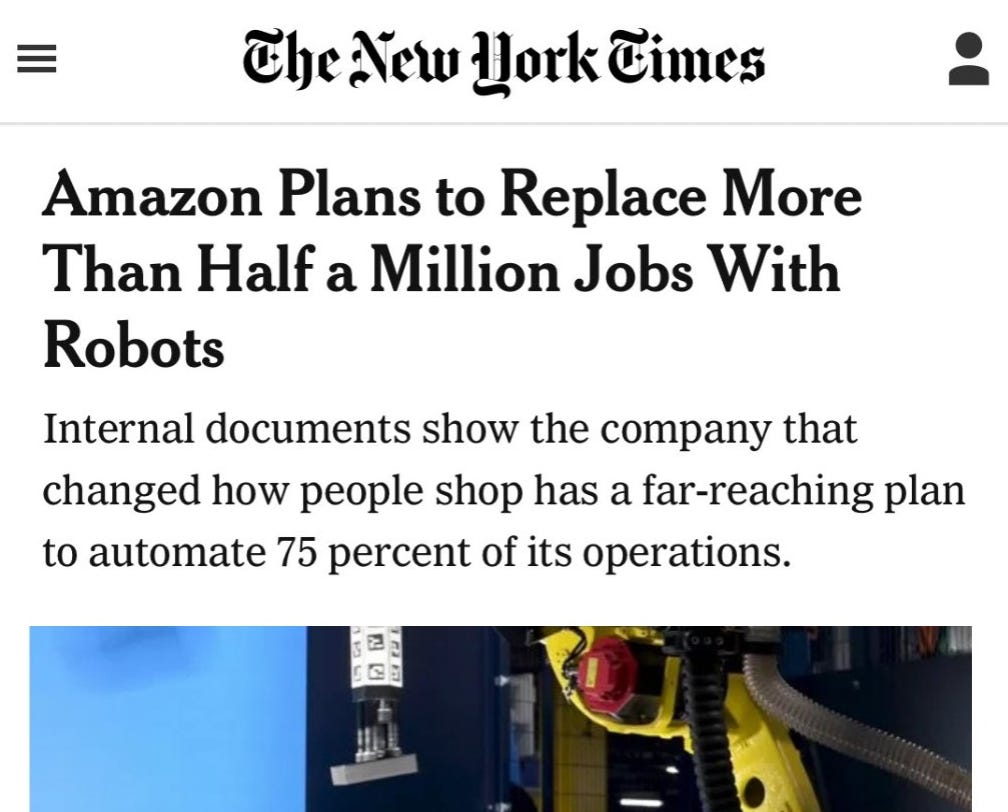
Just last month Amazon said they’re slashing new hires by 600,000, instead making do with the people they’ve got and allowing gradual attrition to shrink workers.
That new worker effect is already hitting: A recent Stanford Report looked at the most AI-exposed jobs, including clerical back-office, administrative support, call-centers and middle-skill tech.
It found that experienced workers are not being cut, but new hires experienced a 13% decline in employment.
Which is recession level hiring.
AI is Advancing Fast
AI is advancing much faster than expected.
Measured by features important in business — like training compute or context length — capabilities are growing 10 times per year.
Meaning 12% could be 25% in a couple years.
Meanwhile, both hallucination and costs -- pennies per token -- are improving by double per year. As in half the hallucination, half the cost.
While human workers aren’t budging -- not least because of our dysfunctional education system.

What’s Next
Current workers with experience still have a runway, since it will take years for companies to redesign around AI.
But for young workers it’s about to hit the fan. A fan that blows their $150,000 psych degrees like confetti.
So if you are young -- or if you have kids -- consider jobs that are least vulnerable to AI.
Skilled trades including construction, maintenance, electrician or welder. Medicine, nursing, physical therapy.
Or services, from personal trainer, child-care, or content creator to chefs, designers, and -- yes -- bartending.
When the smoke clears, experienced workers have time. And young workers who pivot will thrive.
The replaceable white-collars in the middle -- and their expensive degrees -- will get crushed.
.
Every week I write on Economics and Freedom here on Prof St Onge Weekly.
Enter your email to get each article for free. Or choose $5 a month to help keep the lights on.
I also make 3-minute daily videos on economics and freedom:
20 minute Roundup Podcast of all the week’s videos: Search Peter St Onge on all major Podcast platforms
The buggy whip industry would like a word. . . technology advances, especially major ones, are always accompanied by temporary dislocations while labor adjusts. It is painful, and transition assistance is necessary. Still, we should not fear lowering the cost of back-end administration, especially in health care and insurance (and even the legal profession), as AI advances. I realize that it is easy for me to say since I'm retired.