

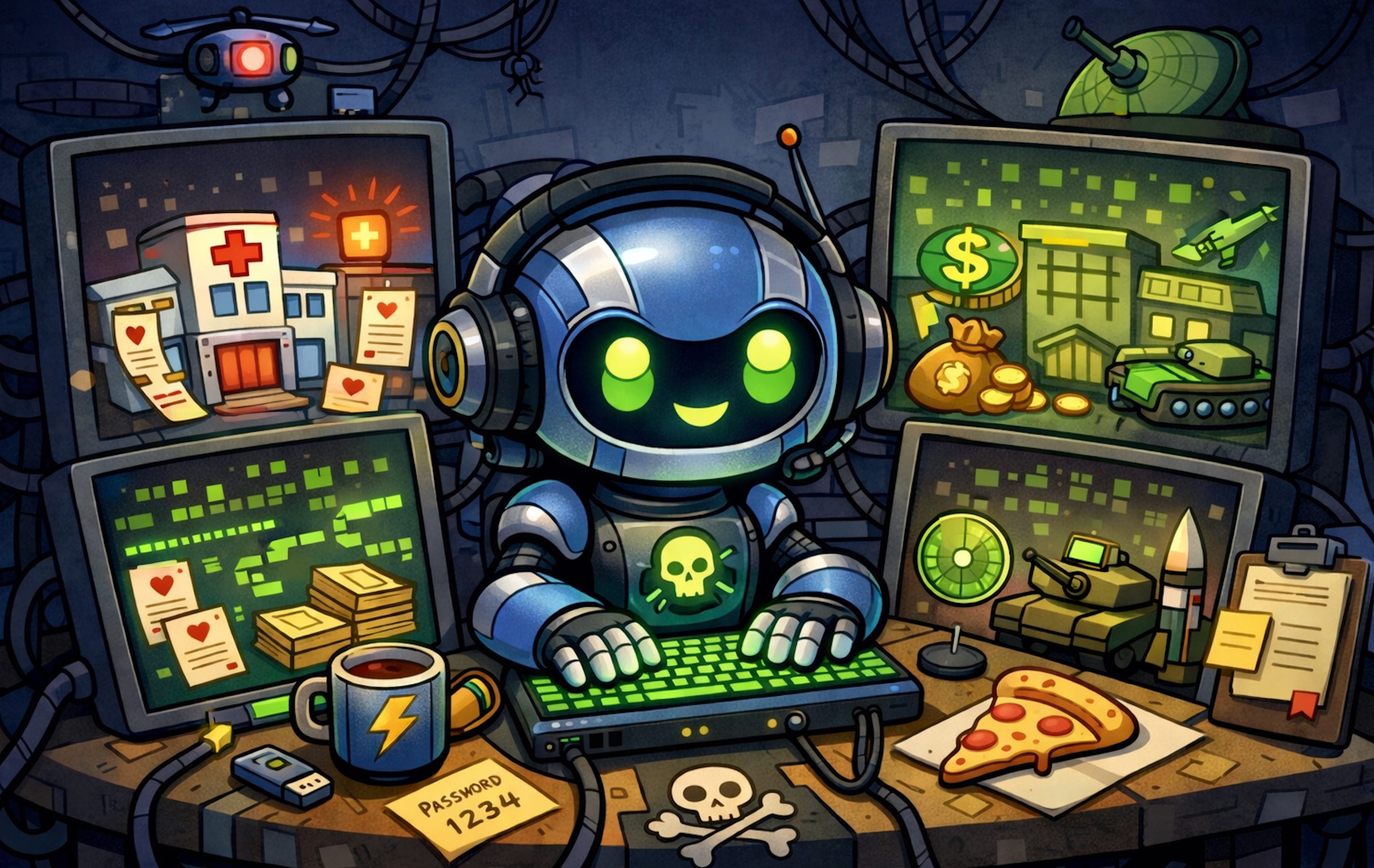
AI can now hack everything as Anthropic’s new model finds more exploits in a couple weeks than the entire global security community discovered in the past decade.
Will we go back to pen and paper, fedexing silver coins to pay the Netflix bill, and burying gold in the backyard.
Mythos can Hack “Everything”
Last week AI company Anthropic -- of Claude fame -- announced its internal Mythos AI model can hack “everything.”
As in every operating system -- Windows, Mac, Unix. Every database. Every web browser -- therefore every website.
So hospitals, power grids, military, the stock market. Your bank.

Just days later Treasury Secretary Bessent called in top banks to coordinate emergency countermeasures.
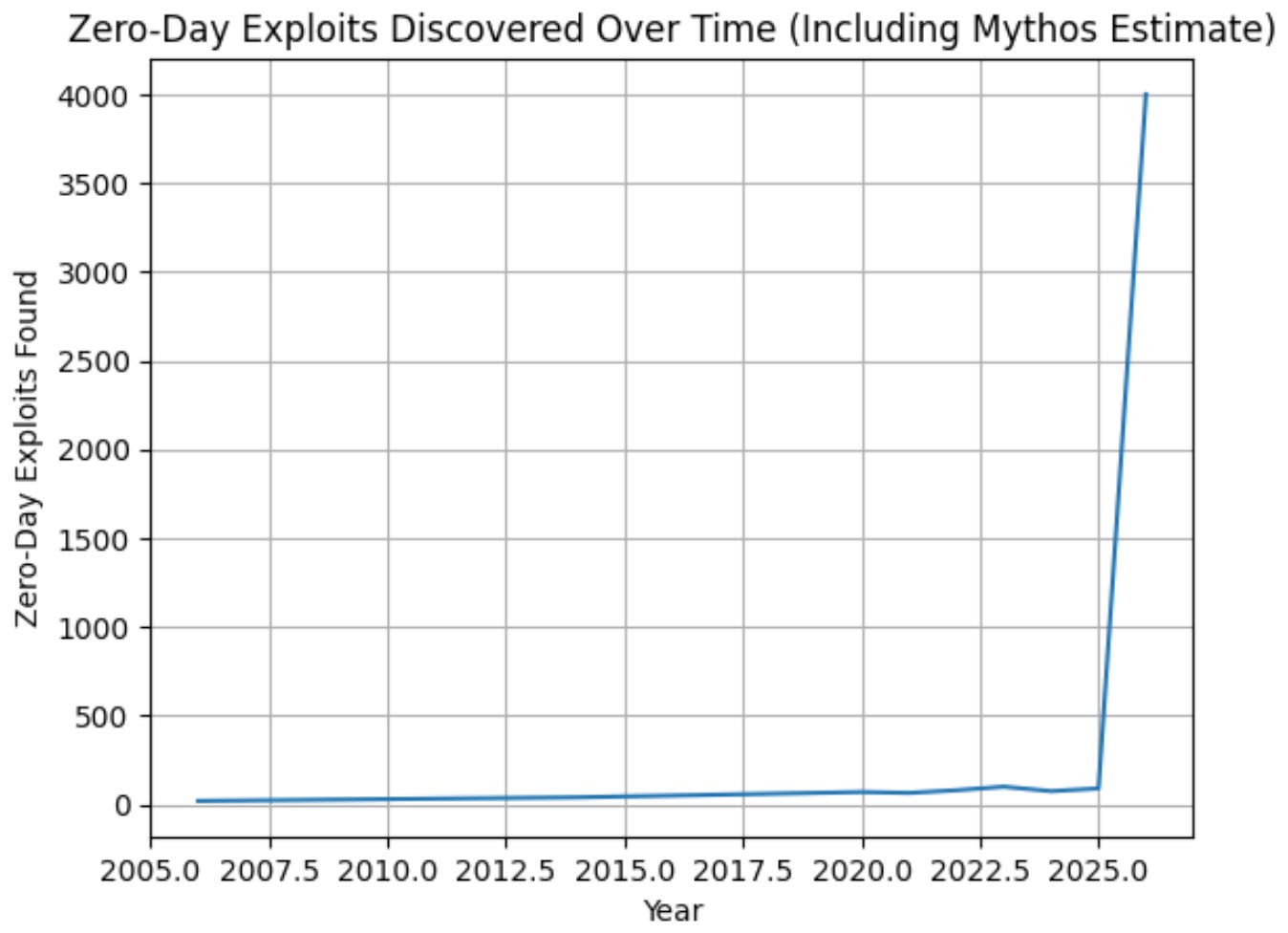
The reason is just weeks after release, Anthropic’s Mythos AI found 4,000 so-called zero-day vulnerabilities -- meaning nobody knows about them so there’s no defense.
Which is more than the entire global security industry found in the past decade.
Anthropic immediately set up Project Glasswing to bring in 40 partners to design defenses before Mythos goes public.
These include Microsoft, Apple, and Linux. Browser companies. Security companies like Crowdstrike.
Cloud infrastructure like Amazon and Google -- who run pretty much every website.
Chipmakers, banks. And, of course, the Department of War.

The problem is over the past 30 years everything has moved online. Paychecks, medical records, retirement savings. Supply chains for food, for gasline. The electricity. The databases that know who you are and what you own.
We did this because it’s cheap and convenient -- imagine trying to run an economy without computers.
But it came with major hacks -- in 2017 Wannacry and NotPetya wiped out hundreds of thousands of PC’s and servers at major companies including hospitals.
In 2020 Russia sat inside Tresaury and Justice for 9 months undetected. A 2024 attack cost $22 billion and froze prescriptions for millions while hospitals couldn’t get paid. China stole 21 million US security clearance files -- which looks an awful lot like an act of war. Equifax leaked 147 million Americans social security numbers.
So 4,000 of those. In a couple weeks.

Government to the Rescue?
It’s tempting to say enough is enough, it’s time to throttle AI. The problem is whatever Mythos can do today, Chinese opensource can do in 6 to 12 months.
Meaning we’re on the AI rollercoaster, like it or not, climbing higher every day. And the only solution is good guys go faster than the bad guys.
Just like gun control cripples the good guys and bounces off the bad guys, AI regulation cripples Anthropic and Glasswing but the bad guys get it next year.
So the focus is defense and making sure government’s not interfering with the goods guys.
Top companies will deploy defenses in time. The half-assed will not. Including the poster child of half-assed, government databases and systems, from voting to tax refunds to social security

How to Play It
If you think markets are under-estimating hacking risk, the most obvious play is buy security companies like Crowdstrike (CRWD), Palo Alto Networks (PANW), or the Global Cybersecurity ETF (BUG). Note they’ve been on a recent downturn because, ironically enough, markets think AI’s better at defense.
Which raises the question you could just buy the AI’s on the assumption AI defensive spend grows.
Alas, you can’t buy ChatGPT or Anthropic unless you’ve got a hookup since they’re not publicly traded. For most investors the closest is Google, which owns Gemini. With the caveat that Google’s huge, so mostly you’re buying online ads.
Or go upstream and buy AI picks and shovels (TSM, AMD, AVGO).
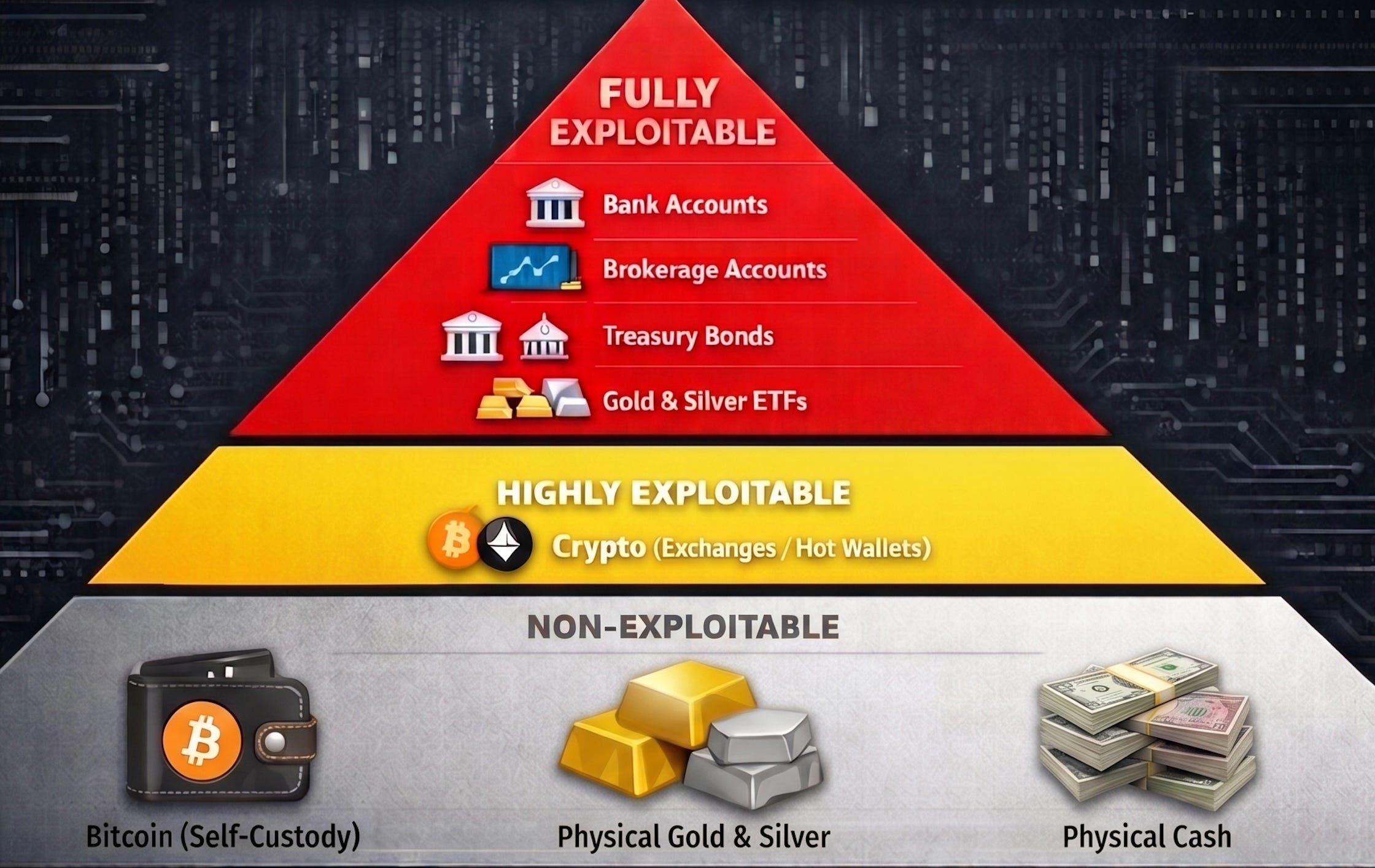
As for your assets, on the off-chance bank accounts get nuked it sets off a rush into things AI cannot hack. Meaning physical gold, physical silver and, of course, Bitcoin.
Each Friday I write on Economics and Freedom. Consider joining over 23,000 subscribers and becoming a subscriber to support my work.
I also make daily 3-minute videos on economics and freedom, and every week I gather these into a 20 minute Roundup Podcast that posts on Spotify, Apple, and Google podcasts.