

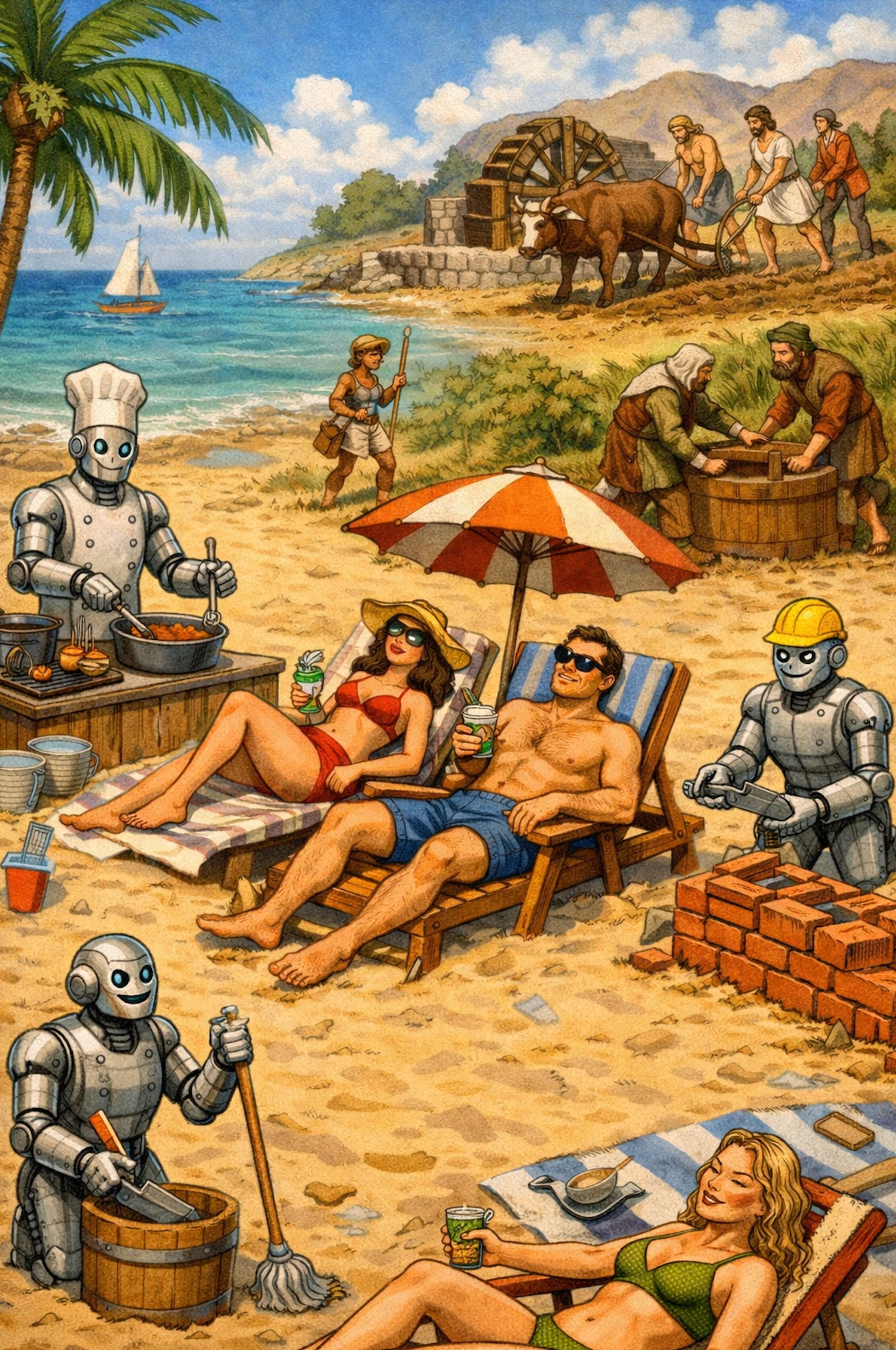
Last week Elon Musk predicted AI and robots will drive “double-digit” GDP growth by 2028 -- comparable to China’s fastest growth rates in the go-go 1990’s
He actually floated triple digit growth down the line.
First, is it possible. Second, what does it mean for wealth, incomes. And jobs.
Elon made the prediction in reaction to our current blockbuster GDP growth -- currently estimated at 5.3%.
The History of GDP and Tech
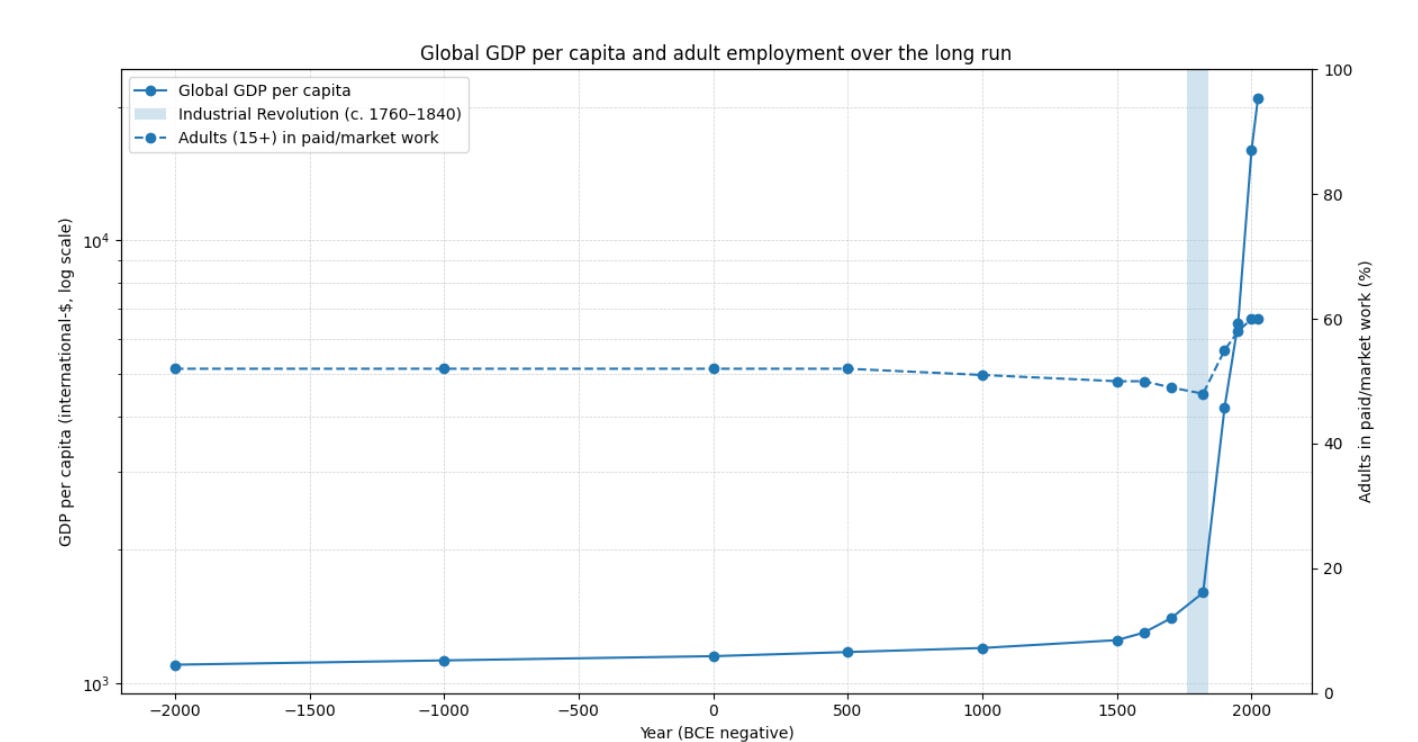
Alas, historically even the biggest technologies have turned in nowhere near that kind of growth.
Railroads and agricultural mechanization did closer to a percent of GDP per year in their first decades. The telegraph and steam engine were half that. The automobile was 2%, tops.
Electricity -- probably the biggest tech of the past 200 years -- was at most 5% at peak deployment. Then again, computers didn’t show up at all in GDP -- economist Bob Solow famously quipped computers are everywhere but the productivity statistics.
Now, a lot of that is limitations to GDP itself, which simply tallies up all the money spent. So a lot of the internet was taking stuff you paid for and making it free. Meaning it made your life better by trillions but reduced measured GDP.
And that’s a standard pattern: New tech makes stuff cheap. Which raises productivity can shrink GDP.
Consumer Surplus
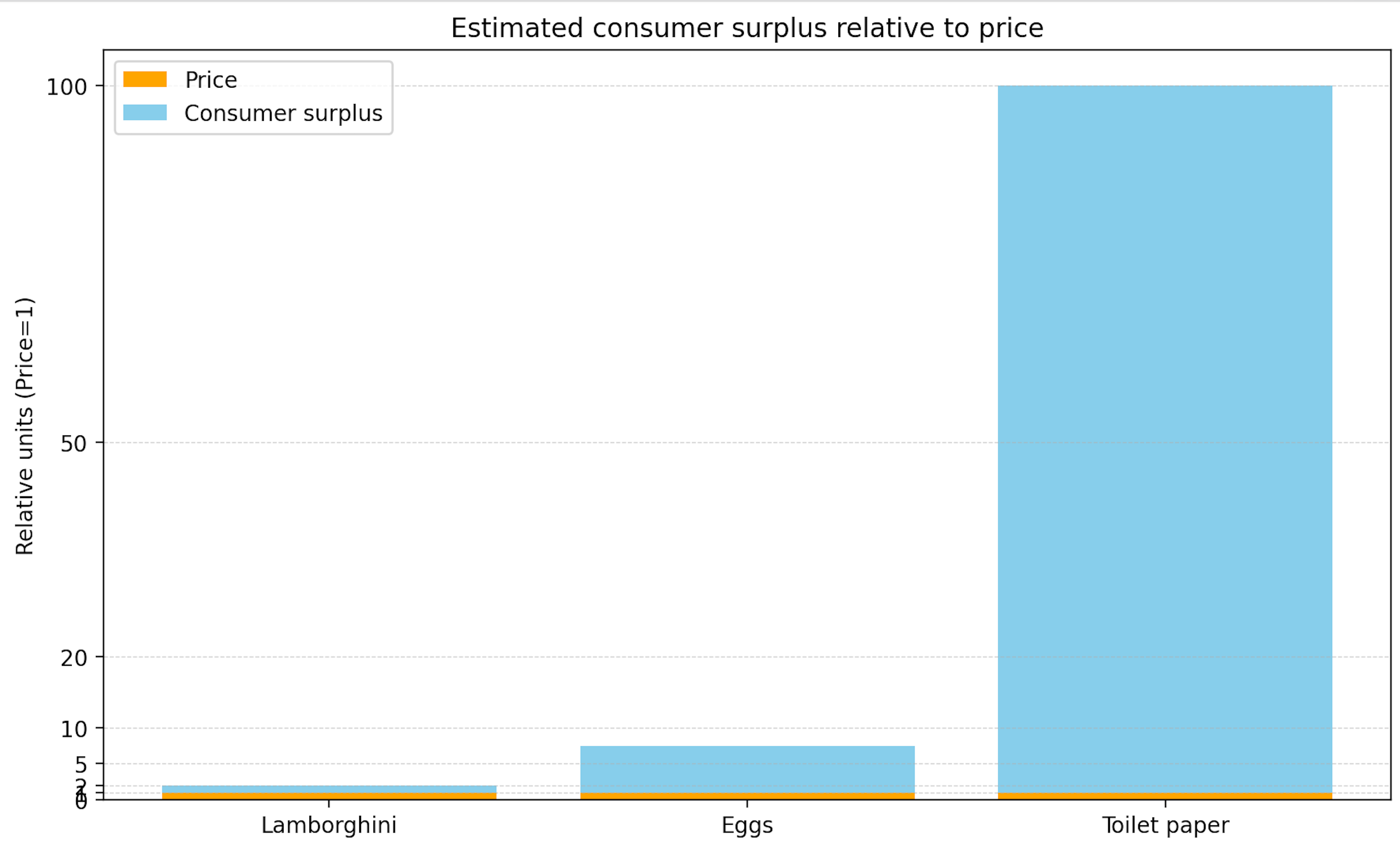
Happily, economists have a fix for this called Consumer Surplus. Which measures what you would have been willing to pay.
To illustrate, toilet paper costs 3 cents per serving. But you’d probably pay 3 dollars before going to the alternative. Meaning toilet paper creates 100 times its GDP in surplus.
For eggs it maybe 5 or 10 times. For most of what you do on the internet it’s nearly infinite -- pay nothing, get something.
A 2004 paper by William Nordhaus tried to estimate consumer surpluses across historical innovations, arriving at roughly 50x.
So pay a dollar, get 50 in joy.

That means in terms of consumer surplus it’s absolutely doable to get Elon’s double-digits: One Harvard study estimates AI already generates 97 billion a year in surplus -- roughly 15 times revenue.
And once AI fixes the hallucination problem it will be mass deployed in companies, driving enormous drops in prices since AI is hundreds of times cheaper than humans.
Throw in robots with big AI brains and you go vertical: Imagine a home-bot that folds laundry and does brain surgery better than humans. For free.
And then there’s the holy grail: Artificial General Intelligence, or AGI. Holy grail because it’s smart enough to improve itself. Meaning very quickly it would do everything better than humans. Again, for nearly free.
Essentially, think of all the free stuff on the internet, and lay that onto the physical world.
This is what Elon’s hinting at with triple-digit growth.
AI and Jobs
Heady stuff.
But what about jobs — high incomes are no good if you’re unemployed.
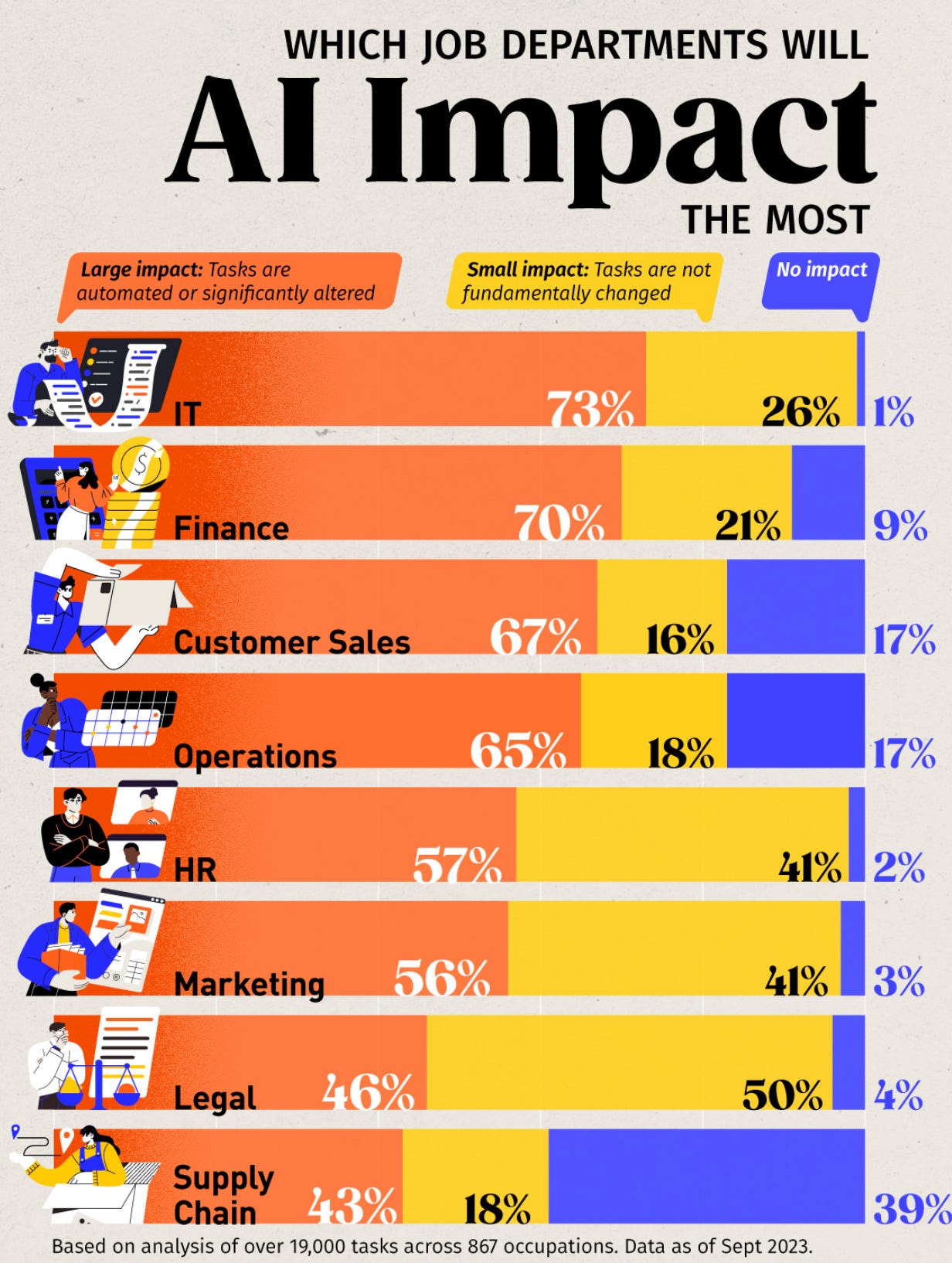
Predictions are already flying that AI will take millions of white collar jobs in the coming years.
MIT says 1 in 8 jobs. McKinsey says 1 in 3. Goldman predicts 300 million layoffs by 2030. Followed with a decade or two delay by robots doing all the physical work.
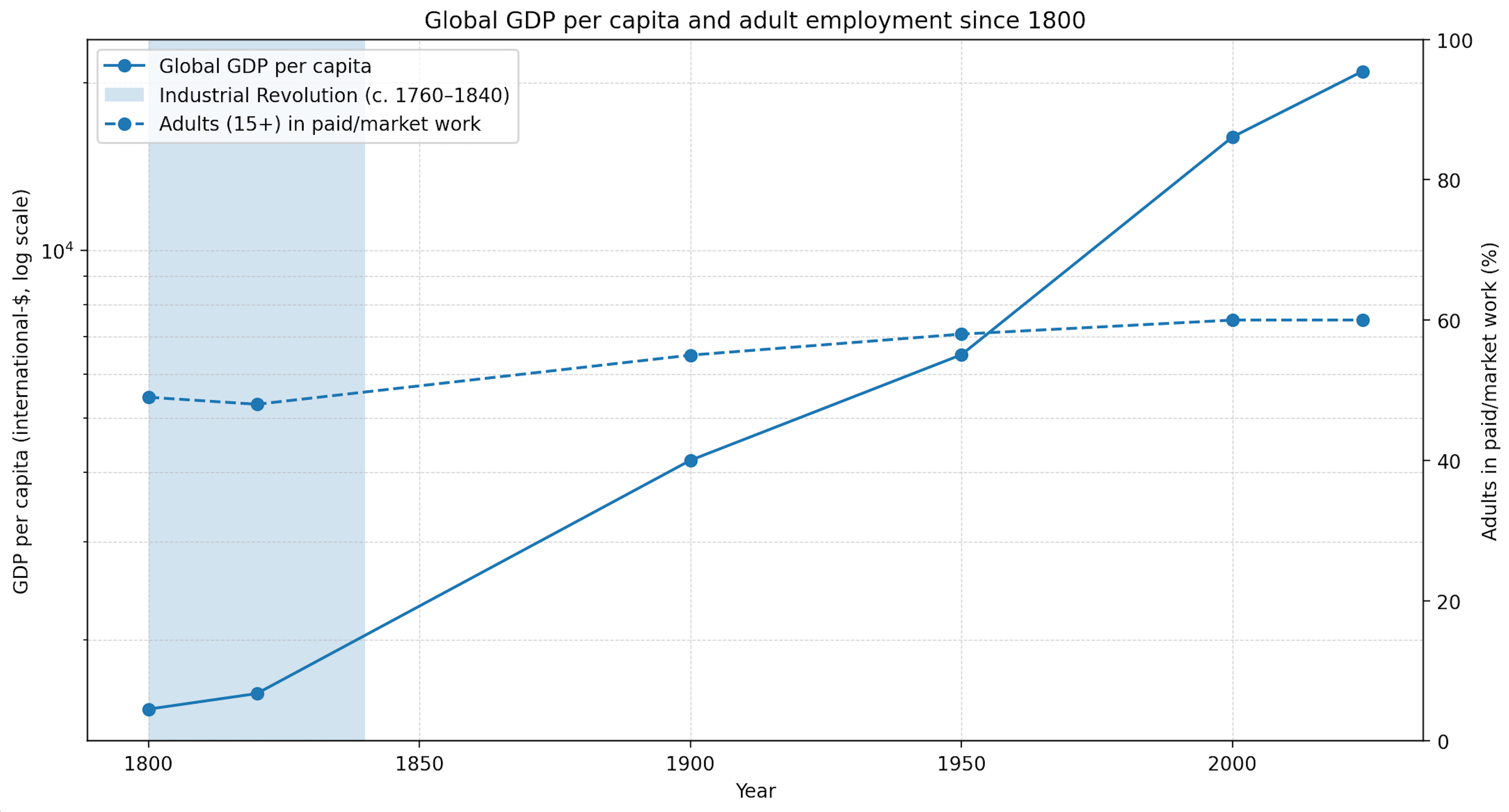
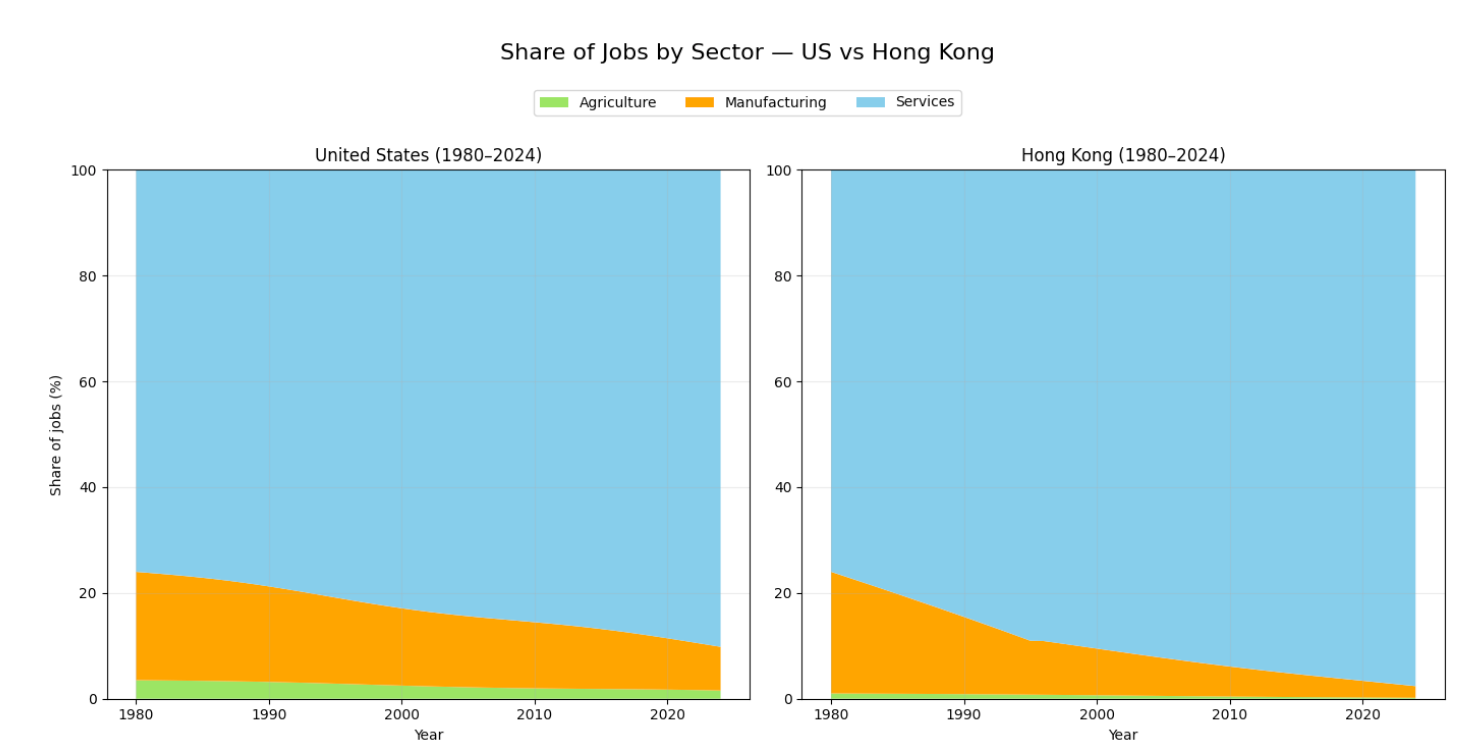
Happily, we know what automation does to jobs because technology has been replacing jobs for literally thousands of years. Ancient Greeks worried about ox plows leaving men unemployed. Medieval Europeans about waterwheels. The industrial revolution wiped out farm jobs. In the 1980s Hong Kong lost its entire manufacturing industry in about 10 years to China.
Every time the jobs were 100% replaced by new jobs that pay much more. And that are far more pleasant.

The Candlemakers’ Petition
There’s a useful metaphor by 1800s economist Frederic Bastiat called the Candlemaker’s Petition, which satirically asks the king to ban the sun since it steals so many jobs with light and warmth.
Just think of all the unemployed candlemakers and firewood choppers.
Of course, in reality we pocket all that sunny goodness and find other useful things to do -- wood-choppers build houses instead. Candlemakers deliver your groceries.

In fact, automation already replaced all the jobs. Over and over.
Consider that in the 1800’s almost everybody was a farm laborer. Now 4 in 5 American jobs are services -- from cubicle drone to bartender.
In Hong Kong it’s almost 90%.
To illustrate, there was a time people cut their own hair, raised and slaughtered their own meat, babysat their own kids -- no daycare, no schools, no senior living facilities.
Today even the poorest Americans buy meat at grocery stores instead of raising cows in the backyard.
AI and robots keep it going: Jobs shift to things that have value because they’re done by a human.
The New Jobs
This includes classic services like child care — a nanny in every home. Elder care — tell me again about your knees. Therapists, tutors, personal trainers who hold you accountable. Pet-sitters, stylists, home designers, private chefs.
It also includes hand-made things — even today hand-made stuff is more valuable even though machines make fewer mistakes.
But here’s the key: Bartending or chair-making don’t pay much today. But they pay a lot after AI and robots.
Just like the industrial revolution, the reason AI and robots take jobs is because they’re massively cheaper. Massively cheaper massively raises incomes.
So the industrial revolution replaced stolen farm jobs with service jobs that paid 10 times more. Essentially, workers took a step down on the escalator. But automation sent that escalator up 10-fold.
Translate to today and we go from cubicle jobs paying 80k to bartenders and chair-makers making half a million in today’s terms.
If that sound ridiculous, consider a house painter in the US makes 20 times India -- 200 bucks a day versus 9. And that’s only half an industrial revolution -- India does have electricity.
What’s Next
The future’s bright, but there will be millions of lost jobs in-between. Just like the industrial revolution.
Government’s job is to get off our back so it’s much easier to create jobs.
The idea is copy Hong Kong — new jobs at twice the pay. And not Detroit where the new jobs were effectively banned, replaced with welfare — effectively Universal Basic Incomes.
What comes out the other side is jobs that pay much better -- and are much more enjoyable -- than today’s cubicle jails our children and grandchildren will pity. Just like we pity the backbreaking farm jobs automation stole in the industrial revolution.
Each week I write on Economics and Freedom. Consider joining over 22,000 subscribers and becoming a free or paid subscriber to support my work.
Every day I also make 3-minute videos on economics and freedom:
20 minute Roundup Podcast of all the week’s videos: Search Peter St Onge on all major podcast platforms.