


First, investment returns.
October was brutal, wiping out all of September’s gains and then some.
The main culprit was the Fed, with interest rates now on a higher-for-longer path. High rates punish hedges like gold and silver, since rates boost returns on bonds - how gentlemen buy dollars.
While gold and silver, sadly, pay no interest.
Even bigger is what high rates do to AI stocks. High rates make borrowing more expensive, and the entire AI boom is being built on trillions of dollars of debt.
At some point, rates gut new spending on data centers. That would hammer hyperscalers like Google and Meta that build the data centers, along with the famously cyclical semiconductor companies selling chips at top dollar into the boom.
Toss in jitters about the midterms, which look almost certain to hand the House — and probably the Senate — to Democrats after Republicans failed to do much of anything useful.
In numbers, my watchlist of winners lost 18.1% in October, bringing year-to-date returns to 22.9%. Precious metals took a beating too, with gold falling 7.0% and silver plunging 18.8%.
Meanwhile, the losers to short rallied as AI stocks sold off, rising 11.3% and bringing year-to-date profits on the short portfolio to 31.0%.
Because both portfolios holding roughly one-third in hedges, that leaves my Adrenaline portfolio up 14.5% year-to-date and my Market Neutral portfolio up 18.0%, compared to 10.8% for the S&P 500.

Details on the portfolios below, alas after the paywall.
The Economy Booms. Jobs Go Missing.
The big economic news is GDP roaring back to 3.2% annualized growth in the third quarter.
This is pretty spectacular considering we’re fighting a war, the Fed is hiking rates, and Congress is borrowing money like drunk sailors who found somebody else’s credit card.
So much for the dozen depressions left-wing media promised under Trump.
But there’s a catch. Jobs.
September added just 29,000 jobs, barely enough to fill a football stadium. Unemployment ticked up to 4.2%.
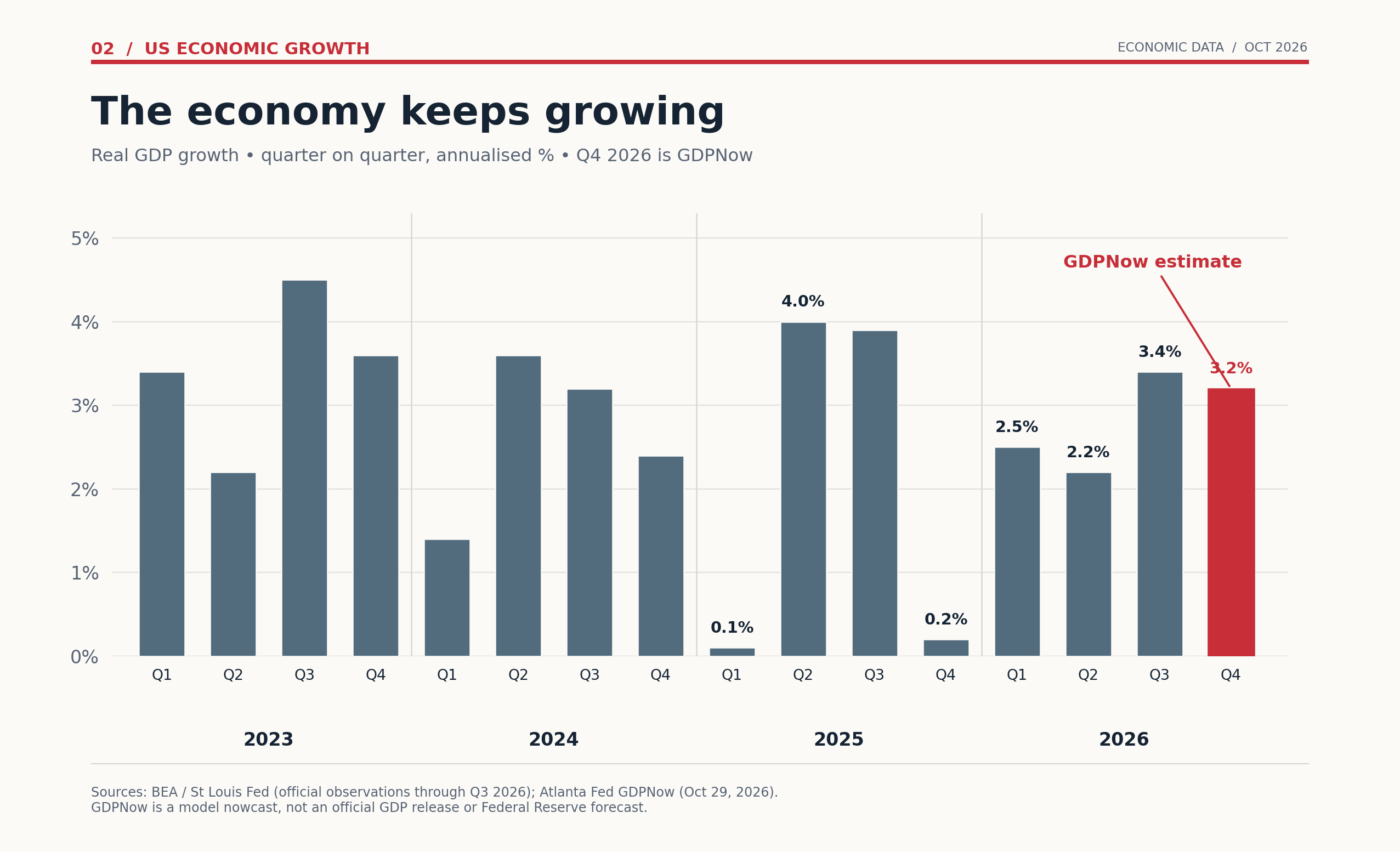
So GDP is booming all year — in contrast to the 2025 yoyo. While hiring is barely breathing.
Which raises a fascinating question: Is AI finally starting to replace workers?
One concerning data point is hiring for recent college graduates is plunging, while experienced workers are holding up just fine. This suggests companies are using AI to get more out of existing employees but leaving the next generation of workers on the sidelines.
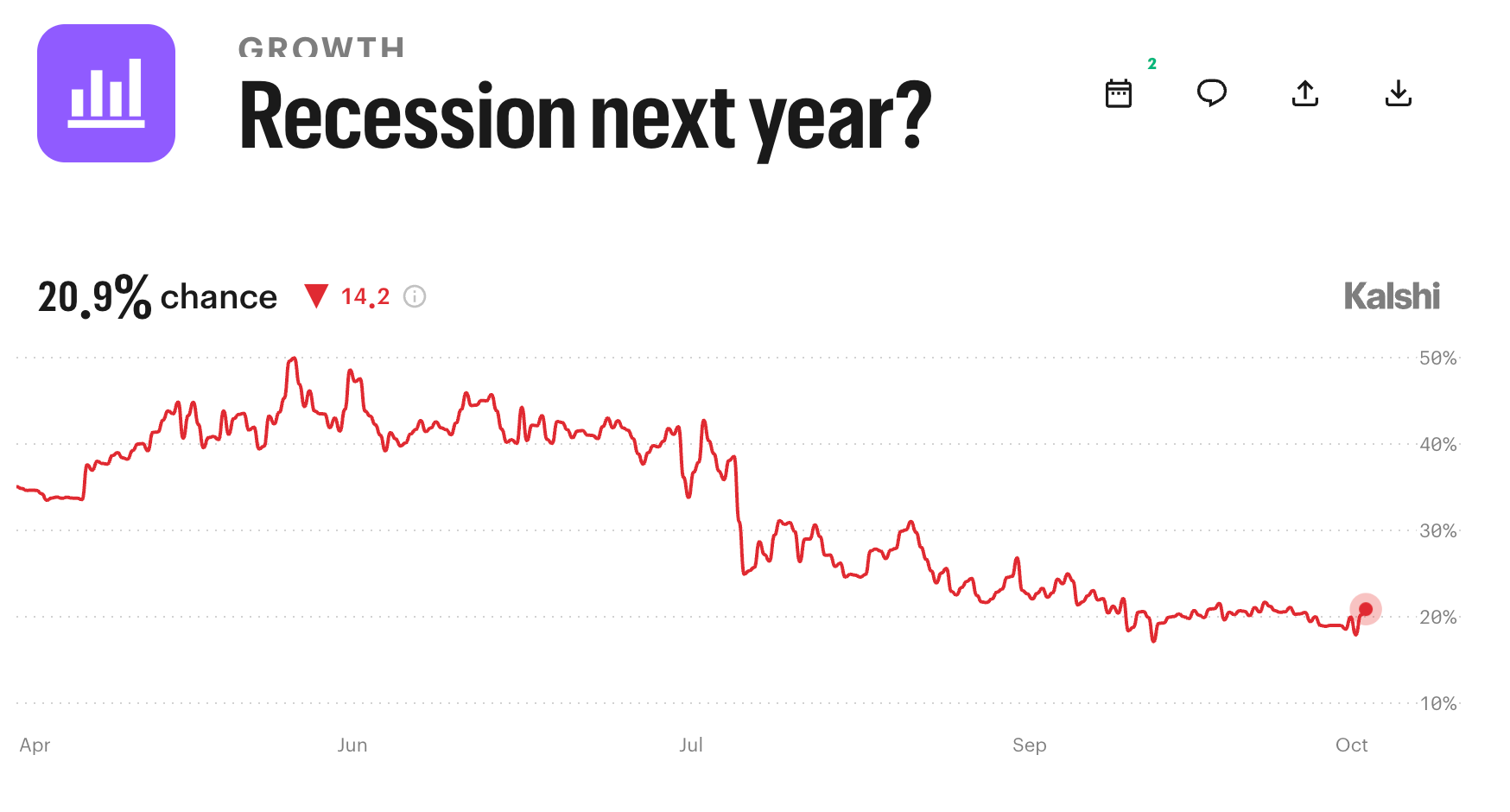
Still, recession remains unlikely. Prediction market Kalshi currently puts the odds of a recession in 2027 at just 20.9%. Which is almost precisely the real-world probability of recessions since the Federal Reserve cast its dark shadow upon the realm a century ago.
The Fed’s Inflation Hangover
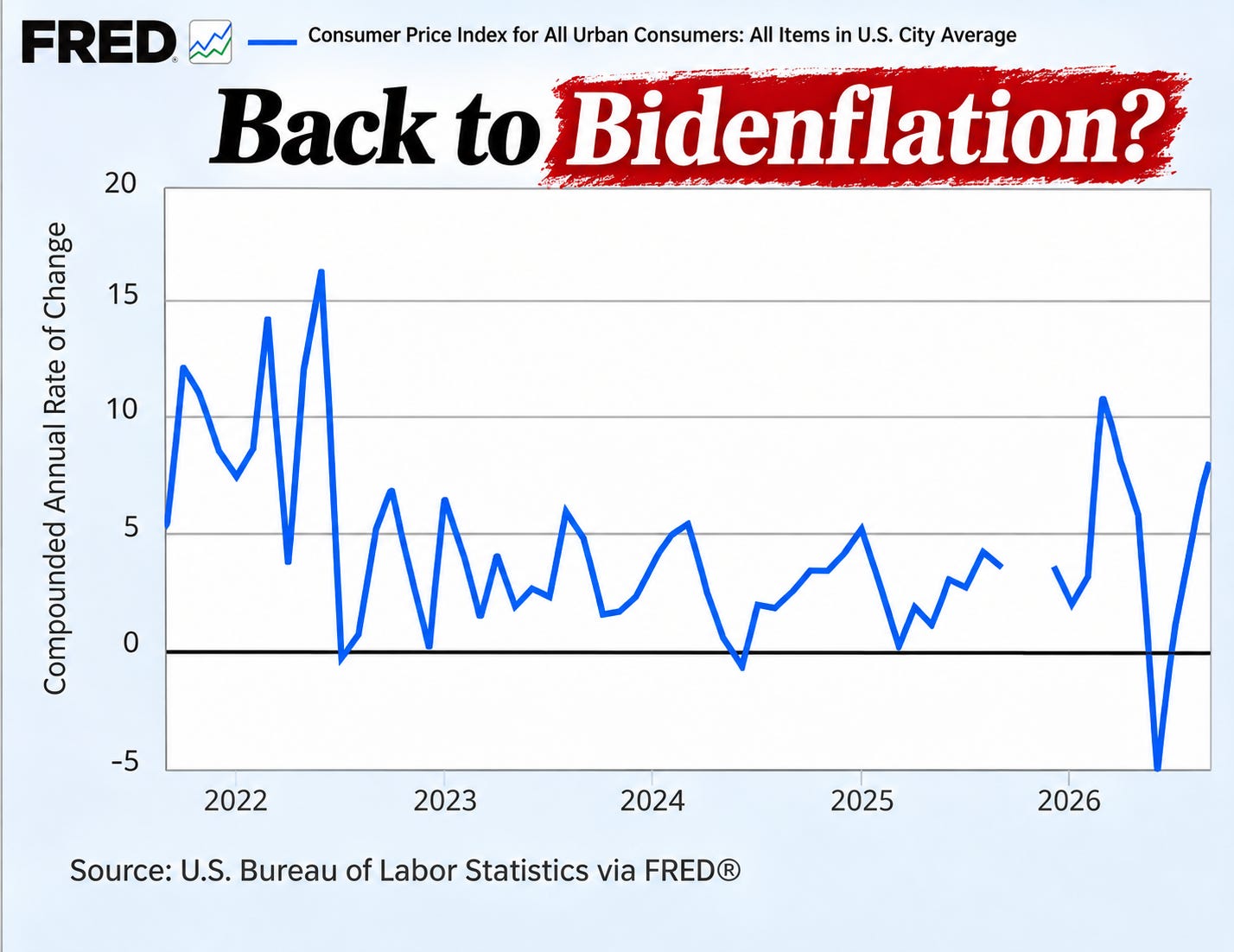
The other October Surprise is inflation, which apparently didn’t get the memo that it was supposed to be transitory. The timing, of course, couldn’t be worse for midterm elections up in just a few days.
September CPI jumped 0.6% in a single month, a blistering 7.4% annualized. Bringing year-on-year inflation to 3.7%, nearly double the Fed’s target.
Much of that is war-driven gasoline prices, up 9.1% in September alone.
But even core inflation, excluding food and energy, continues running hot.
So at its October meeting the Fed held rates at 3.75% to 4%, after hiking in September. Two officials wanted another hike.
That’s bad for hedges and AI stocks, but it’s also trouble for Washington, where debt is approaching $40 trillion and annual interest expense is already flirting with a trillion.
Higher rates mean higher interest costs, which mean bigger deficits, which mean more borrowing in a fiscal doom loop where Congress’ main contribution is spend faster.
AI’s $2 Trillion Gamble
Which brings us to the biggest investment story on the planet: AI
According to S&P Global, the leading hyperscalers are expected to plow $763 billion this year into building AI infrastructure.
That’s more than double last year’s $362 billion. And next year they’re projected to spend $1.3 trillion.
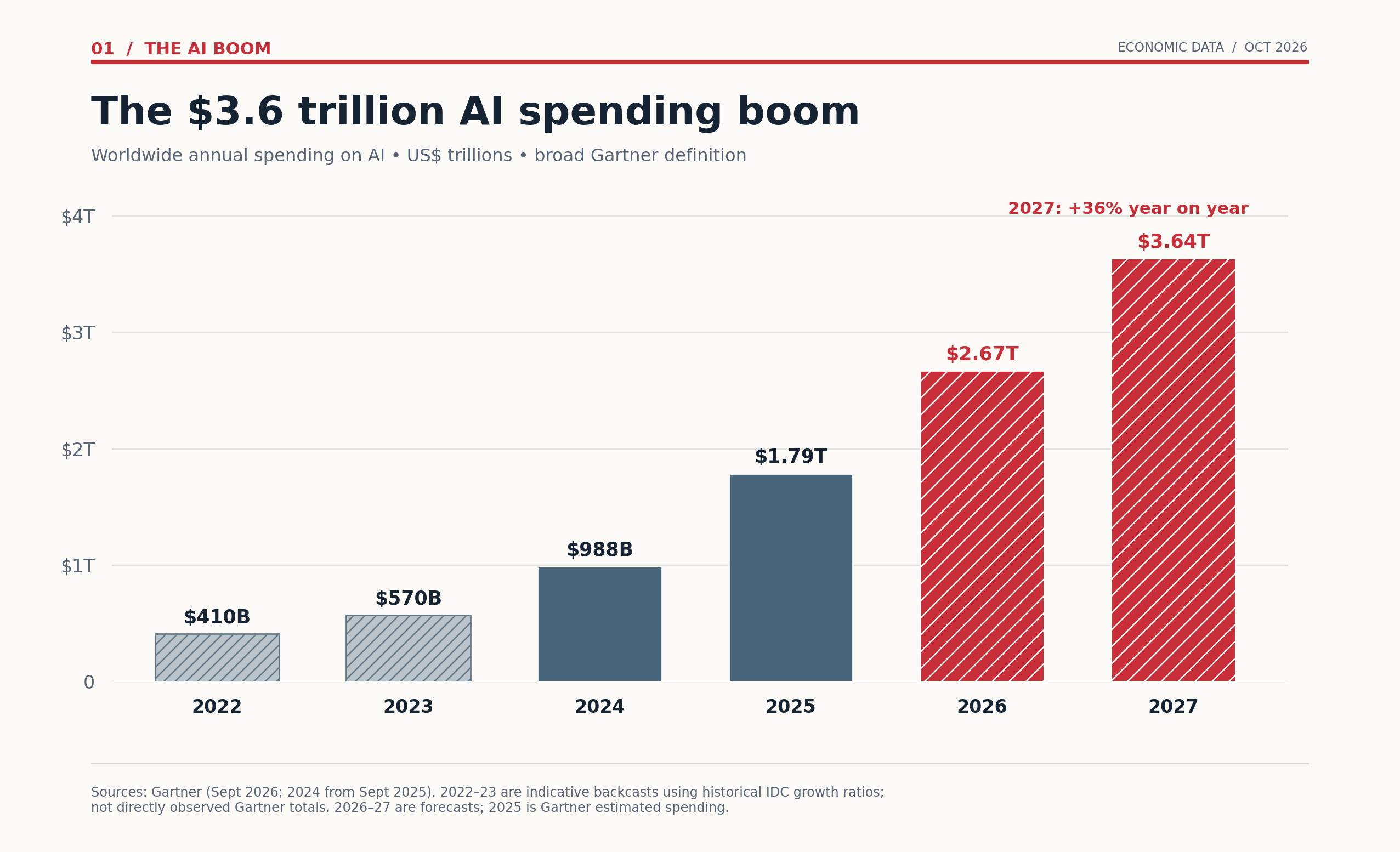
For companies making chips, memory, networking equipment and chipmaking machinery, this is spectacular. For companies spending the money, it’s getting dangerous.
Because while AI demand is exploding, AI prices per token are collapsing, down 19-fold in the past year. In other words, Silicon Valley is betting that demand grows faster than prices fall.
Markets Review
Despite the inflation and rates drama, my base case remains we’re in the boom phase of the business cycle — 3.2% GDP growth doesn’t print itself.
This keeps us in the boom story, which obviously remains AI infrastructure despite a bloody October.
But there are risks. AI is increasingly a crowded trade, and with trillions of dollars riding on a handful of hyperscalers, any slowdown in their spending could hit semiconductor stocks hard.
In short, the economy is stronger than the doomers think. Inflation is stickier than the optimists think. AI is both big enough to determine the next recession and is getting wobbly.

Now on to the stocks.
As always, I track two model portfolios:
Adrenaline: 70% longs I think will go up, 30% hedges like gold, silver and bitcoin.
Market Neutral: 35% longs, 35% shorts I think will go down, and 30% hedges.
Below the paywall: My 11 longs, 10 shorts, how I’m positioning for the next stage of the boom. And the all-important question at the moment, should you dump AI.
If you’re not yet a subscriber, it’s $8 a month, and you also get the full archive of over 90 articles and market analyses including every month since January.
Let’s get into the picks.