

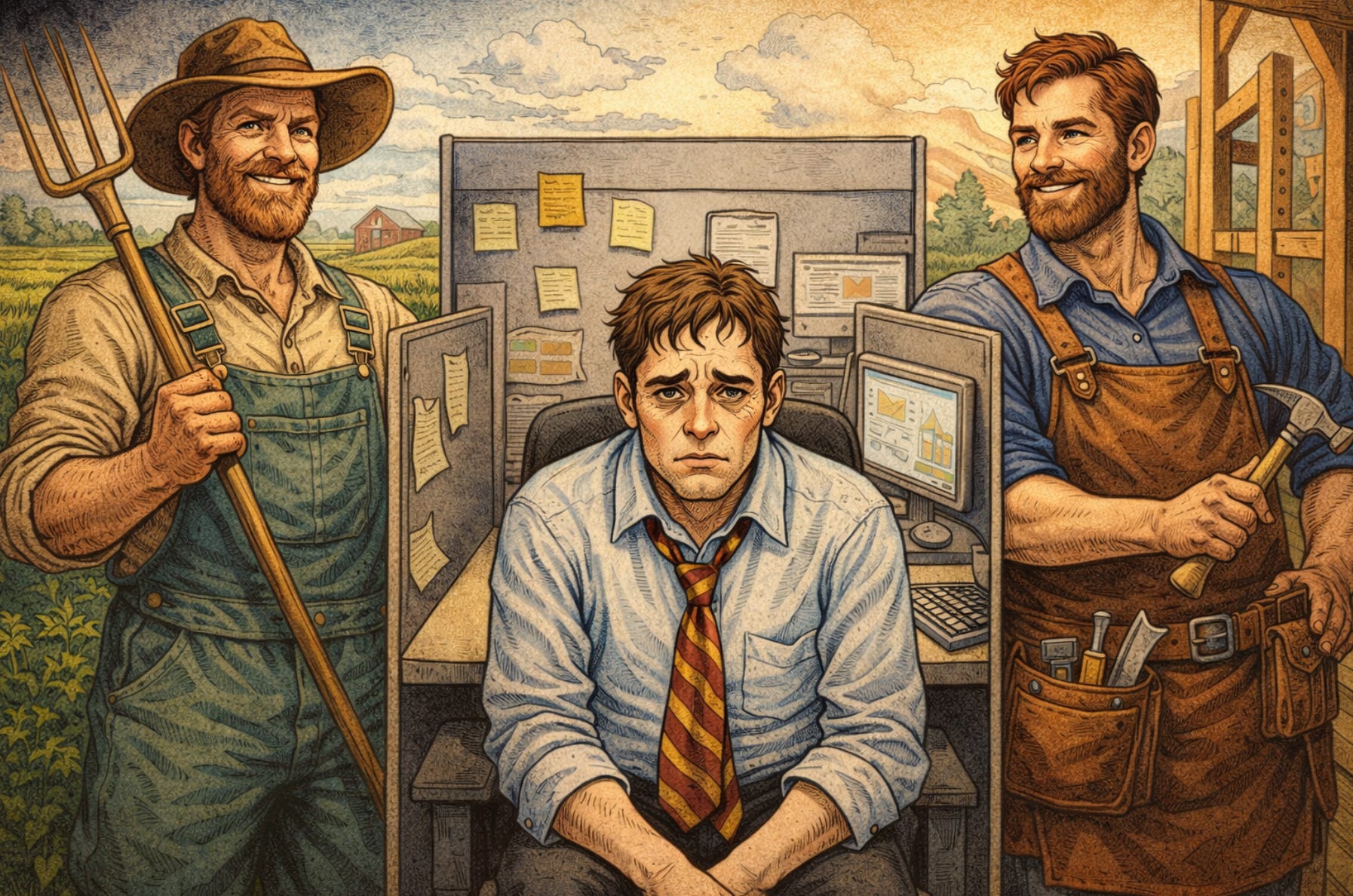
Last week Facebook announced they’re laying off 20,000 -- one fifth of the company -- blaming AI.
In a cruel irony, they’ll be plowing those 20,000 salaries -- and the free backrubs -- into building more AI data centers.
With AI job replacement finally putting some numbers on the board, it’s a useful time to ask what happened last time we wiped out two-third of jobs: The Industrial Revolution.
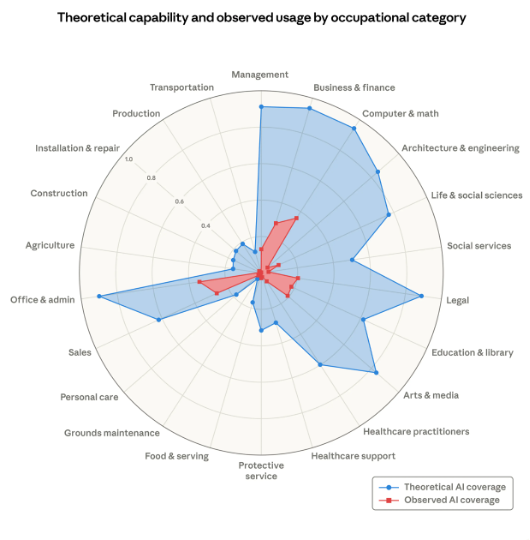
Interestingly, AI is almost the opposite of the industrial revolution: It doesn’t replace physical jobs, it replaces mental jobs.
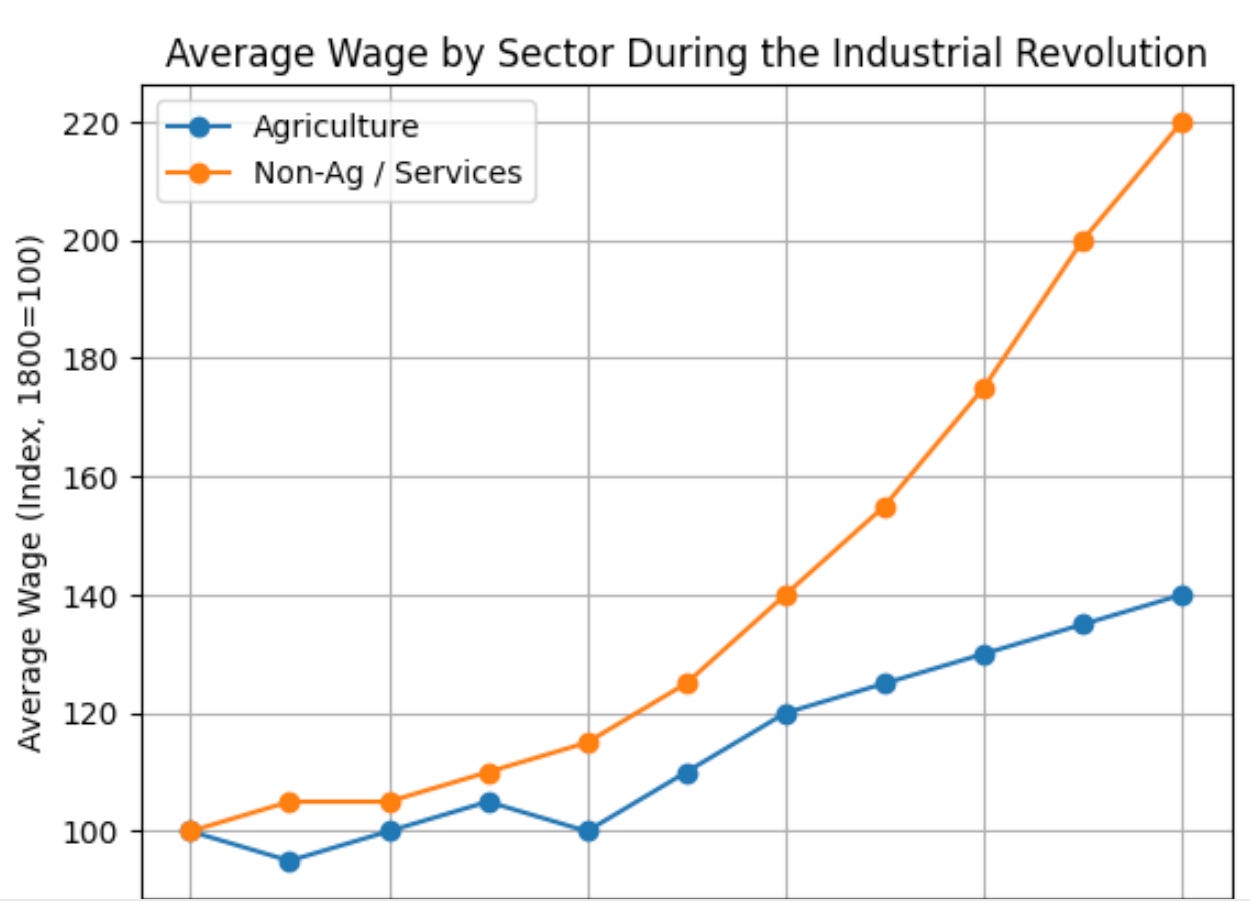
In fact, it makes physical jobs pay more because automation makes us rich — that’s the whole point, automation replaces expensive production.
Of course, this shift from white-collar to blue is deeply disturbing for the over-educated white-collars who spent their life looking down on working men. And who write the AI doom porn.
The Industrial Revolution and Jobs
When the industrial revolution hit in the early 1800’s, roughly 70% of Americans worked on a farm. The other 30% were domestic servants, traders -- wholesale and retail -- and skilled crafts: weaving, cobblers, blacksmiths, tailors.
Fast forward 200 years later and the farm workers went from 70% to 2%, replaced by tractors, combines, and refrigeration.

The servants, traders, and skilled trades got converted into mass services. So you don’t have a maid and butler, instead you have a poke bowl delivered while the dog’s at the groomer.
In fact, we almost doubled services because the industrial revolution made us rich -- consider in 1950 almost nobody got their dog groomed, their nails done at a salon, or had a personal trainer.
So these went from 30% to 50% of jobs.
What happened to the other 50?
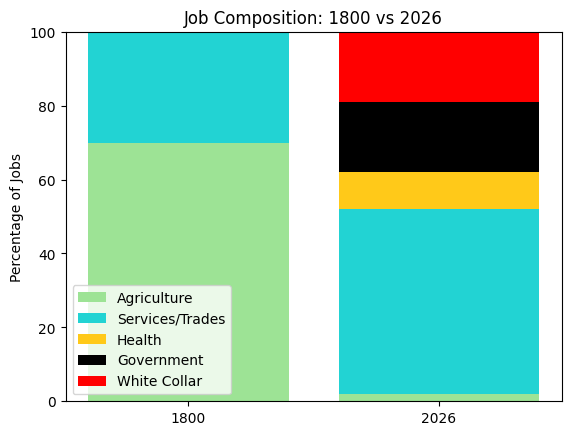
A big chunk sadly, went to government, which grew from 2% of jobs in 1800 to more than 20% today. Because good times make big parasites.
Another chunk was healthcare, which went from almost nothing in 1800 -- you basically went to the hospital to die — to around one in eight today.
The final 20% got replaced 1 to 1 by what we now call white collar work -- cubicle jobs, accounting and finance, tech, analysts, administrative jobs.
These are in the firing line of AI.
Now they won’t all go — customers still want to talk to a human financial advisor, and somebody’s gotta check what the AI’s doing.
But if we lose, say, 15 of those 20, how will be replace them?
Easy: the same way we did last time. Services, trades, healthcare.
After all, we’re not trying to replace 70% of farm jobs like the industrial revolution, we’re talking one fifth that. And if AI automation makes us rich like industrial automation did, services and trades alone cover it.

Jobs after AI
On the ground, a boom in services would mean regular people consuming personal services like rich people do today — almost nobody would mow their own lawn just like almost nobody cuts their own hair or raises their own chickens.
On trades, more factories, bigger houses, second houses, swimming pools. More stuff means more trades all require more skilled trades. This will continue at least through the robots, which will comes decades after AI since you need one AI for 8 billion people but you need 5 robots per McDonald’s. Meaning robots are your grandkids’ problem, not your kids.
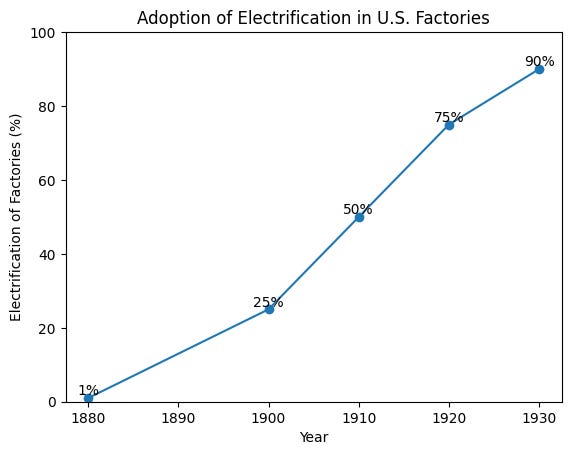
For perspective, the first factory was electrified in 1880. Then it took 30 years for half of American factories to be electrified — many in India still aren’t.
Of course, the problem with all this is that driving an uber pays a lot less than being an accountant. But before the industrial revolution clerks lived in poverty: The automation and attendant wealth is what made accounting valuable.
If AI delivers the productivity revolution it promises, Starbucks will pay six figures. And if it doesn’t, false alarm: AI was a bust.
What’s Next
Even if we eventually replace lost jobs at twice the pay -- or five times -- AI job replacement will hurt the young and unskilled. And it will gut high-income, over-educated white-collars including the journalists, professors, and analysts who write AI doom porn.
Meaning there may be light at the end of the tunnel, but there’s a lot of disurption — and a lot of AI doom porn — between here and there.
Each week I write on Economics and Freedom.
Consider joining over 23,000 subscribers and becoming a free or paid subscriber to support my work.
I also make daily 3-minute videos on economics and freedom, also posted as videos on X.
And every week I gather these into a 20 minute Roundup Podcast that posts on all major platforms.
Thanks for reading!
Hi Peter - good article. Ironically, FB is laying off people because of other companies' AI, not their own. They failed at building their own AI model. They are also laying off because of diminishing interest in FB products, which is a good thing. So the world turns. Hope your newsletter thrives!