

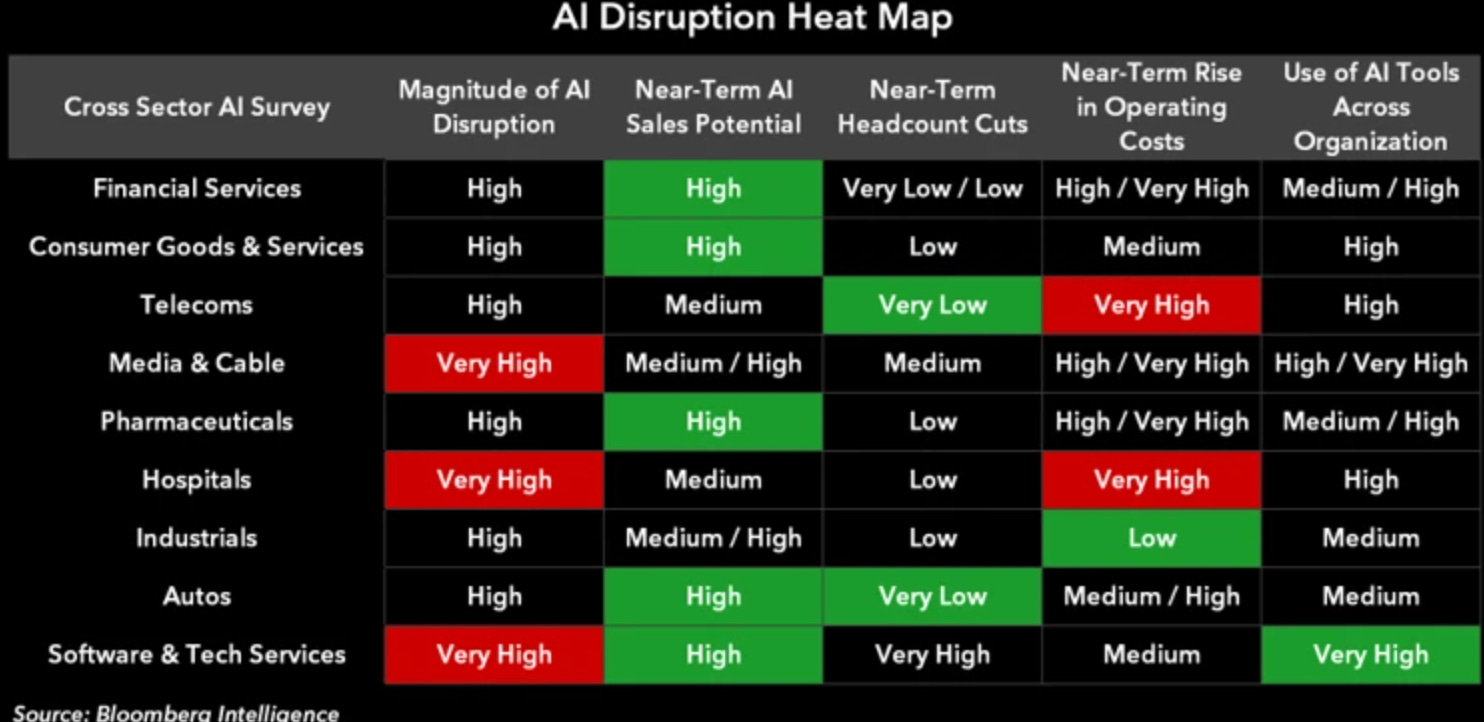
Will AI make everything so cheap — including wages — it sets off an economic doom-loop?
Is there such a thing as too much efficiency.
Last week the Dow dropped 800 points -- worth a trillion dollars -- on a piece of speculative fiction from a small stock analyst called Citrini Research.
The report predicted AI would set off a doom-loop of what they call “ghost GDP” where we make stuff but nobody gets paid for it.
Economically, this is incoherent: When you make stuff either workers get paid, shareholders get paid, or it’s consumer surplus — better known as rising living standards.
The industrial revolution, for example, was a mix of all three.
Still, the Citrini report touched a nerve on Wall Street after weeks of the so-called AI disruption trade. Which I predicted would be the investment theme of 2026 on this very newsletter, turning tidy profits so far.
The question is what gets disrupted. And what gets boosted.

How AI Affects Stocks
The key to AI and the economy is AI will do interesting things to non-AI business.
For most businesses it helps because AI makes stuff cheap. Potentially 20 times cheaper, going by a recent Goldman Sachs case replacing entry-level bankers.
That reduces costs, which boosts profit margins. Which makes stocks go up.
But there’s also a bunch of companies where AI destroys profits by commoditizing the product. For example, licensed images when anybody can prompt an image. Or management consultants, advertising agencies, and low-end Indian IT shops that can be replaced with AI.
This displacement is already becoming a major market theme. A few weeks ago a tiny Florida company that made karaoke machines switched to an AI trucking router it said could cut trips by 3 to 4 times. That set off a 25% drop in shipping company stocks.
AI disruption is coming weekly in software: Last week a random blog post showing AI can handle Cobol programming knocked 12% off IBM — $30 billion down the drain.
These isolated executions will continue even if the vast majority of companies get improvements in margins — and stock prices.

How AI Affects Jobs
But what about the jobs -- for most people that’s most important.
The key is every automation creates more jobs than it destroys -- and those jobs pay a lot more. Like 20 times more.
This is true since fire, agriculture, writing. Ox-plows, waterwheels, windmills. The industrial revolution and the internet.
In terms of jobs, automation is an escalator where you take a step down every so often — your job pitching hay was replaced by a tractor.
But the tractors themselves raise incomes. So jobs that used to pay crap now pay a lot.
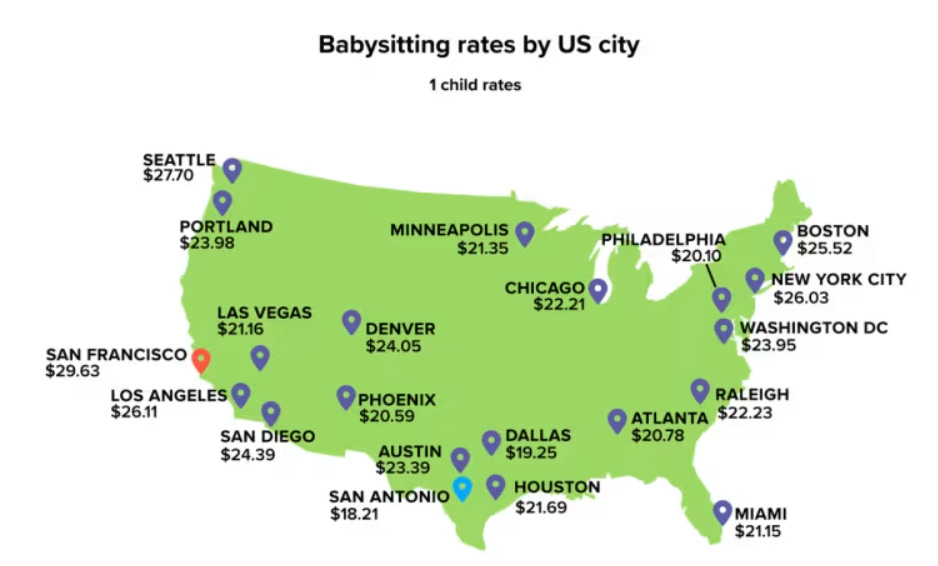
Consider 100 years ago major league baseball players worked day jobs at the deli. Today, construction laborers take cruises to the Bahamas. A new report says babysitters make 25 bucks an hour.
The claim is this time is different because AI replaces intelligence. But this is fighting the last revolution: Intelligence only emerged after the industrial revolution stole the more valuable physical jobs.
Displaced workers stepped down to service jobs. Which are now more than 75% of all jobs. And pay much better than pitching hay in 1820.
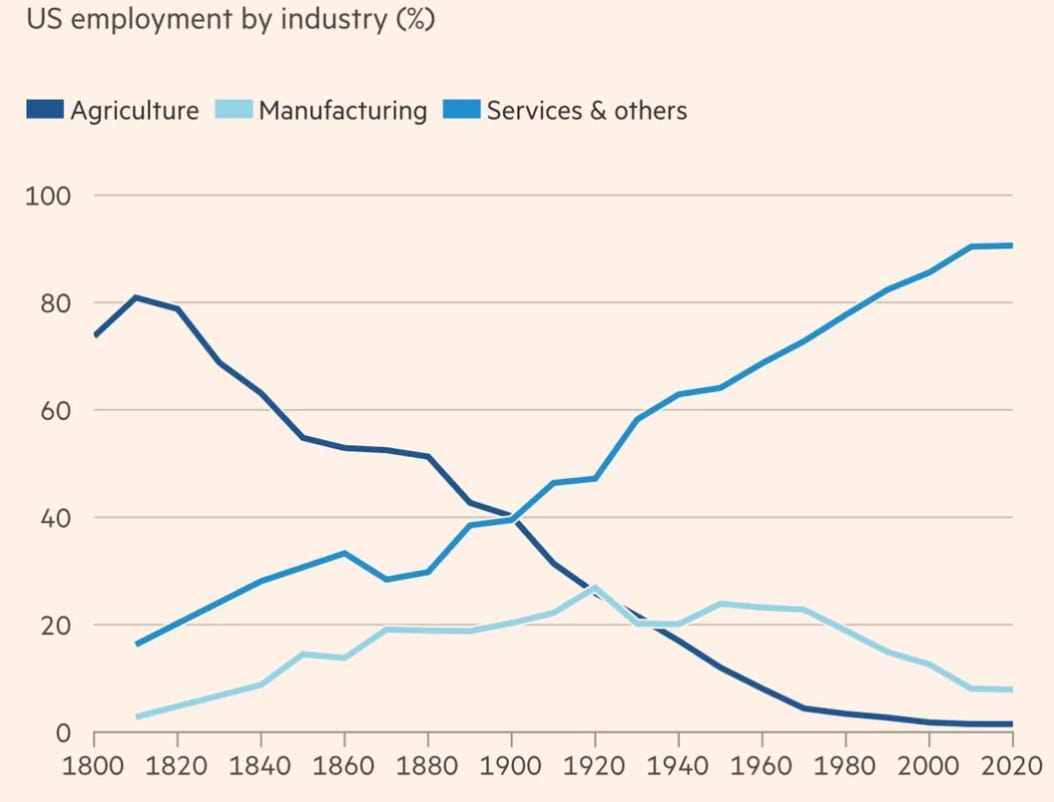
AI will do the same with services, the trades, and personal creation. All of which soar with rising incomes from automation itself.
Consider there are 300,000 pet groomers, 330,000 personal financial advisors, and 370,00 personal trainers in the US — industries that basically didn’t exist in the 1950’s since people weren’t rich enough.
For the trades the key is robots come much slower than AI — one AI covers 8 billion people, but you need 5 robots per mcDonalds.
Finally, original creation, from hand-made chairs to... writing substacks on the economy.
Consider that hand-made things are worth more than machine-made despite having more flaws. Or that vending machines were supposed to replace bartenders a hundred years ago. Or the strong preference people already have for human-created content over AI slop.
This is human value in dollars and cents. And it dramatically increases post-AI because of the wealth automation creates.
AI will cause real disruption between workers switching careers — which we already do every decade — and individual companies becoming commodities.
But when the smoke clears the money comes from the automation, the jobs come from being human.
Each week I write on Economics and Freedom. Consider joining over 22,000 subscribers and becoming a free or paid subscriber to support my work.
Every day I also make 3-minute videos on economics and freedom:
20 minute Roundup Podcast of all the week’s videos: Search Peter St Onge on all major podcast platforms.
Hi Sir... when will you issue March update to your Adrenaline portfolio, and where can I access that (I'm a subscriber)? Thank you.