


Will bonds crash stocks, spark a banking crisis, and send us into a recession that could cost millions of jobs?
Is it time to stock up on cat food.
Across the West, bond yields are soaring -- meaning bond prices are crashing -- from a combination of runaway government deficits and inflation.
Now you may not care about bonds, but bonds certainly care about you.
Because soaring yields can tank stocks -- and gold. They can trigger bank failures like in 2023 when Jerome Powell’s panic-hikes crashed bonds.
They can devastate capital-intensive industries like the AI data centers currently propping up roughly half of economic growth.
And they can send the entire economy into recession as soaring borrowing costs force companies to abandon trillions in investments -- malinvestments in Austiran economics.
The warning signs are flashing worldwide.
In France, the prime minister warns that runaway government debt poses a “mortal danger” to the country, leaving France “on a cliff’s edge.”
French bonds hit their highest level in nearly 25 years -- worse than the European debt crisis that followed 2008.
In America, the 10-year bond recently crossed 5.3%, up more than a third since Trump started bombing Iran, which lit a fire under deficit and inflation fears. 5.3% is the highest since 9/11.

What’s Driving the Bond Panic
The immediate trigger is inflation fears, especially oil prices from the Iran war.
But the deeper problem is decades of governments spending trillions they don’t have.
America’s on track to $2.5 trillion of annual deficit. As a share of the economy that’s something we’ve never seen since the World Wars.
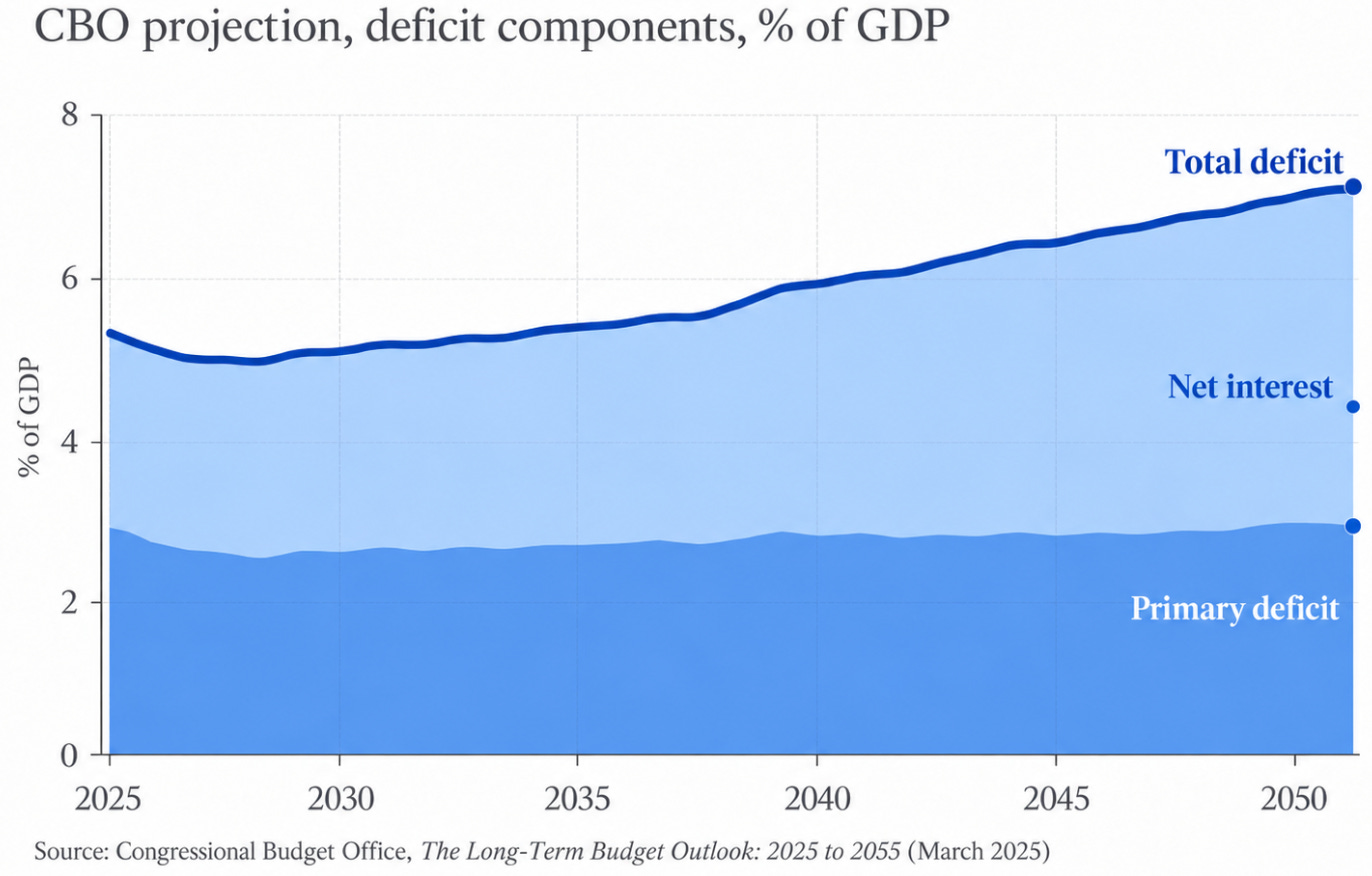
The problem is the debt compounds. As in, if you’re paying interest 5 cents on the dollar, every $2.5 trillion leads to a permanent $125 billion in additional federal spending just to service the brand new debt.
For perspective, $125 billion is roughly 3 times the budget of the Department of Justice. For one year’s deficit. Again and again.
It’s like paying off your credit card with another credit card. But every new payment they hike your rate.
That panics bond investors. Who demand even higher rates to cover the risk that governments default — either so-called hard default where they stop paying. Or the much more common soft default of letting inflation melt the debt — and the bonds.

How a Bond Crisis Turns to an Economic Crisis
The problem for the real economy is what happens in Washington doesn’t stay in Washington.
High yields drive up the cost of borrowing across the economy. This strangles growth and new investment, but it devastates existing investment since projects that made sense at 3% interest don’t at 6%.
In Austrian economics these are called malinvestments. And today’s biggest candidate is AI.
Goldman Sachs estimates tech giants will spend roughly $1.2 trillion in 2027 building AI. For perspective, all investment in the entire economy -- which is roughly 1/4 of world GDP -- is only 4 trillion.
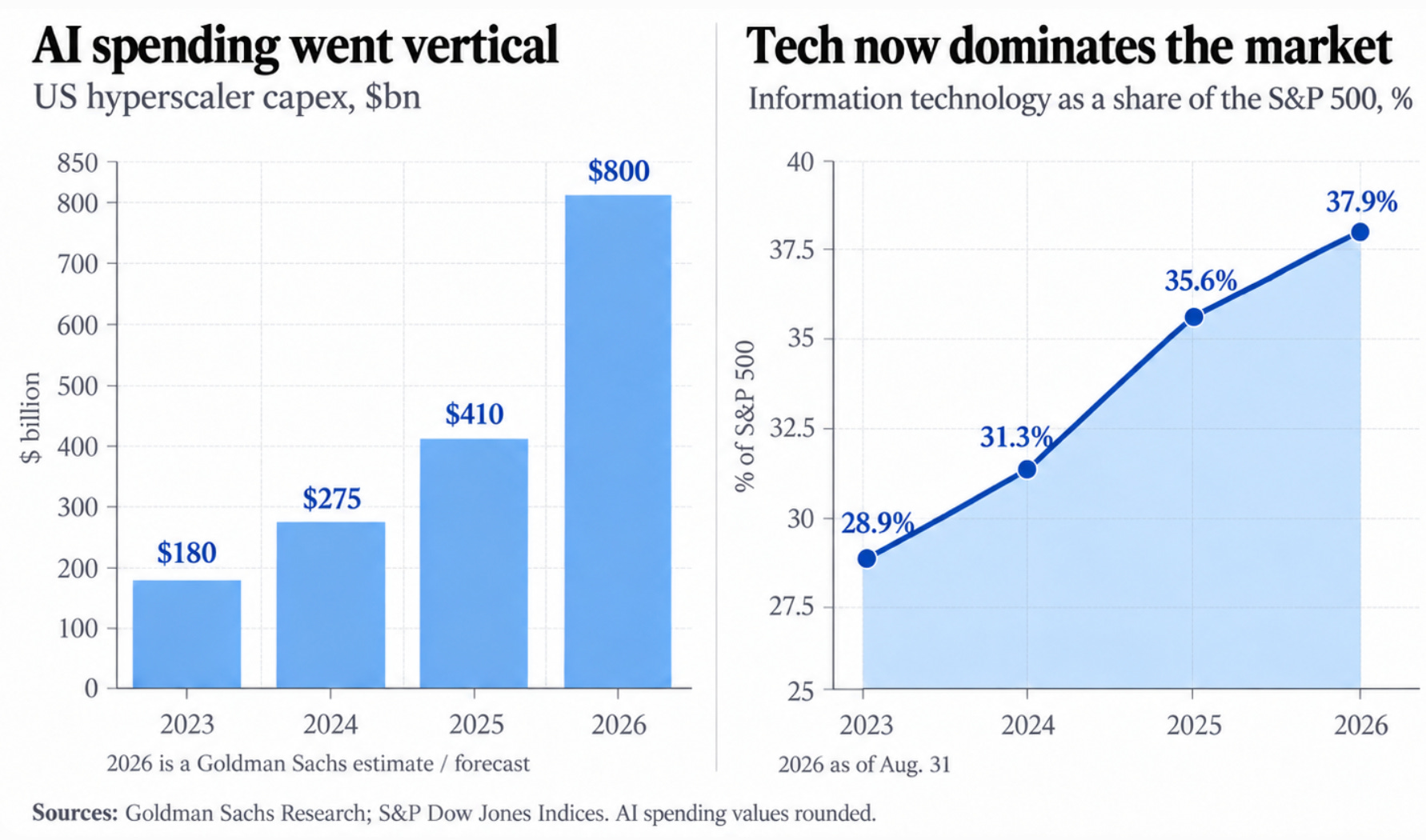
One recent study estimated AI and IT are now driving 92% of GDP growth.
If borrowing costs soar, those trillions crash. Chip orders disappear. Data centers get canceled. Millions of construction workers get laid off.
And given AI and IT are now roughly 40% of the S&P 500, stocks crash.
Along with banks, since rising bond yields crush the bonds filling their vaults. When assets fall below deposits, presto, the bank’s out of money. We get an ominous Sunday night “everything’s fine” presser by Bessent and Warsh.

What’s Next
The solution’s very easy: balance the budget. Of course, the problem is government deficits have no natural predator in Washington.
We saw from DOGE how impossible it is to even slow spending, and Congress has spent decades passing balanced budget mechanisms that get gamed to oblivion before the ink dries. A balanced budget amendment stands a snowball’s chance in modern Congress.
So deficits aren’t going anywhere. Meaning the bond crisis isn’t going anywhere.
What’s the end game? As alway, the money printer. Central banks step in and print money to buy government bonds, trading higher inflation for capped bond yields.
Politicians get their spending. Bondholders get their money back.
You — and your children — get the inflation.
Enjoyed this article? Get the next one free.
Join 23,000 readers who get my weekly take on the economy, markets, and freedom, in plain English with no spin.
Plus regular deep dives like the Fall of Rome and the Weimar hyperinflation.
Want to invest alongside me?
My paid subscribers get my monthly investment guide, with the actual stocks I’m buying and shorting.
So far this year my $100,000 model portfolio has returned 51% annualized.
For just $8 a month, get my latest picks, market analysis, and monthly updates.
Or take a peek at what you’re missing in my latest investment guide:

See you next week!
If the markets and assets crash, it removes a few decades of fake value created by the Fed's own silliness in trying to control the economy. El Trumpo says he can inflate away the deficit...all $40 trillion of it. That means a whole lot of money printing, inflation and rising rates for the next decade.
As usual, government lives in the alternative universe of stupidity and that is why we are where we are. It'll be painful for just about everyone but the super rich but what else you gonna do?
At some point within the next 5-10 years, it's all gonna come crashing down anyway no matter what they try to do. The cuts to the budget that would be needed to erase the deficits would spark a national riot within our borders. The world has too much debt.
The good part is, all the pearl clutching and hand wringing over the debt and deficits brings attention to what modern currency is. An illusion.
The better part is, when the debt implodes and currencies go to zero, all the physical things that were actually built and manufactured will still be there. Just very cheap relative to the capital available that has no counterparty or infrastructure operational risk, yet are durable and divisible as well as portable. There is only one substance that serves this purpose and that is metals of a scarcity nature. Bitcoin is nice, but only works when the electricity is working and not so nice when the grid is down from a storm, flood, earthquake, volcano or we are hit with a big solar flare.