


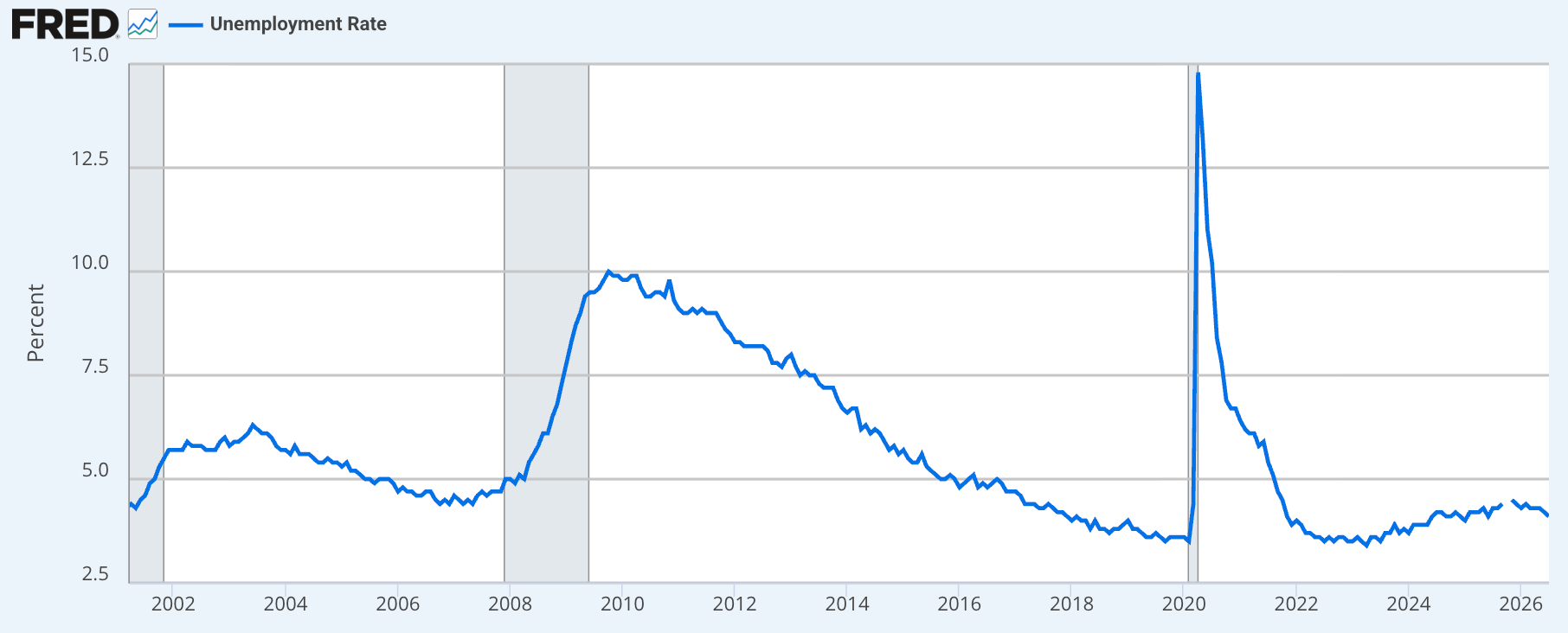
Last month jobs in the American economy fell by 23,000 yet the unemployment rate improved to 4.1%.
This gave ammunition to both sides: The doomers point to falling jobs, the optimists point to an unemployment rate that matches or beats 90% of months over the past 50 years.
So which is it: Are we in a jobs recession? Or is a falling labor force a good thing?
Mixed Signals
Part of the paradox is even though both jobs and unemployment rate come from the notorious Bureau of Labor Statistics, they’re different series.
Payroll growth is estimated through a survey of employers -- which has pathetically low response rates, so it’s mostly guesstimates. While the unemployment rate comes from a separate survey of households.
So the first counts jobs; the second counts people. Since one person can hold two or three jobs, while payrolls excludes unincorporated self-employed, unpaid family members, and many agricultural workers, the number of jobs and the number of people working do not necessarily move together.
But the bigger issue is the main driver of the paradox right now is millions of Americans are dropping out of the workforce.
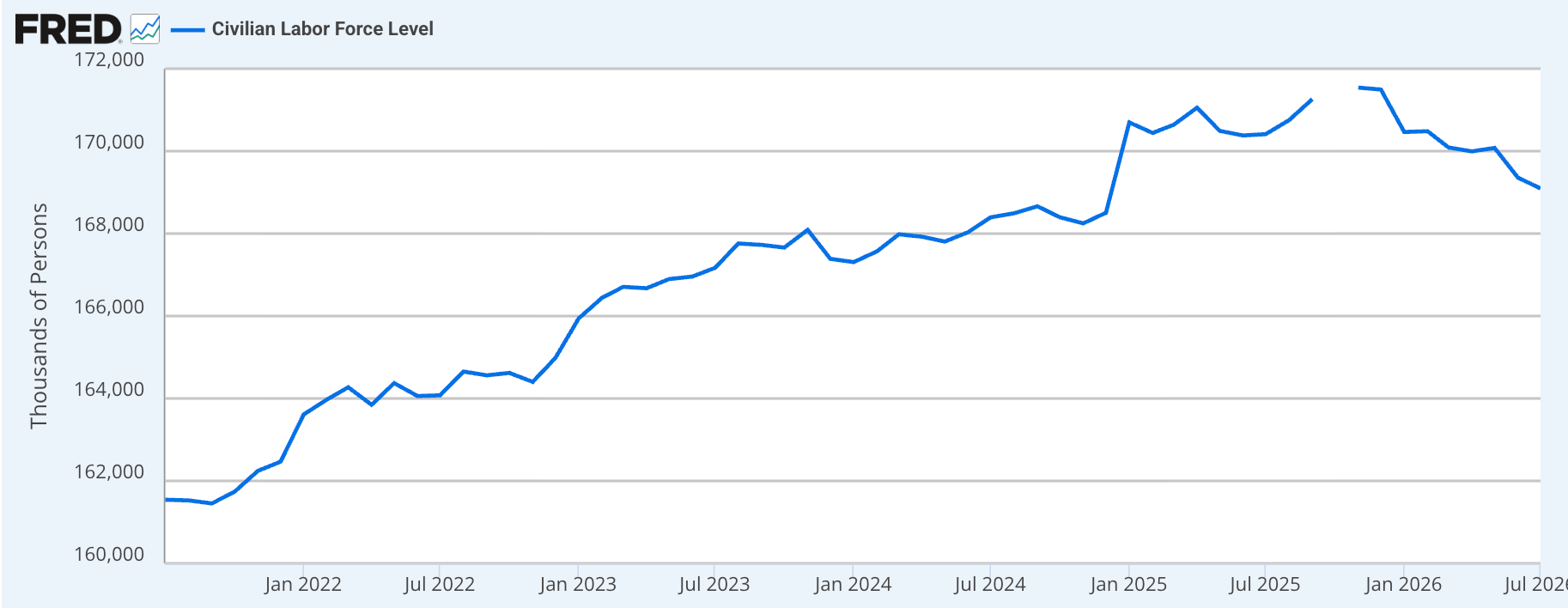
As in there’s fewer jobs, but there’s even fewer people in the workforce. Which mechanically reduces the unemployment rate because the unemployment rate doesn’t measure everyone without a job. It measures people without jobs who are actively looking for work, divided by the total labor force.
In other words, if somebody loses a job and looks for another one, that person is unemployed. But if he gives up searching, retires or otherwise leaves the labor force, the government no longer counts him as unemployed.
That creates the strange result we just saw: fewer jobs, but an even sharper decline in the number of people participating in the workforce.
So the falling unemployment rate may not mean that Americans are finding jobs. It may mean Americans have stopped looking for them.

Falling Labor Force
In raw numbers, since the labor force peaked in November of last year, 2.5 million people have dropped out of the labor force.
About half of that is statistical noise and natural aging -- millions of Baby Boomers reaching retirement age every year.
Roughly a fifth is reduced net immigration -- fewer arrivals and more deportations.
Leaving a mysterious third -- which appears to be concentrated among Americans aged 55 to 64.
That group is especially interesting because most are still below the traditional retirement age. They are old enough to leave the workforce but generally young enough that their departure is not automatic.

One possibility is discouraged workers. Older employees who lose a job can have a hard time finding another position with comparable pay and status. After months of unsuccessful applications, some may simply stop searching and live on savings. Or on their spouse.
They disappear from the unemployment statistics, but they have not disappeared from the economy.
The second possibility is health. Chronic illness, disability and lingering health problems could be pushing more people out of the labor force before they planned to retire. Turning them from a potential producer to a long-term economic burden.
A third possibility is more people living on government benefits, including fraud. During the spending orgy of Covid, government spending on welfare, benefits, grants, and social services rose by over 60% — hitting almost a trillion dollars in handouts.
Finally, the fourth possibility, which is much brighter: Americans may be retiring early because they can afford to.
Older households own a disproportionate share of stocks and real estate, which have been dutifully pumped by 40 years of easy money from the Federal Reserve.
According to the Fed’s own Survey of Consumer Finances, the average 55-64 year old household is worth approximately $1.57 million. Invested at 6% per year, that’s over $90,000 a year without runing down a dime of principal.
All three explanations produce the same government statistic. But they describe very different economies.
Because a discouraged 60-year-old who has given up looking for work is evidence of labor-market weakness. A sick 60-year-old leaving work is evidence of a health and productivity problem. A 60-year-old retiring because his 401(k) doubled is evidence of rising wealth.
For now, we do not have enough information to say confidently which explanation dominates.

What this Means for the Fed
The modern Fed trades off two numbers: jobs and inflation.
On inflation the Fed’s already swimming in muddy water: Year-on-year inflation’s running 3.5%, but everybody knows that’s energy talking from the Iran war. Before the war started, monthly inflation was nearly flat, and private-sector analyst Truflation had inflation under 1%.
Meaning the Fed’s not sure where to go from here: Respond to today’s headlines, or assume the war will be over soon, as markets and the general public assume.
But now it’s jobs that are also getting muddy: Falling payrolls and falling unemployment leaves the Fed confused until it can figure out what’s happening.
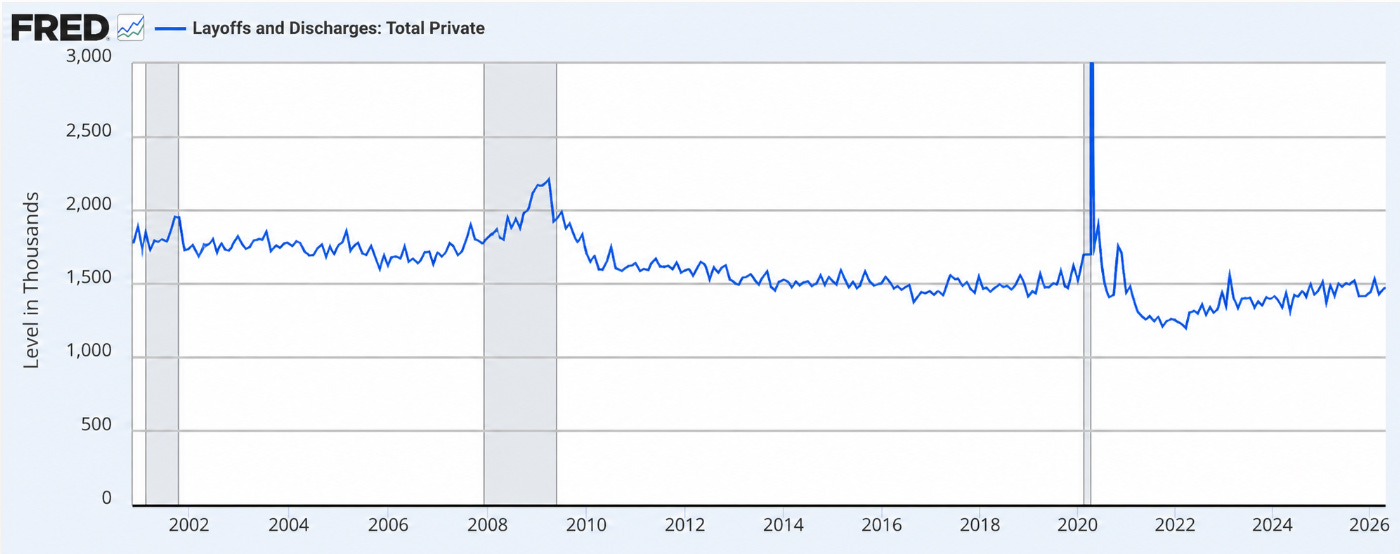
And the usual suspects aren’t much help: Temporary-help employment, which leads the broader labor market, has recently been improving. Weekly unemployment are historically low. Corporate earnings forecasts are rising, which is usually where they hoard workers. Layoffs are historically low, despite the supposed AI job armageddon.
What’s Next
Even in the best of times the Fed’s a speeding car at night with no headlights, responding to last month’s report to make decisions that won’t impact the economy for 18 months given monetary lags.
Right now, even those headlights aren’t working. Which makes it a splended time for Kevin Warsh to announce a true “regime change” -- get the Fed out of the business of manipulating interest rates.
Enjoyed this article? Get the next one free.
Join 23,000 readers for weekly articles on the economy and freedom, with regular deep dives like the Fall of Rome, the Weimar hyperinflation, and FDR’s Great Depression.
Want to go further? Paid subscribers also get my monthly investment guide including real-money picks that have made 35% to 37% annualized returns so far this year on a $100,000 portfolio.
Also, check out my interview with Tho Bishop of the Ludwig von Mises Institute on the rise of Socialism in the Democrat Party and what it means for Democrats, Republicans, and the future of the Republic.
See you next week!
Peter
The declining health hypothesis seems reasonable. Check out the St. Louis Fed Disability plot:
https://fred.stlouisfed.org/series/LNU00074597
What caused the inflection point in 2021?
"private-sector analyst Truflation had inflation under 1%."
That's crazy, as anyone who is a buyer of groceries or just about anything else can see.
Since September 2024, the Fed has lowered the one rate it controls, the short-term federal-funds rate, by 175 basis points. The money supply has now increased for 28 straight months.
Prices rise when the money supply rises faster than the production of goods.