

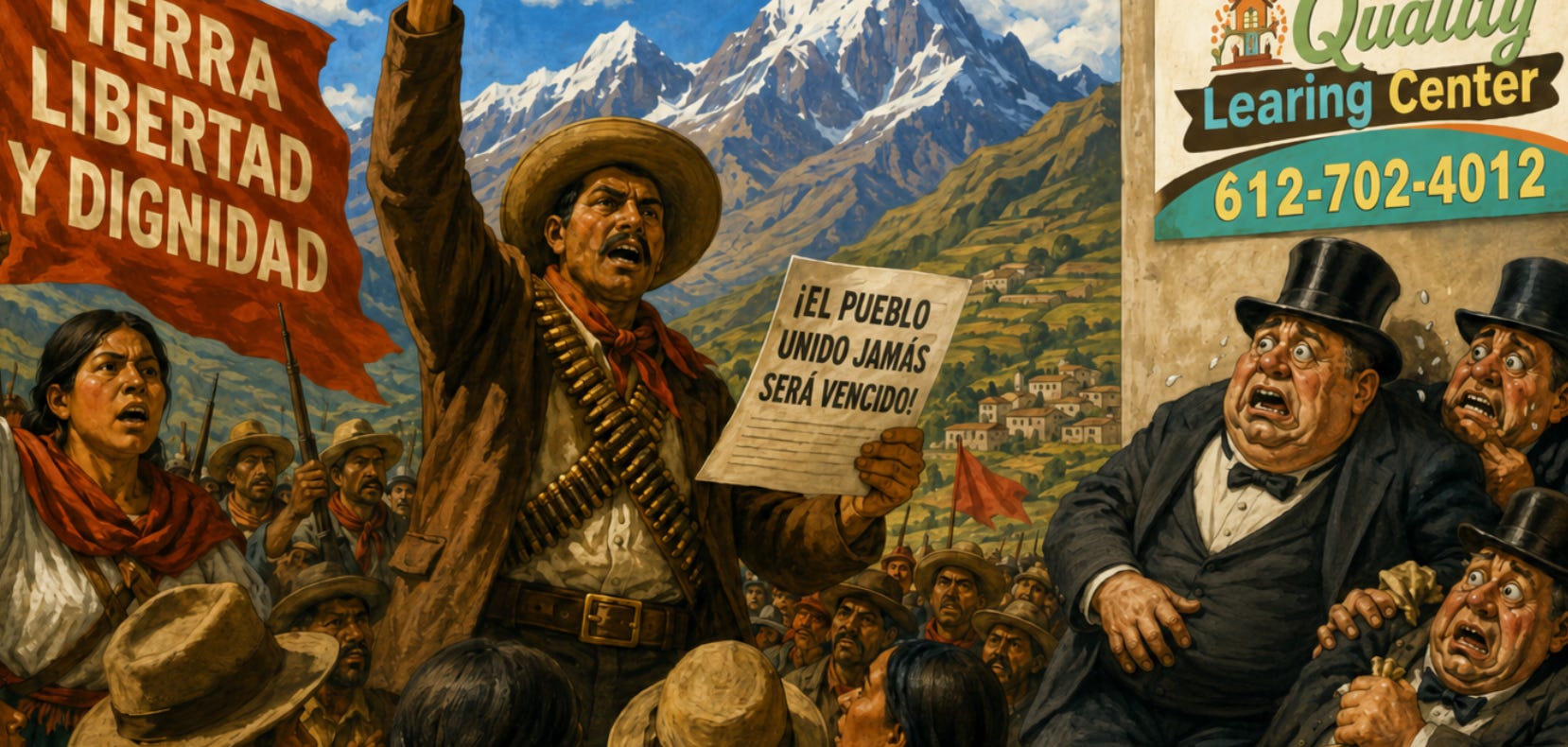
Latin America is going based as Colombia’s populist Abelardo de la Espriella -- nicknamed El Tigre, The Tiger -- won the first round of the presidential election.
Putting him at 80% odds of winning the presidency in 3 weeks according to prediction market kalshi.
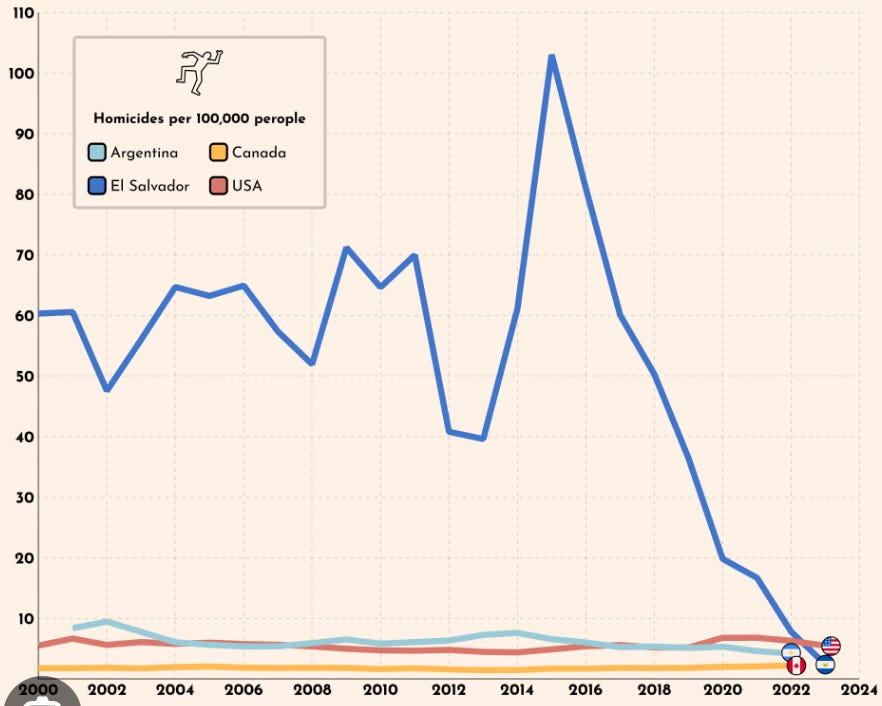
This is interesting because Tiger’s an open admirer of Najib Bukele, El Salvador’s populist leader -- and Trump ally -- who famously cut the murder rate by 98%.
Taking Salvador from literally the most violent country in the world -- worse than Haiti -- to safer than New Hampshire.
This earning Bukele approval ratings in the 90’s according to independent polling.
Salvadoran children can now play in the streets -- unlike, say, Chicago. Grandmas can nap at the park. Young women can go out at night.
I was actually in El Salvador 2 years ago for Bukele’s inauguration and every working-class Salvadoreno I talked to beamed with pride. In the night-club district middle-class women in miniskirts were getting pupusas at 2am with no care in the world.

The Spread of Latin American Populism
Salvador-style safety would be a welcome change for Colombia, which has a left-wing government friendly to cartels and street crime alike. The murder rate hovers around Baltimore levels -- 15 times Salvador.
More important for Latin America, it’s not just Colombia. Bukelismo is spreading across the continent, scoring 70 to 80% support region-wide.
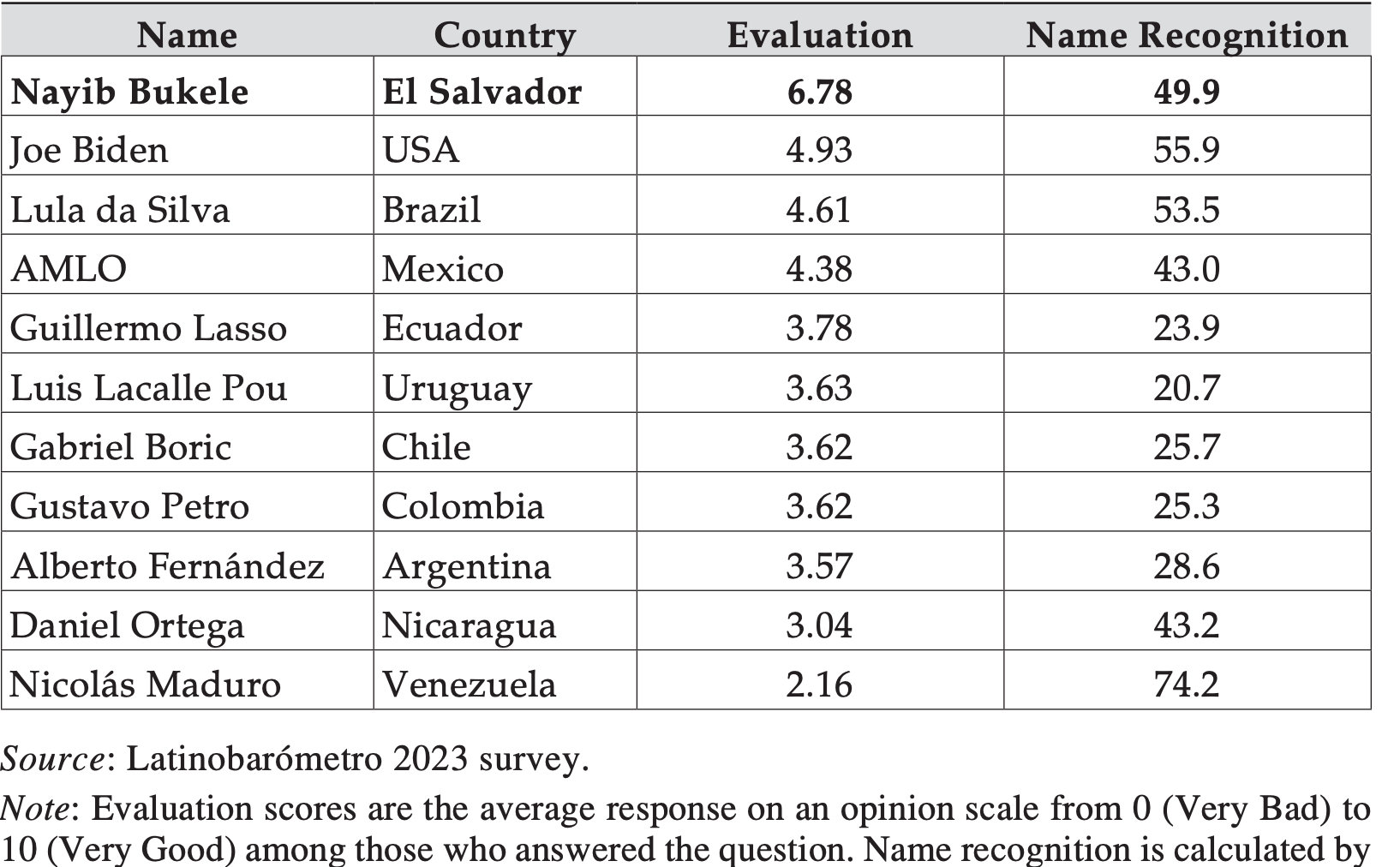
Bukele is by far the most popular leader among across all Latin American countries, scoring a 6.8/10 according to regional poller Latinobarometro versus an average of 3.7 for the rest of the leaders.
Where the parade goes, the leaders are close behind. Chile’s new president is an open admirer of Bukele, as is Ecuador’s. Argentina’s Javier Milei is close to Bukele and they’ve been trading ideas.
Honduras already implemented Bukele reforms, and Costa Rica just jumped on the bandwagon. There’s even pressure on Mexico’s left-wing government after 20 years of carnage that’s finally turning the corner thanks to Trump’s border.

Why the Left Fights Populism
The danger to populism is that lower crime’s just one part of populism, whether Bukele or Trump. It’s also smaller government, less corruption, cutting red tape to boost job creation. Handing economic power to small business instead of back-room cronies.
And that’s where the trouble starts. Because even if you convince the voters, you hit the wall of ideological judges and legislatures who are tools of the incumbent power structure.
Bukele himself was blocked by judges -- which may sound familiar to Americans. And by a hostile Congress -- which may also sound familiar.
He solved it by winning a landslide in Congress and using it to replace left-wing judges.
A solution that, alas, would require Trump getting two thirds of Congress.

It was similar for Milei in Argentina, who still doesn’t have enough of Congress to over-ride left-wing judges who’ve blocked some of his major reforms.
And Brazil, where left-wing judges effectively mounted a coup, stealing the election then sentencing populist Bolsonaro to 27 years in prison for saying nice things about Jan 6 style stop the steal protests.
Put it together and Latin America is turning populist, led by crime and corruption. But even where the populists do win -- like in the United States -- they’re up against a gauntlet of left-wing judges.
Meaning Latin populists -- like American populists -- need to win bigly to fix it.

What’s Next
The genius of democracy is it’s a pressure value. But when it’s blocked by censorship or ideological judges the pressure builds. The people get angrier.
Best case elections are fair enough that populists win supermajorities to remove the judges -- like El Salvador.
Worst case the judges keep blocking until Presidents just start ignoring them.
At which point the people will welcome Caesar.
My June Economic Survey is live, complete with model portfolios that have made roughly 50% annualized year to date. Check it out here!
Every week I write on economics to 23,000 readers with regular deep dives into history like the Fall of Rome, the Weimar hyperinflation, or FDR’s Great Depression.
Subscribe for free for weekly articles. Or choose paid to support my work along with my monthly Economic Survey complete with model portfolios and stock picks that have performed roughly 50% annualized year to date.
See you Next Week!
Fabulous read and well-written, but more than that - reality!
The People are rising, and no longer The "Silent" Majority.
*Tips hat
Much Love
Sir Peter, Great.