


It’s “Regime Change” at the Fed as Kevin Warsh carts the Jerome Powell legacy to the dumpster. Sadly, he’s not ready to dumpster the entire Creature from Jekyll Island.
Last week freshly minted Fed chair Kevin Warsh held his first big FOMC meeting, launching multiple salvos that change is coming to the Federal Reserve.
On interest rates it was pretty much what everybody expected, holding rates steady at roughly neutral given the past 40 years.
Fed members’ rate expectations crawled up, which isn’t surprising given inflation took off on oil prices. But the Fed’s not panicking into hikes, which is good.
But the big news was Warsh announcing five changes to how the Fed operates.

Warsh’s “Regime Change”
As my based colleague EJ Antoni put it, Warsh wants to dismantle the Fed bureaucracy to reorient it to the job it’s supposed to do: fight inflation.
First, Warsh slashed the so-called policy statement the Fed puts out to manipulate markets, replaced with a repeated promise of “price stability.”
Next, he wants to improve the data the Fed uses, which is long overdue since the Fed’s step by step painted itself into inflation data nobody believes: A YouGov poll last year found over half of Americans with an opinion do not trust government inflation numbers.
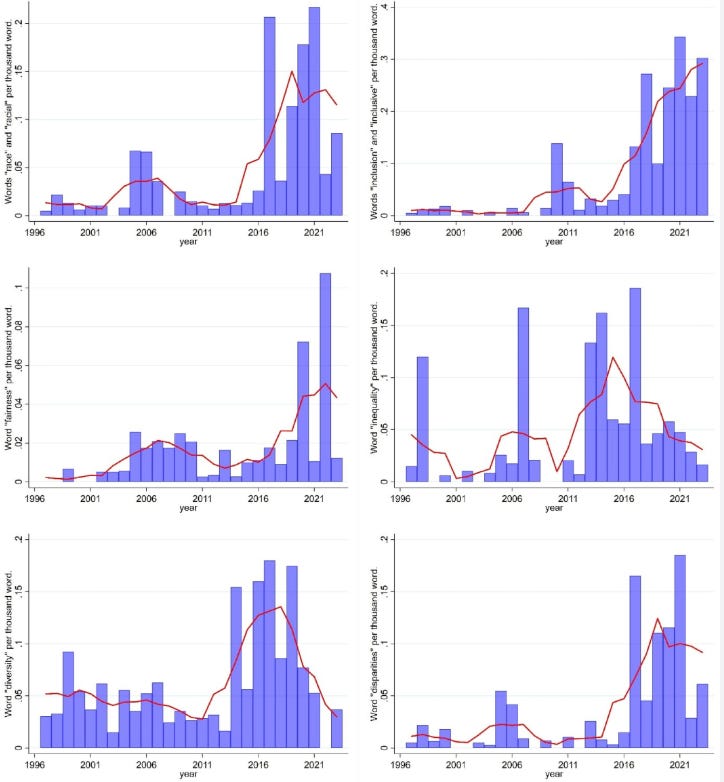
Third, Warsh wants to slash the mission creep that took the Fed from inflation fighter to economic manipulator to, under Powell, climate change and DEI. Fiddling with systemtic racism while inflation burned at double-digits.
Finally, Warsh announced a review of the 7 trillion dollar Fed balance sheet, which is the accumulated assets -- mostly federal debt -- the Fed bought with freshly printed dollars since the 2008 crisis -- and especially during Covid.

“Robin Hood” Monetary Policy
This $7 trillion was the main reason for Bidenflation, and Warsh has argued for years to pawn it, cancel the dollars -- which lowers infaltion -- and use that to let rates come down to boost growth.
In other words, take from Wall Street and give to Main Street. Warsh himself has called this Robin Hood monetary policy, and it squares the circle of Trump wanting lower rates without hiking inflation.
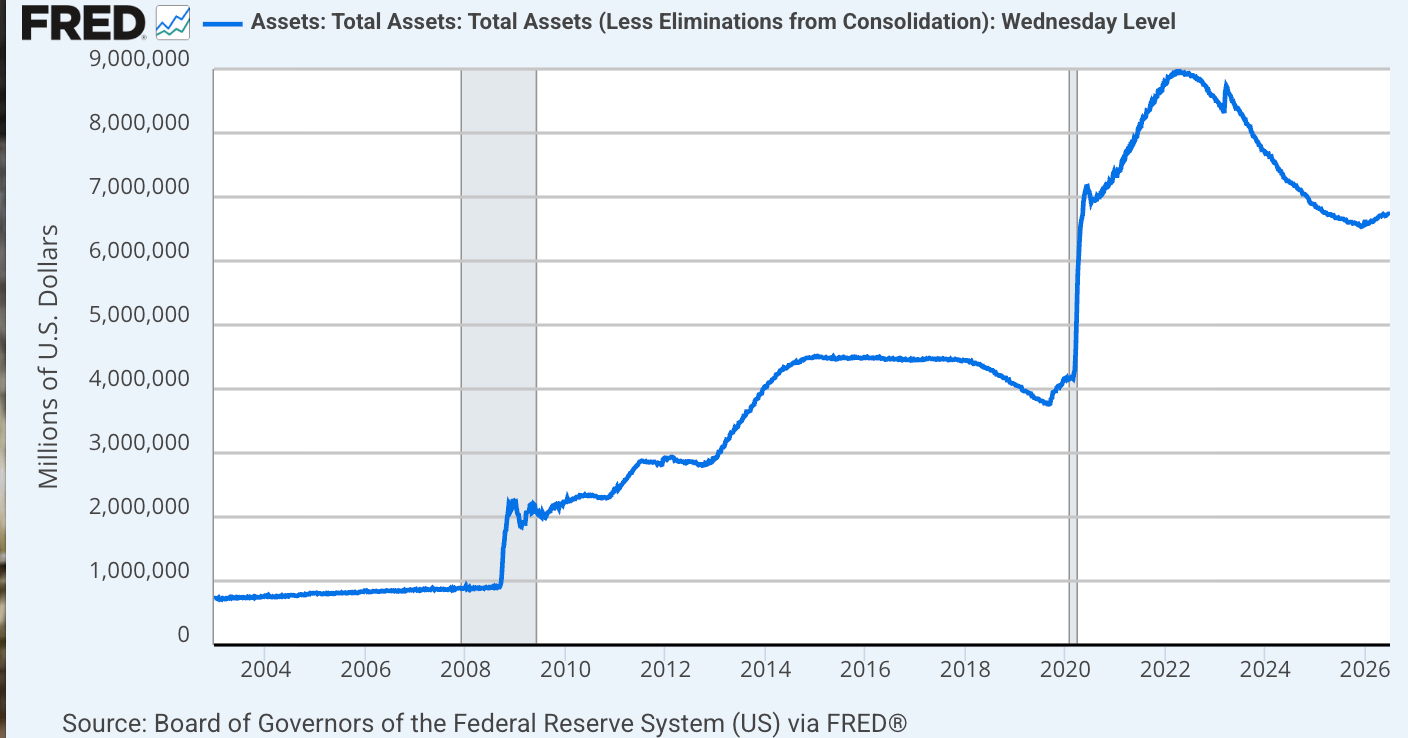
That plan got scrambled with energy prices, but Warsh apparently still believes. With the caveat that his hands could be tied since Wall Street long ago digested that 7 trillion and could have a seizure if it’s cut too fast -- which already happened in the so-called taper tantrums when Bernanke tried to drain the punch bowl.

Don’t Fix the Fed, End It
This all may be helpful, but the larger issue is why try to fix the Fed when you can shut it down. Not as a legal entity -- Congress would have to do that -- but as an economic manpulator.
After all, the Fed is the cause of both inflation and recession, manipulating rates down until prices take off, then fighting that with hikes til you get recession.
The few legitimate things the Fed does like payment and banking oversight are already done by Treasury or OCC. The only thing a Fed adds is a counterfeiting cartel. And bank bailouts.

Concretely, Ending the Fed as economic manipulator means letting markets set rates -- no forward guidance, no any guidance. Swearing off the money printing -- no QE.
And letting banks know if they over-lend there’s no bailouts coming -- they’ll go bust and get acquired at auction like any other business.
That would be true regime change.
Sadly, Warsh is not a revolutionary -- his regime change is closer to rearranging the silverware. So expect some improvements on the edges, less climate talk, maybe some better inflation data.
And hopefully a Fed chair restrained enough that his boom-busts don’t destroy as many million life savings as the other 16 Fed chairs.
Every week I write on economics to 23,000 readers with regular deep dives into history like the Fall of Rome, the Weimar hyperinflation, or FDR’s Great Depression.
Subscribe for free to get 4 issues a month. Or choose the $8 subscription to support my work and get my monthly investment guide with picks that have made 63.6% returns so far this year on a $100,000 portfolio.
See you Next Week!
Great Article.
But before ending the Fed, the Fed should clean up its huge mess.
Start with creating the money to pay all interest owed, or was already paid, on student loans.
Also refund the excess student tuition cost the Fed's inflation caused.
Then prohibit the Fed from ever profiting from student loans in any way.
Next, prohibit the Fed from ever buying any mortgage backed securities or their equivalent.
House prices and property taxes would fall back to reality and true affordability for main street.
The Fed won't suffer actual loss since it did nothing to create this money.
The taxpayers should not have to pay for the Fed's experiments that always boost profits of 1%.
Giving the money back to the people who will actually use it would truly stimulate the economy.
Agreed, especially "End the Fed". The Fed can only affect short rates and the markets do a better job of setting ALL rates, so what really is the point of the Fed? Also why does the Fed need TWO trading floors, one in NY and one in Chicago if not for manipulating many markets which be far better left alone to send correct economic signals.
As a matter of interest, how does one "pawn" $7 Trillion of USTs without pushing prices down so increasing rates? I suspect the answer is "very slowly". But when the economy goes into recession and the Fed responds in the usual way with lower short rates and QE/YCC at the longer end, that would seem to be something of a dilemna?