

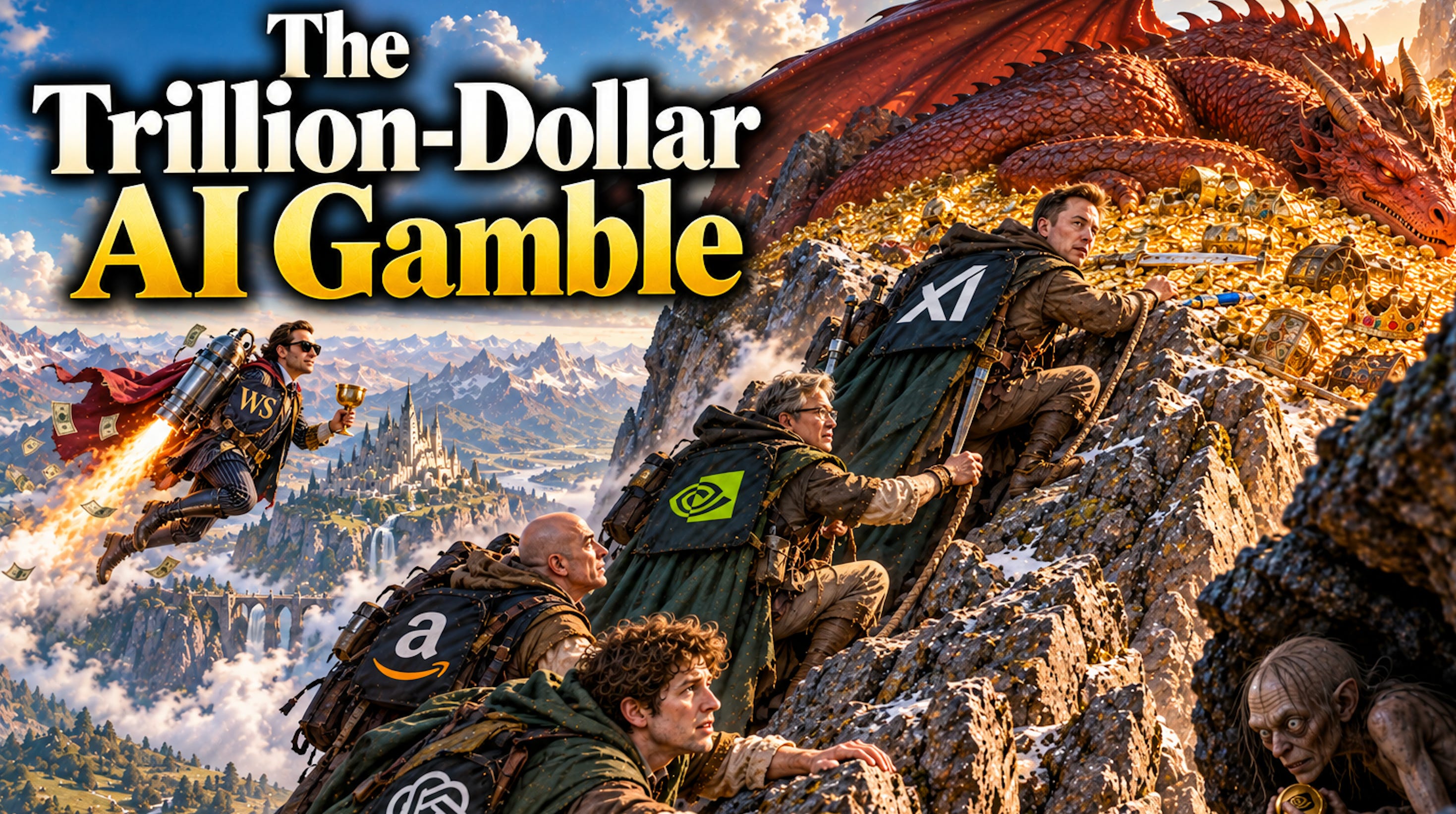
The AI Revolution is mountain climbing without a harness
There’s a trillion-dollar hoard of gold at the top. The dragon’s sleeping. But one wrong step and you’re dead. With Wall Street, as always, jumping the line.
Anthropic - maker of Claude - just filed for an IPO potentially valuing it at $2 trillion. Kalshi traders put 93% odds of it happening in the next 8 weeks.
2 trillion is positively astronomical considering Anthropic is running just 35 billion in annual revenue with losses of $110 billion.
Imagine a coffee shop that loses 10,000 a month on 3,000 in sales it’s selling for 2 million. And hedge funds are slashing each others’ tires to get a slice.
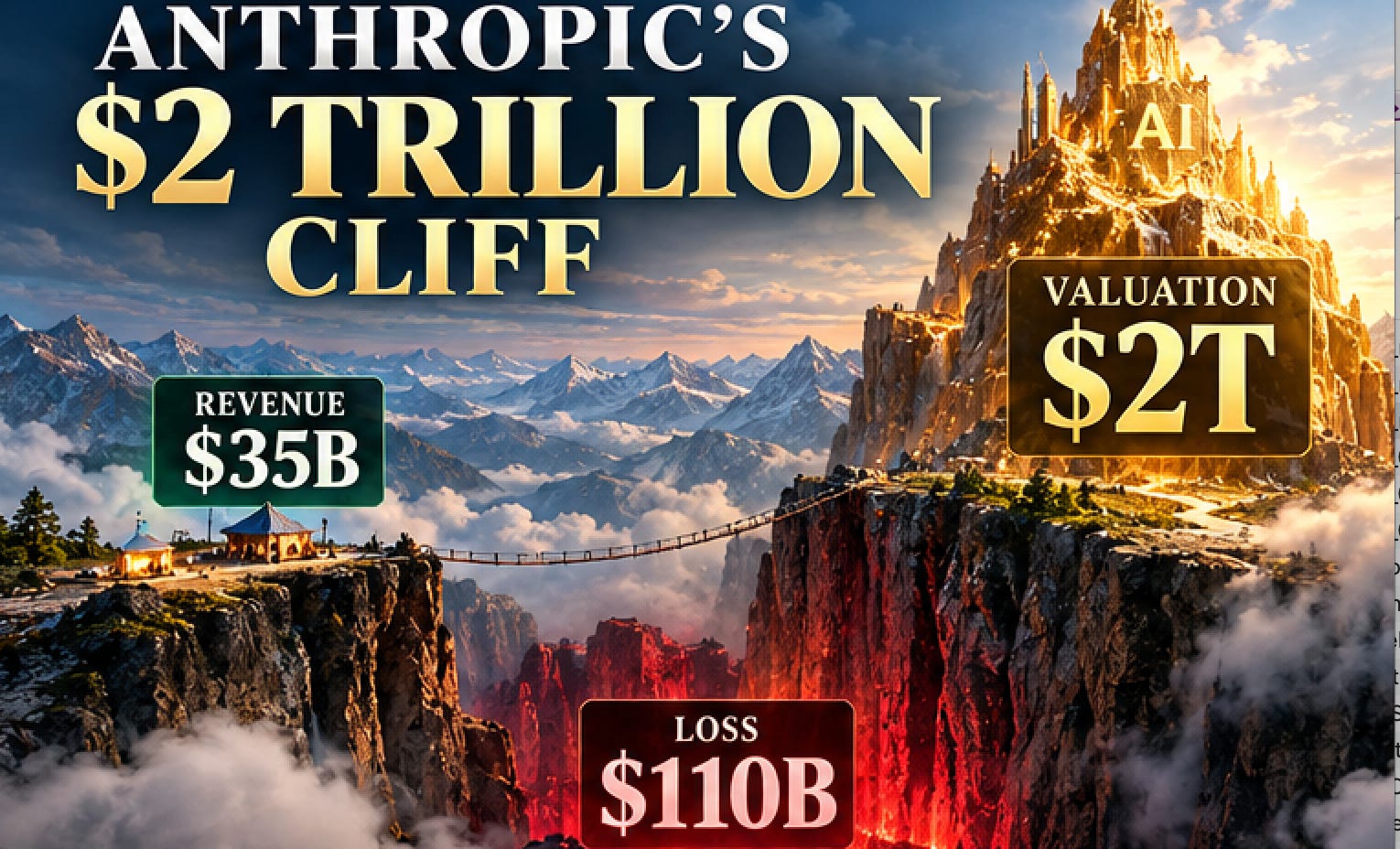
The reason, of course, is Anthropic’s revenue growth is on fire, up 14 fold in a year. For perspective, when Google was at this revenue stage it was growing 29% a year. Not 14-fold.
And Anthropic is just one company. Across Silicon Valley, AI is exploding, with infrastructure spending approaching a trillion dollars annually -- up 7 fold since 2023.
Because AI is priced as the biggest productivity revolution since electricity. But it could also be the biggest capital bust since railroads.

The Good, the Bad, the Ugly.
Start with the good news. AI demand is absolutely real. 14-fold revenue is nothing to sneeze at.
And it’s not just students outsourcing homework to beer pong maxx.
Anthropic has nearly 12,000 corporate customers spending over $100,000 annually, and almost 2 thousand spending over $1 million.
That’s real business demand for AI that writes code, analyzes contracts, and increasingly performs entire workflows. A few days ago I posted about swapping my entire workflow to Grokbot, which is literally like having a very smart, very capable personal assistant.

The scary part starts with that hundred ten billion Anthropic loss.
Goldman Sachs estimates leading hyperscalers -- Amazon, Google, Meta -- will spend $737 billion on data centers, nearly tripling in two years.
To the point data centers are competing with federal borrowing to chase scarce capital.

Boom, Bust, or Both
Now, this spending could be the bargain of the century, both for companies -- Anthropic itself estimates ROI of 108%. And for the economy, akin to the great switch from steam to electricity.
Imagine every small business commanding teams of programmers, accountants, and researchers working 24 hours a day for pennies -- well, for tokens.
Or scientific discovery accelerated ten-fold.
If AI unlocks trillions in annual productivity, today’s infrastructure spending could look like peanuts.
But there’s a catch: AI is crushing the price of intelligence.
Stanford’s AI Index found the cost of performance plunged 280-fold in roughly two years.

That’s amazing for consumers. And potentially catastrophic for providers spending all those trillions to compete the price to pennies.
The warning is the dotcom boom, where companies spent a hundred billion laying fiber, which competed to price to 29 dollar broadband.
The technology changed civilization. Investors lost their shirts.
In the case of AI, there’s light in the tunnel from agents -- like Grokbot -- that are getting so good so fast that 14-fold revenue could keep going.
The question is whether pricing keeps up with demand.

What’s Next
AI demand is real, and the potential of the technology rivals electricity itself.
But the financing could destroy fortunes along the way on a scale the dwarfs the dot-com bust.
The gold is real. The mountain is very high. Consumers will be swimming in wonders.
The question is how many investors survive the climb.
Enjoyed this article? Get the next one free.
Join 23,000 readers who get my weekly take on the economy, markets, and freedom, in plain English with no spin.
Plus regular deep dives like the Fall of Rome and the Weimar hyperinflation.
Want to invest alongside me?
My paid subscribers get my monthly investment guide, with the actual stocks I’m buying and shorting.
So far this year my $100,000 model portfolio has returned 51% annualized.
For just $8 a month, get my latest picks, market analysis, and monthly updates.
Or take a peek at what you’re missing in my latest investment guide:

See you next week!