

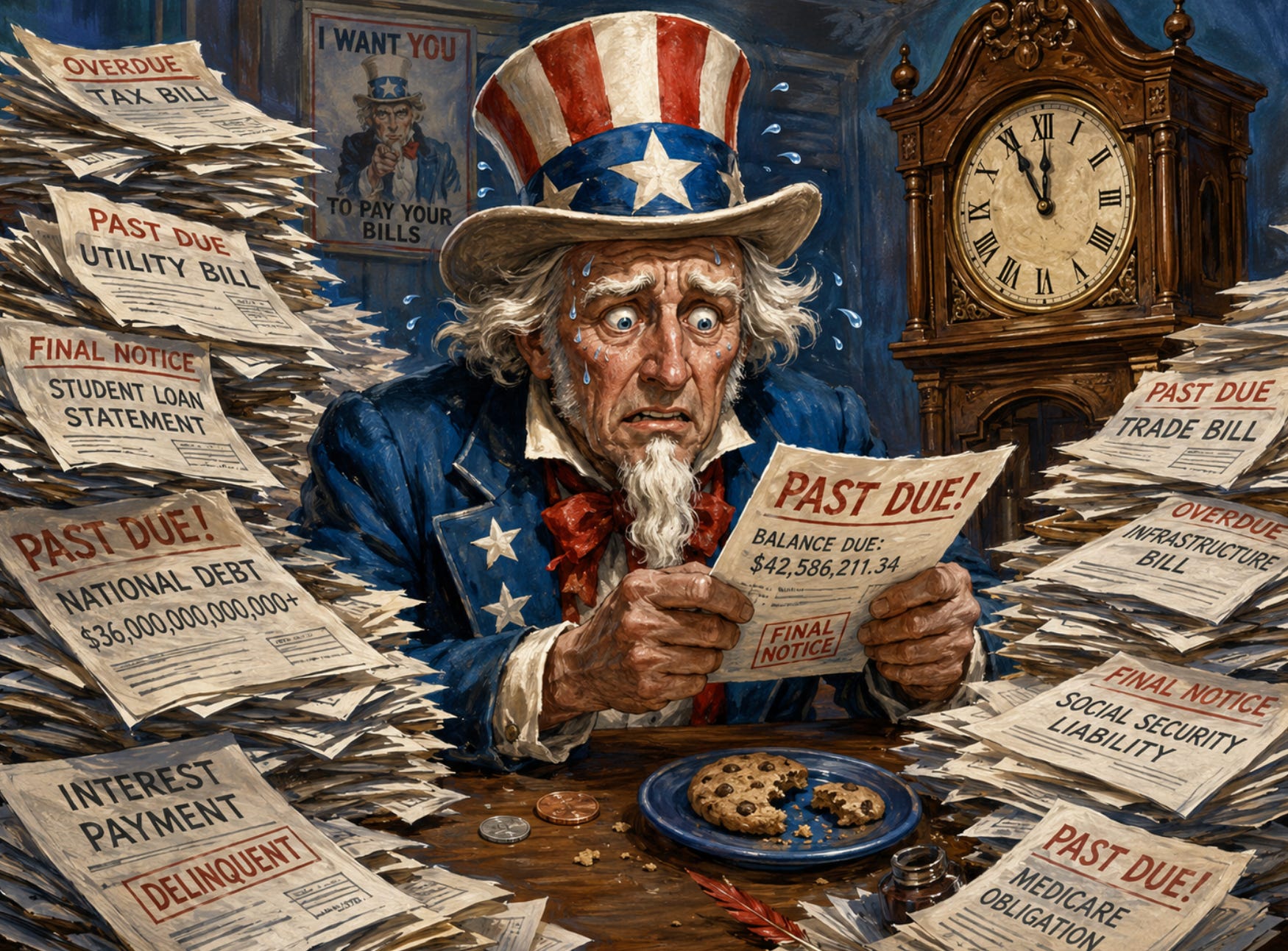
Washington now spends 2 dollars for every 1 it collects. As in taxes would have to double to cover what Congress already spends.
The DC credit card statement arrived last week courtesy of Treasury, who tallies $628 billion out the door in May compared to just $335 billion collected.
That’s a $293 billion hole in a single month.
$3.5 trillion annualized.

Now, deficits this big -- 7% of GDP -- have happened before in American history.
For example World War II.
But what’s never happened is 7% deficits when unemployment’s low, the stock market is hitting highs, and with nothing resembling total war — nobody’s rationing rubber.
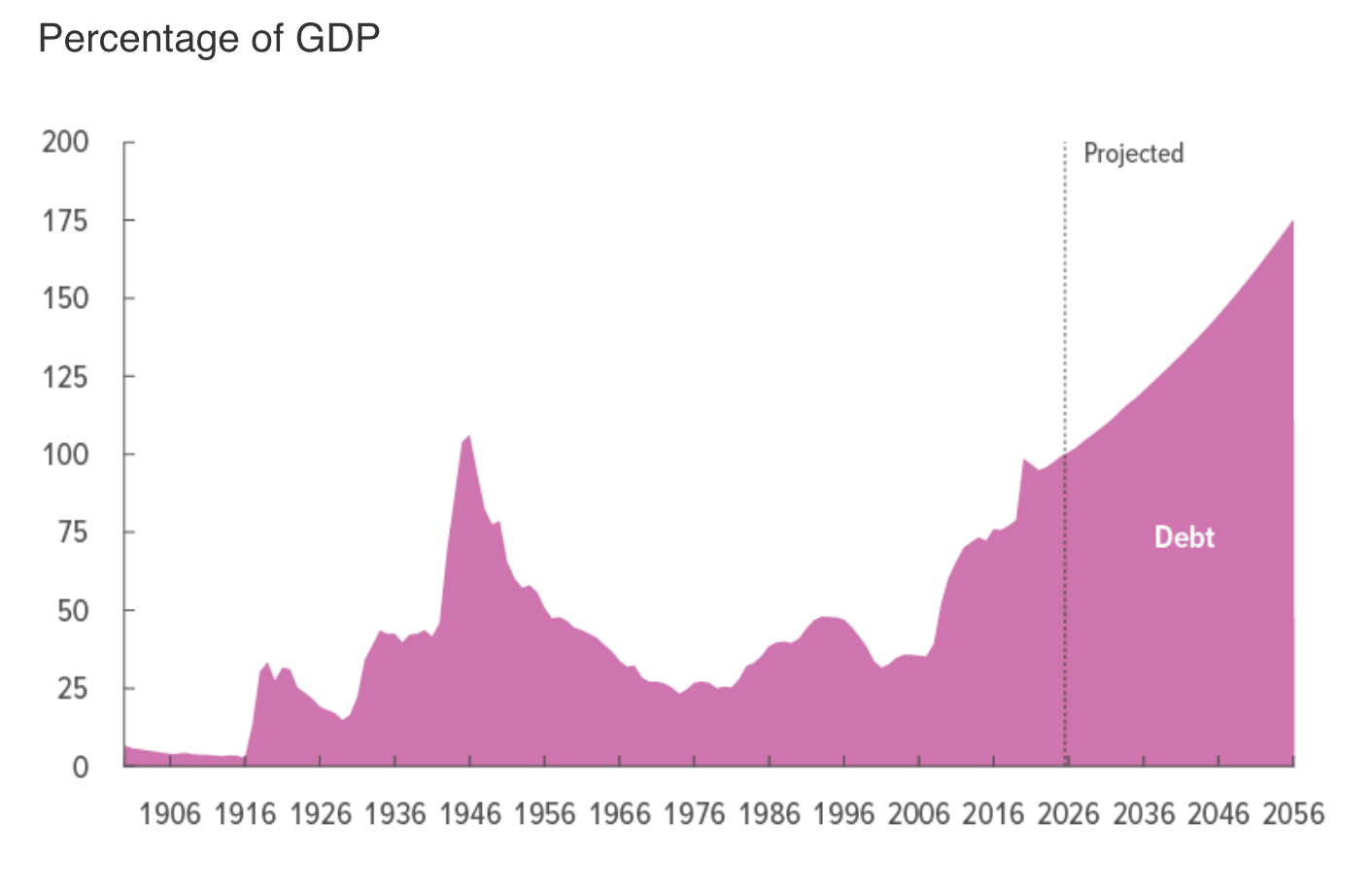
In other words, we’re running emergency-room deficits on a regular Tuesday.
And that matters because eventually we will get a recession. Because it’s what the Fed makes for a living. And when that happens, going by the last 40 years, it’ll blow out the deficit by another 6% of GDP — potentially $5 trillion of annual deficit.
For perspective, there’s just over $20 trillion in all the bank accounts in America.
The Feds will be borrowing one quarter of that per year.
In a recession.

Where did it go Wrong
So where did it go wrong? The short answer is FDR then Nixon killed the gold standard that used to limit government borrowing.
Meaning every crisis, every problem makes spending go up like a ratchet but it never goes down.
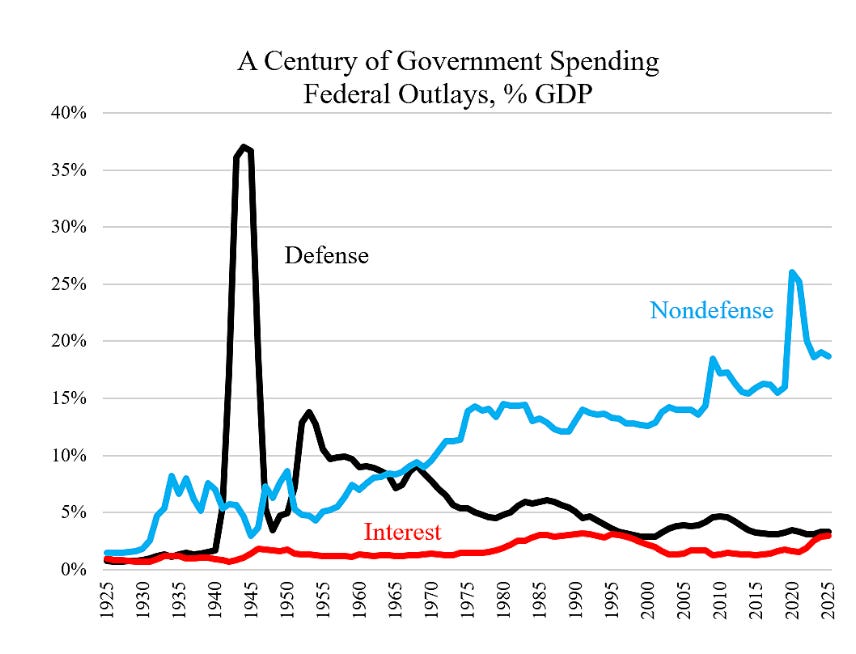
To illustrate, in Covid they rubber stamped welfare and now, 6 years later, social spending is still $2 trillion above pre-Covid. Military spending keeps going whether or not we have any wars worth fighting. Green subsidies, crony infrastructure bills, NGO slush funds. Washington breeds mouths to feed.
We had the perfect storm with DOGE and unified Republican control including a GOP Congress who spent 50 years promising lower spending.
Instead, they hiked spending. True, they hiked a tenth Biden’s proposed spending. But if the perfect storm can’t make a dent, that leaves one last hope: Grow out of it.
Get economic growth fast enough that we outrun the deficit.

Growing out of the Debt
Growing out of the debt is sound in principle -- and Treasury Secretary Bessent’s been pushing it. The problem is if you’re running a 7% deficit you’re got to grow 8%. Toss in the recessions and you need closer to 10% when the sun’s shining.
That’s China-level — in its very best days.
Now, it’s possible to grow 10% -- we did it in the 1800’s when we had no income tax, a tiny regulatory code, and a tiny federal government.
But today we’d need a miracle. Prediction market Kalshi’s got us pegged under half that thru twenty thirty -- and that’s with AI.

What’s Next
When you see a crisis coming there’s two options. Start preparing today. Or let it hit and then fix it when minds are concentrated.
Washington’s obviously gonna let it hit.
Faster growth will buy us time. Republicans vs Democrats buys us time. But spend twice what you make and the music eventually runs out.
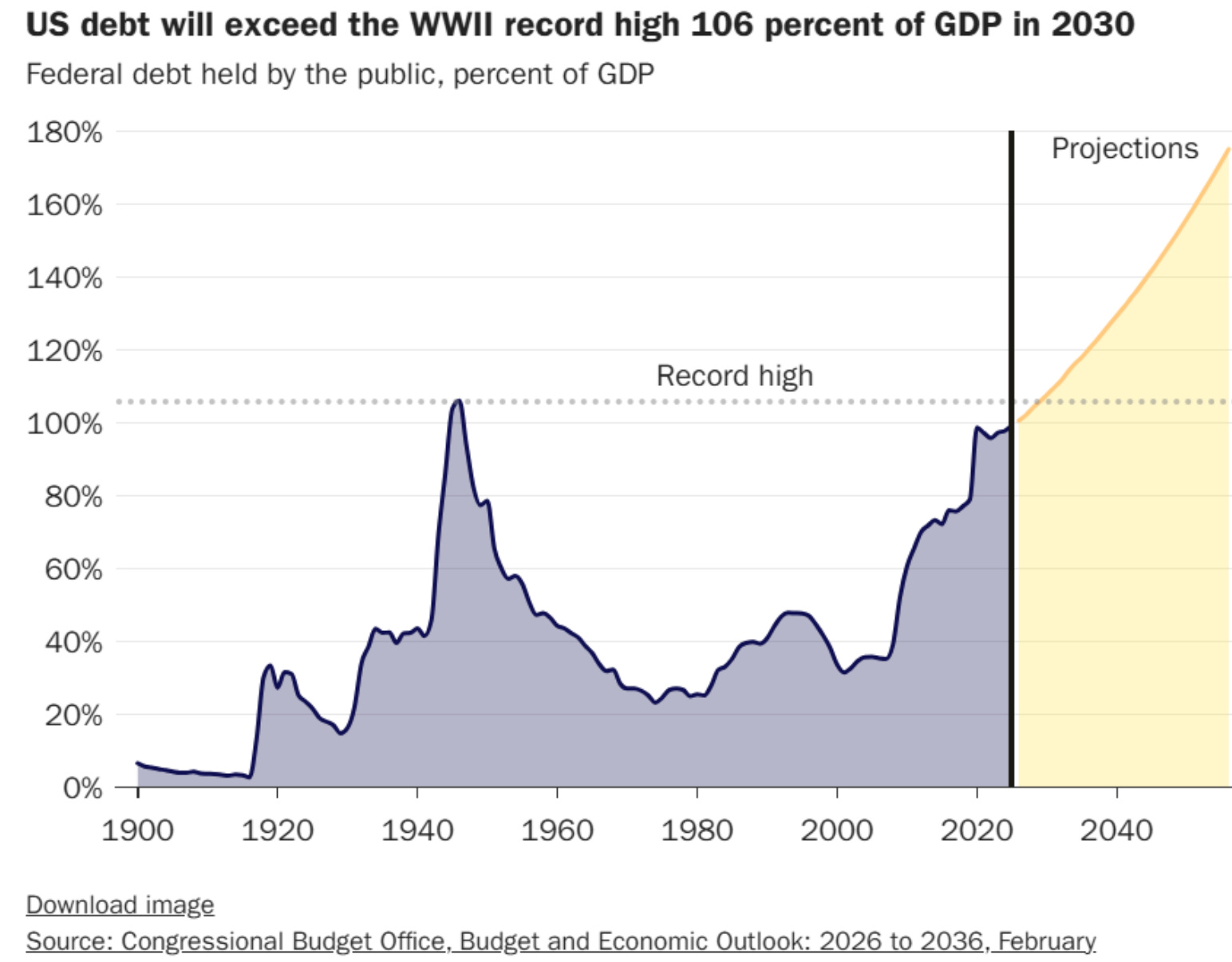
And when it does, you’ll see it first in bond markets -- yields in the double-digits. Which freezes the real economy and crashes Wall Street and pensions.
Melting pensions are pitchfork-adjacent, so at that point you’ll see the Fed parachute in to convert it to inflation, printing the missing trillions to pour water into every dollar’s wine.
At which point anybody holding dollars -- or buying groceries -- gets wiped out. While the rich who own hard assets -- houses, stocks, hedges like bitcoin or gold -- get to inherit the rest of the economy.
Courtesy of the Federal Reserve and the federal spending it feeds like an addict.
Every week I write on economics to 23,000 readers with regular deep dives into history like the Fall of Rome, the Weimar hyperinflation, or FDR’s Great Depression.
Subscribe for free to get 4 issues a month. Or choose the $8 subscription to support my work and get my monthly investment guide with model portfolios that have made nearly 50% annualized returns on $100,000 portfolio.
See you Next Week!
The most remarkable aspect of today's fiscal situation is not the size of the deficit but its timing. Historically, governments ran massive deficits during wars, depressions, or major crises. Today, the U.S. is running crisis-level deficits during a period of low unemployment, record equity markets, and no obvious national emergency. As investors, the uncomfortable question is: if these are the numbers during relatively good times, what will the fiscal picture look like during the next recession?
High inflatiion contributed to Trumps win and rejection of the Democrats. High inflation was a catalyst for Milei's win in Argentina. Will we see America's version of Milei arise in the next inflation cycle?