


The Iran war broke the century long rule that war is bad for stocks, good for bonds, and rocket fuel for gold.
Instead, since America started rocking the casbah stocks rule, bonds drool, and gold got thrown off a roof.
So what changed. And should we be worried.

The Oil Shock that Cried Wolf
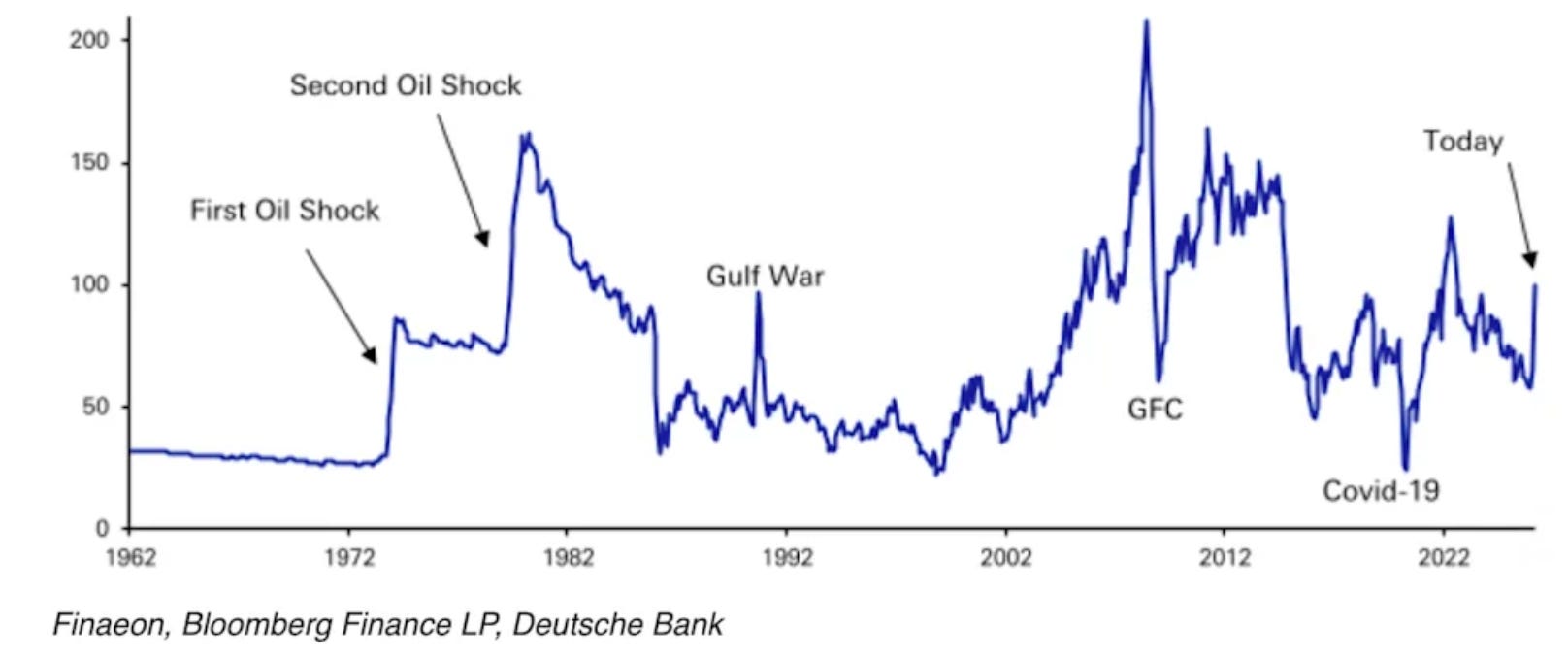
When the Iran war kicked off, Wall Street predicted disaster, that we would repeat the 1970’s, when stocks dropped by half, inflation took off into the double-digits, and GDP plunged -- the dreaded stagflation that turned gold into the go-to late night infomercial.
Analysts called Iran “the worst nightmare we thought could ever happen, incomparably worse than any oil shock in history. Reuters’ poll of analysts predicted a hundred fifty dollar oil. An unnamed Saudi official said 180. Options markets said 200 or 240 oil.
Long-time markets guru Ed Yardeni warned of a stockmarket meltdown. Bond guru Mohamed El-Erian warned of “stagflation gripping the entire world economy.”
Moody’s Analytics pegged 50% odds of a recession.
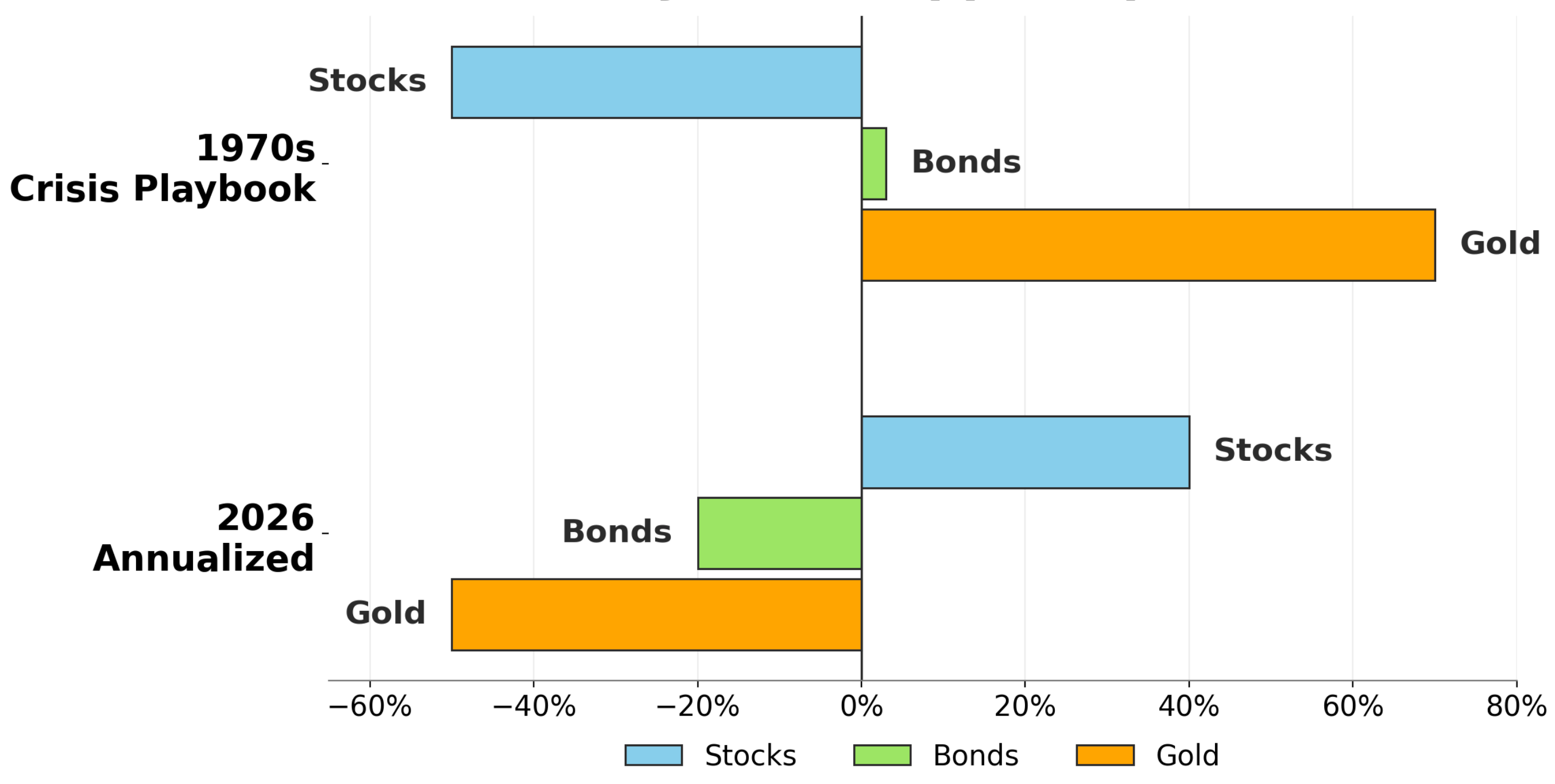
Their script was the 70’s oil crisis, when stocks did plunge by half, bonds held up with 3% gains, and gold positively sang, up 70%.

What Actually Happened
It turns out every bit of that was wrong. 3 months into the war the S&P 500 isn’t down half, it’s up 8 and a half percent -- 40% annualized.
The long bond is actually down annualized 20%. Gold is down 12% -- annualized 50%.
The Wall Street Journal was mystified, writing “It’s hard to overstate just how unusual this is.”
So what changed?
The first difference is oil didn’t get hit nearly as hard as expected -- we’re at 100, not 240. This is because new drilling -- above all in America. And a collapse in Asian demand -- above all from China -- means fully three quarters of the interrupted supply was cancelled.
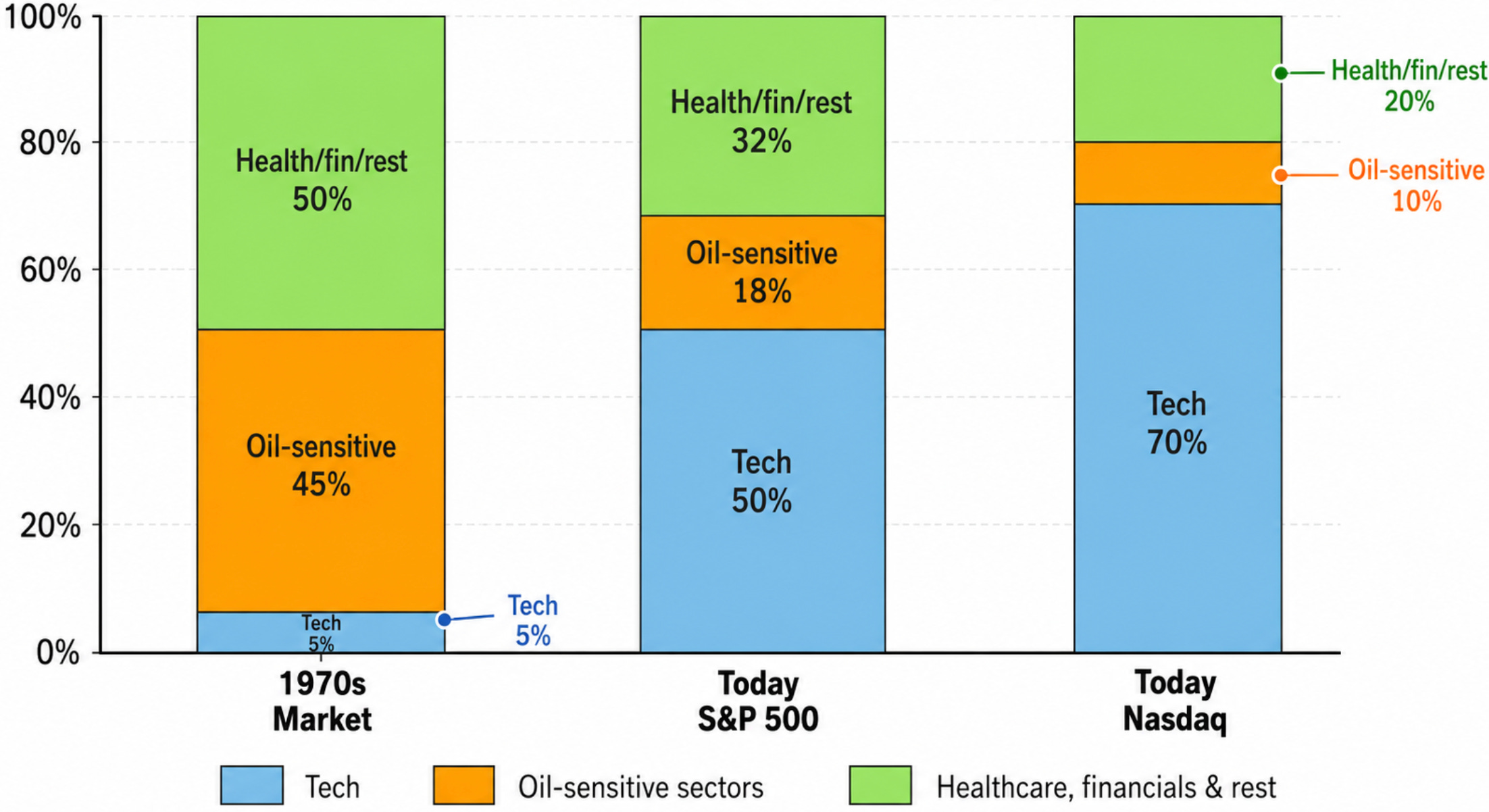
But the other reason is the stockmarket in 2026 is not the stockmarket in the 1970’s.
Namely, AI and tech took over the stockmarket, and frankly they don’t give a damn about Iran.

Not your Grandfather’s Stockmarket
To illustrate the change, in the 1970’s tech was 5% of the market but almost half was oil sensitive sectors -- industrials, utilities, materials, manufacturing. Today, tech is half the S&P and 70% of the Nasdaq, while oil-sensitive is less than a fifth -- healthcare and financials make up the rest.
So in the 70’s we were deeply dependent on oil we didn’t have. Today we don’t need oil yet we’re swimming in it -- exporting millions of barrels.
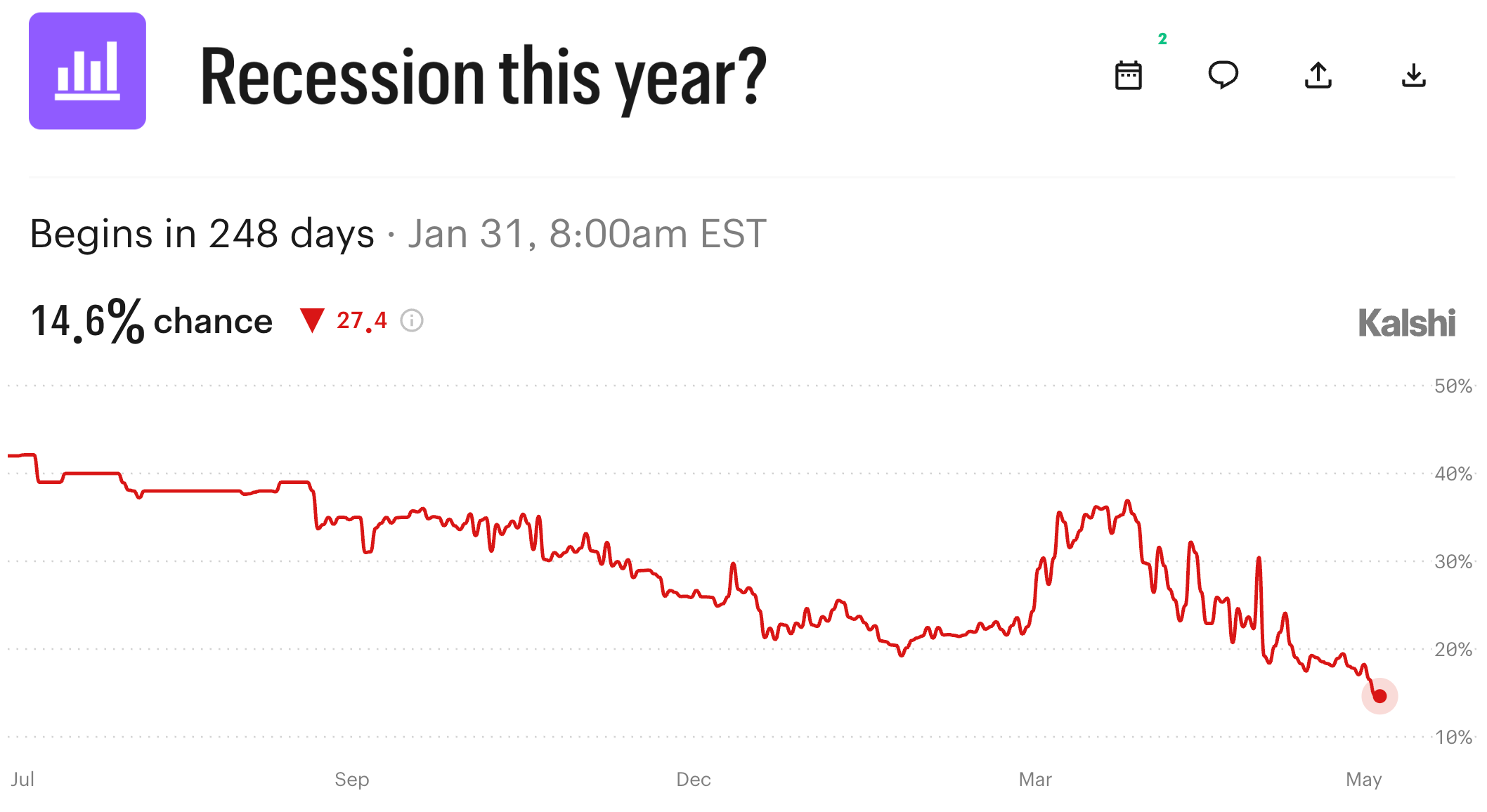
Put it together and recession risk is actually lower than when the war started: The volatility index -- Wall Street’s fear gauge -- is lower than when the war started even though oil futures say oil stays high into 2027. While prediction market kalshi is at just 15% odds of a recession — down from 22% when the war started and 40% during last year’s tariffs.
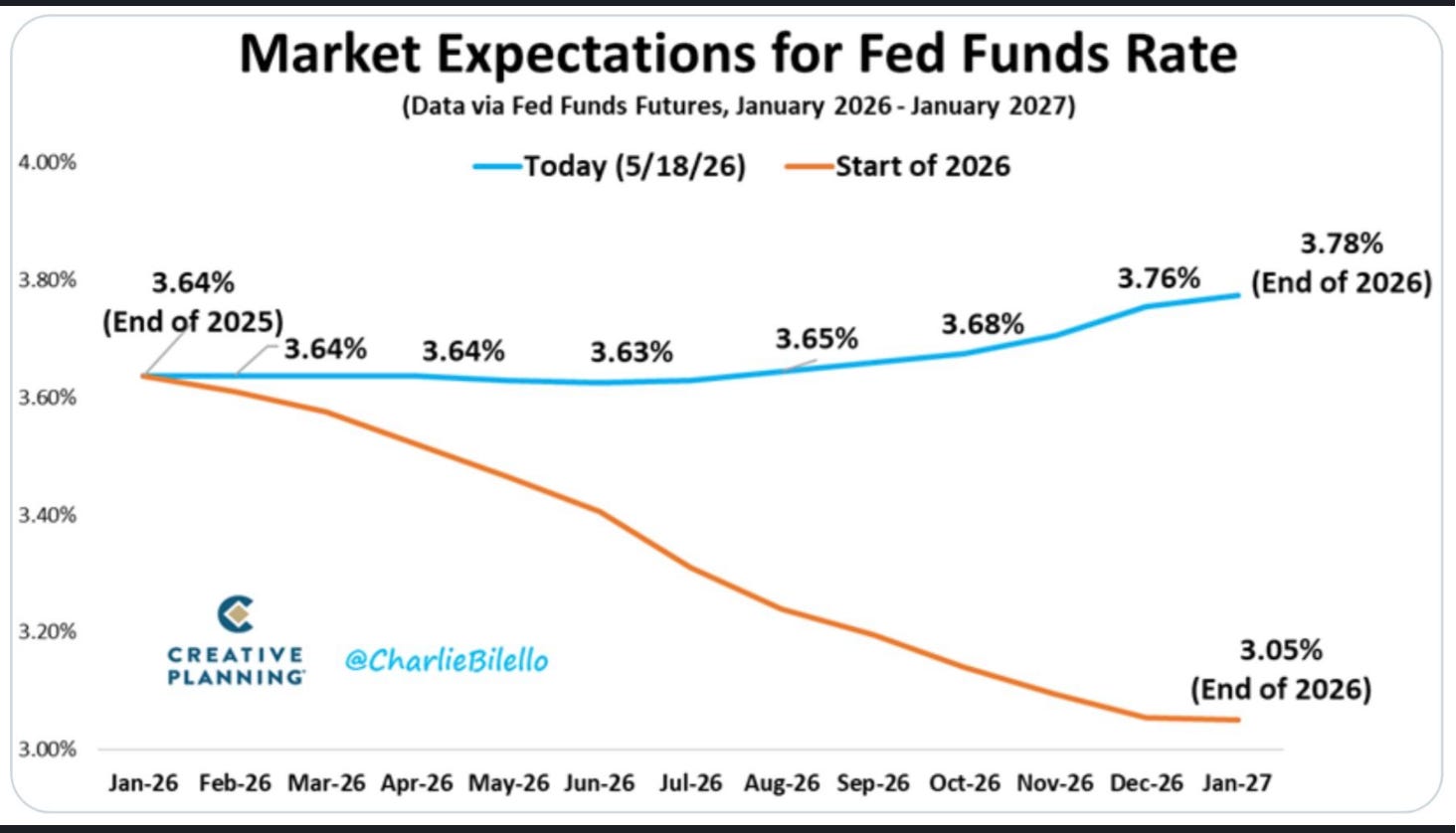
This final piece of the puzzle is why bonds and gold are sucking. And the most likely reason is fears the Fed will panic-hike on oil prices have overwhelmed the traditional safe-haven demand since higher rates directly lower bond prices while they gut gold prices since gold doesn’t pay interest.
When bonds are paying 5% risk-free it tempts even rock-ribbed gold-bugs into paper.

What’s Next
For better or worse, the Iran war showed our economy is no longer made of stuff you can drop on your foot. It’s made of tech, healthcare, and Wall Street.
More important, it reinforced the pattern since Covid — really since Alan Greenspan — that reality no longer matters, the Fed matters. As in if things go bad the Fed will shoot money til everything goes up -- Covid. And in wartime, markets don’t care about the bombs or oil, they care about the Fed.
That may not be healthy.
But it’s reality.
Every week I write on economics to 23,000 readers with regular deep dives into history like the Fall of Rome, the Weimar hyperinflation, or FDR’s Great Depression.
Subscribe for free for weekly articles. Or choose paid to support my work along with my monthly Economic Survey complete with model portfolios and stock picks that have performed roughly 50% annualized year to date.
See you Next Week!
Since this is all speculation (without firm evidence), allow me to present my own on Gold. Foreign CBs are selling USTs to raise USD to fund higher oil prices. The Fed is trying to restrict this by establishing new "Swap" facilities using mouse-clicked Dollars. Inflation risks are probably overstated because instead we have price spikes due to supply constraints, which isn't inflation. But the fear in the market means that USTs, and as a result USDs are under pressure. The Fed/Treasury/ESF are, therefore, heavily suppressing PMs to ease pressure on their product. Gold was ALWAYS a safe haven during wars AND times of inflation, so why different now? See above - you can't have it both ways?
In terms of rates, yes nominal rates might be over 4% for the 10Yr BUT with CPI at 3.8% that means that REAL rates are around ZERO. You are, of course, aware of the difference between real and nominal rates as are the "Markets". Yet this distinction is being ignored. And in my experience, when fundamentals and real supply/demand factors are completely out of sync with price trends - there's an agenda, The "markets" are being fed the "talking points" that "rates are high so that's negative for PMs" and like the good little lapdogs to the Fed that the main players in the "markets" actually are, they will, as always, run with the official narrative.
We are in a period of extremely high suppression of PM prices to defend UST/USD as the US gets ever closer to a disaster in the financial system Fortunately, in the words of Ayn Rand "You can ignore reality but you cannot ignore the consequences of ignoring reality". Those consequences have a habit of coming back to bite you in the ass. I'm heavily weighted towards physical PMs and Mining stocks.
Thanks Prof for this very illuminating discussion of oil, stocks , bonds, and gold. Its very interesting to me that the WSJ and just about everybody else got these relations entirely wrong.
I worked in the oil patch during the shocks in the 70s and 80s. Everybody thought we were going to run out of oil. So, as a young chemical engineer, I was part of the effort to develop alternative sources of fuels from coal, shale and biomass. It is a very long story, but just about every technology we evaluated was very capital intensive; so investment could only be justified by higher oil prices. I remember sitting in one meeting where the discussion was how much above inflation w oil prices will go in 5, 10, 20 years. ( (Inflation plus 1,2,or 3 %?) The DOE and most corporate economists were on the same page. Just about every projection had oil at $100 by 1999. So the work continued until the economic models failed.
A lesson Big Oil learned was they could not predict the price of oil (they openly said this). Projects were approved only if they were viable at low oil , about $15 per barrel in the early 90s as I recall. And then fracking become very successful so both oil and gas are still relatively inexpensive. People today really do not appreciate how cheap gasoline and diesel are today and how successful Big Oil has been in finding and developing new reserves . But at $150 per barrel I could probably build you a plant that converts coal into gasoline .