

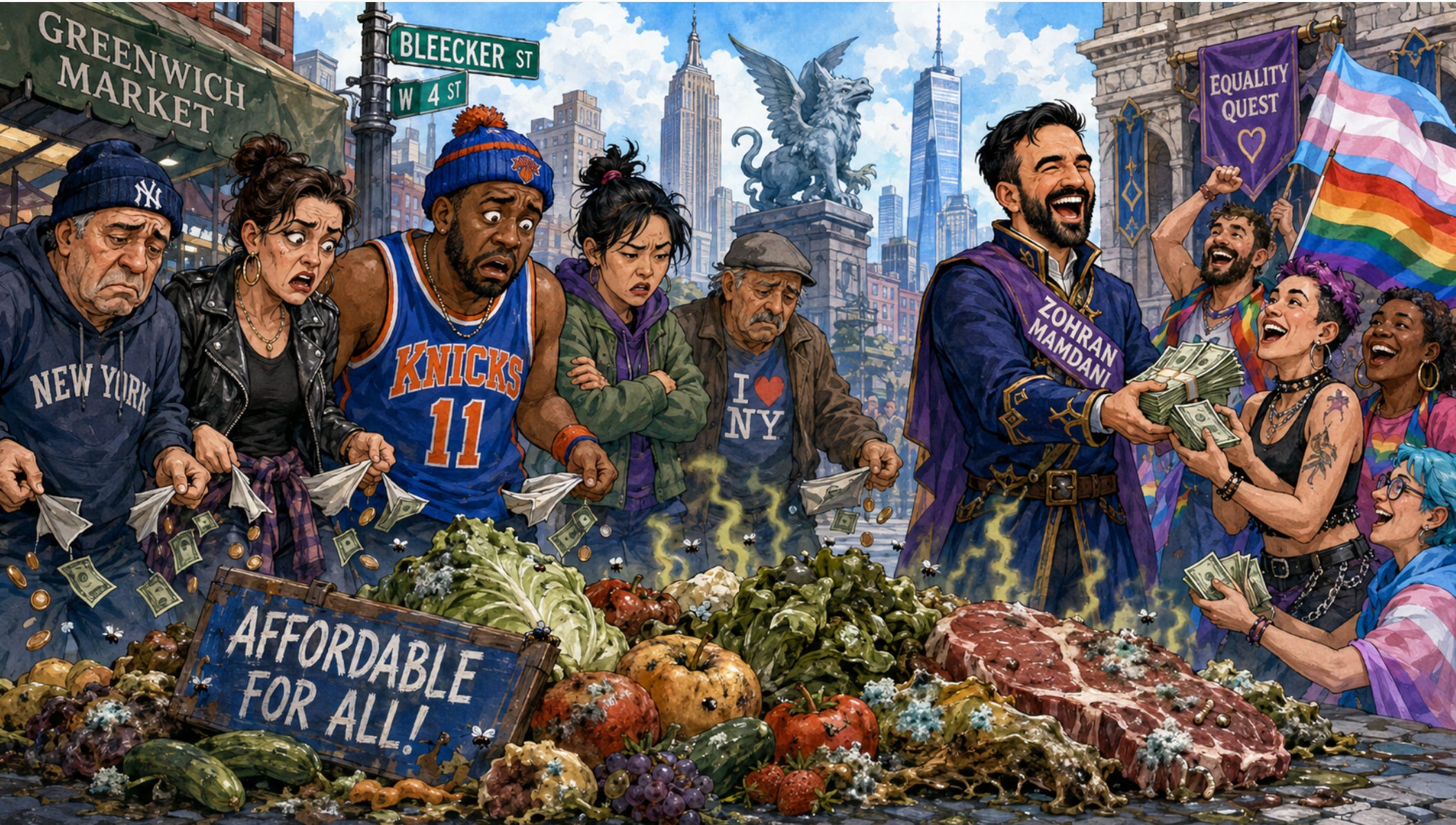
35 years after the Soviet Union collapsed, the Communist bread line is poised for a comeback in the Big Apple, as Zohran Mandani announces his government grocery stores will be undercutting real groceries by 30%.
Socialism will work this time.
Zohran’s Cheap Eats
The announcement came in a press conference earlier this week, where Comrade Mamdani promised 30% discounts for “essential products” at his new city-run grocery stores.
The problem, of course, is grocery is a razor-thin industry, sporting profit margins of roughly 2%. And that’s with competent management, which New York City is decidedly not famous for.
So even if the socialists somehow manage to run a grocery as efficiently as Aldi or Walmart, the city will be losing an ungodly amount of money -- at least 28 cents on the dollar.
Throw in typical efficiency of New York’s Smartest and taxpayers probably lose closer to 40 cents on the dollar.

And that’s where the fun begins. Because if city groceries are actually selling food 30% cheaper, that robs enough market share from real groceries that they start going out of business.
After all, private stores must pay rent, property tax, insurance, labor, utilities, security, and New York’s regulatory army.
While Mamdani’s stores get city property, tax exemptions, and apparently an unlimited allowance from mom who’s willing to lose 28 cents on the dollar -- or 40.
So marginal supermarkets close. Others will cancel plans to open.
City Hall will point to packed municipal stores as proof of success — as if it’s hard to attract customers when taxpayers are footing the grocery bill.
Shoot the competition, then congratulate yourself for winning the race.

Socialist Food Deserts
And then the third act: What happens when taxpayers get tired of the money hole.
Every time New York has seized an industry it turns into a money hole. New York’s city-run transit system -- MTA -- replaced private sector alternatives that used to make money with a government-run system that loses $11.7 billion a year -- roughly $3,000 per household in New York City.
If city groceries approach that number, there will inevitably be calls for subsidy cuts. Given the mandate to keep groceries cheap combined with the costs of government efficiency, that means the groceries will have to cut back on quality.
Meaning they turn from a giant money hole into a slightly smaller money hole full of rotting food.
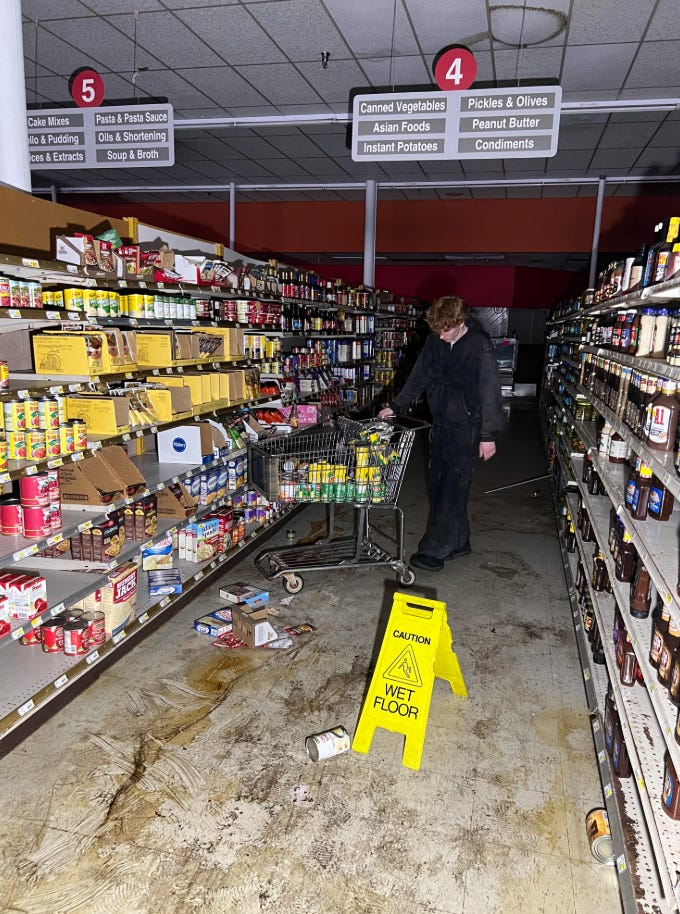
When the smoke clears, New Yorkers get a couple years of cheap bananas.
Tens of billions of new debt.
And with real groceries fleeing, now they have to take 2 trains and a bus to get to a real grocery store.
In fact, this is exactly what’s happened in dozens of government grocery experiments across the country, from Kansas City which lost $18 million on a grocery that sold rotting food to Chicago, which blew $26 million running 7 stores into the ground.
But socialism will work this time if Mamdani smiles hard enough.

How to Actually Fix Grocery Prices
Instead of recreating Soviet bread lines on the taxpayer dime, Mandani should sit down with functioning grocery stores and ask how to expand.
For example, cutting property taxes, permitting costs, and construction costs. Relaxing parking rules. Leasing disused public space at a discount to real grocery stores. Re-zoning so groceries don’t have to wait years in limbo for the ministry of red tape to green-light their bananas. Perhaps even arresting shoplifters once in awhile.
The hallmark of socialism is it breaks things, then uses the debris as a battering ram to break more things.
New York already has a distinct absence of proper grocery stores thanks to dysfunctional local goverment. Handing that dysfunctional local government the entire food supply will turn an annoyance into a crisis.
Enjoyed this article? Get the next one free.
Join 23,000 readers for weekly articles on the economy and freedom, with regular deep dives like the Fall of Rome, the Weimar hyperinflation, and FDR’s Great Depression.
Want to go further? Paid subscribers also get my monthly investment guide including real-money picks that have made 35% to 37% annualized returns so far this year on a $100,000 portfolio.
See you next week!
Peter
And without further ado, the Numbers that Mattered last week, also available on Youtube:
Amasing how persuasive the promise of free stuff is to ignoramuses.
Love the paragraph on how Government can really help by cutting property taxes and other ways. Sharing!