

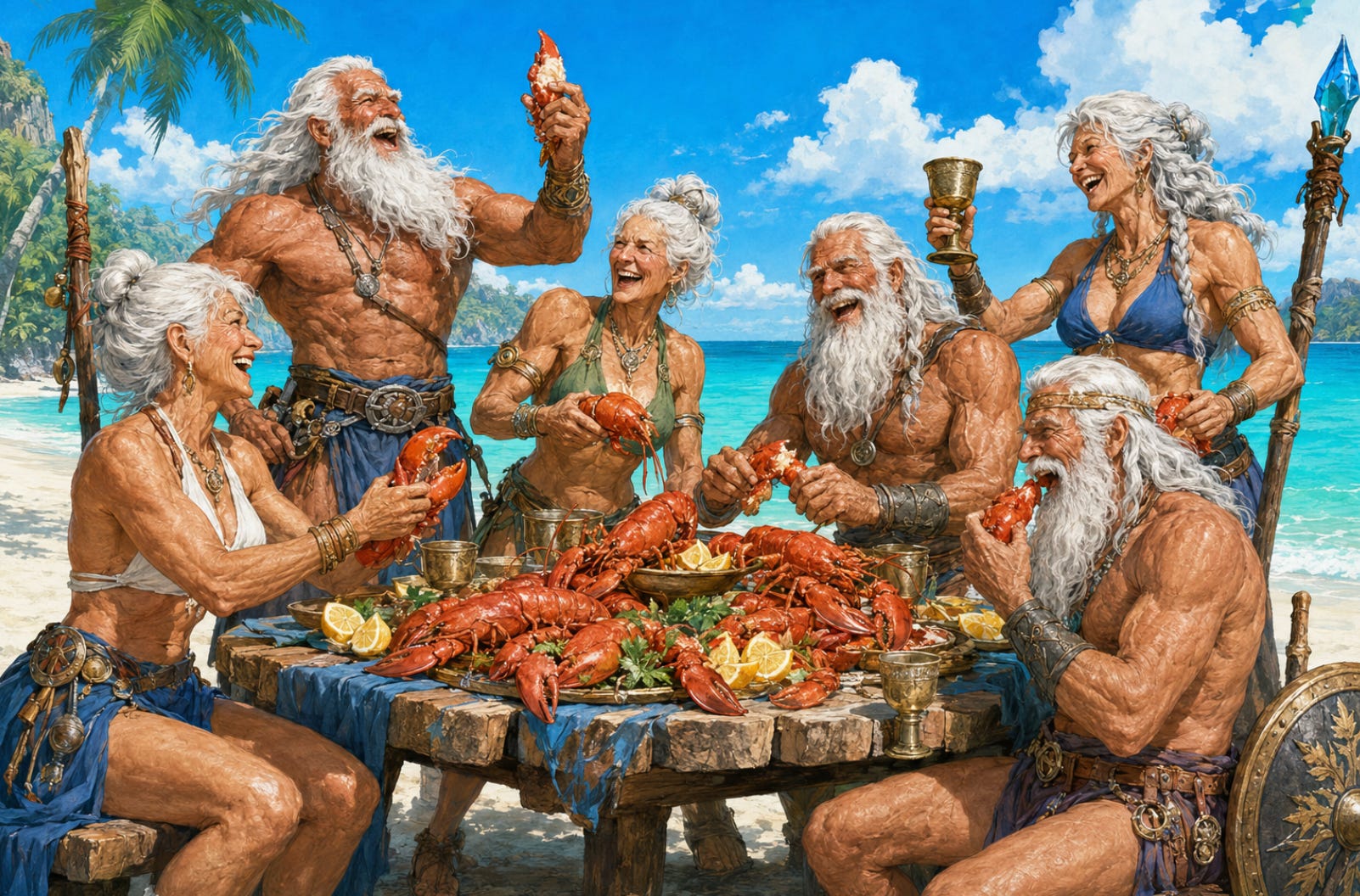
A new study says humans could live healthy to 194.
Which seems oddly specific but it’s also a long time.
And lest that sound bonkers, on a recent Peter Diamandis’ podcast Elon himself said “aging is not that hard a problem,” with that faraway look Elon does when he’s thinking of starting another company.
Now, immortality has been on humanity’s to-do list for awhile. Isaac Newton chased immortality with alchemy. Han dynasty China experimented with mercury and arsenic. Gilgamesh searched in vain for the secret to living forever, which was sadly stolen by a snake.

The kicker is biologically it’s absolutely possible. Lobsters, for example, essentially don’t age. Naked mole rates live 15 times longer than other rodents -- call it 1,000 years in human terms. Quahog clams are still charming the lady-clams at 500 years old.
The trick, of course, is figuring how they do it and translating that into humans. There’s about 8 mechanisms to reverse what’s essentially the body’s clock, including telomeres, mitochondria, chronic inflammation, so-called zombie cells.
These are the mechanisms the new study modeled, concluding they could buy lifespans of 200 years.
Population Growth
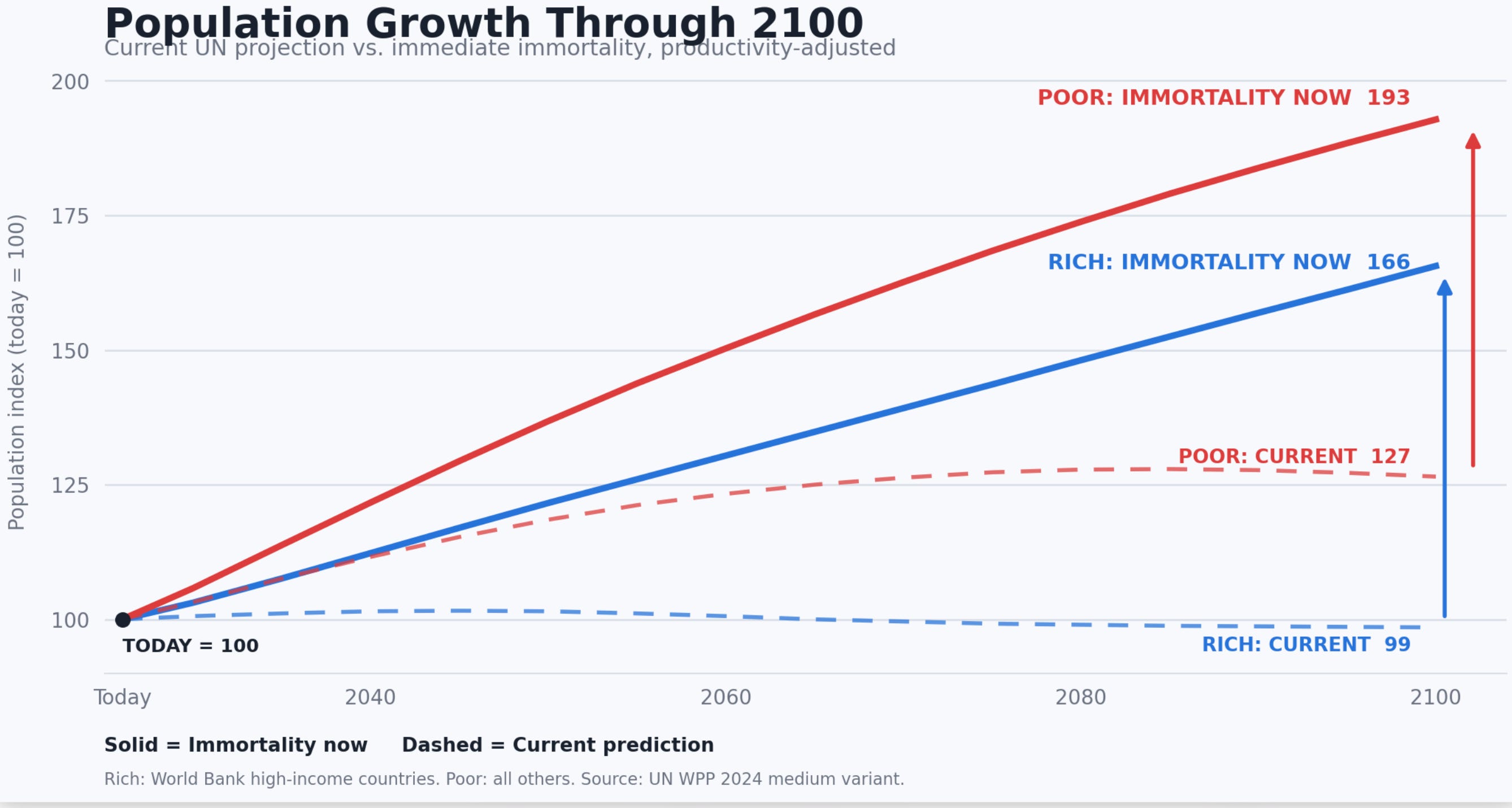
An environment-obsessed media’s first reaction will be overpopulation. But in fact population doesn’t increase as fast as you’d expect.
In rich countries today 1% of people die per year, falling to 0.7% in poor countries since they’re young. So population growth would essentially double in rich countries — 0.9% to 1.9% — but only go up a third in poor countries, from 3.4% to 4.1%.
Put differently, both would return to where they were in the 1970’s.
This is great for Japan or Italy, who are dying off. And it wouldn’t make much difference in Africa for decades.

The Economy and Immortality
On the economy, you have 3 effects combining to dramatically raise wealth and growth.
First, the preservation of human capital. Ballpark a third of everything we do is thrown away for death, a treadmill that replaces experienced neurologists, engineers, and CEO’s with unskilled 18 year olds.
Second is more direct: Education and healthcare costs plunge, since the ratio of kids and frail elderly to workers crashes. That’s about 1 in 4 dollars we spend.

And, finally, longer careers. After all, if you’re living to 194 you’re not retiring at 65. This may sound depressing, but remember your assets compound much longer. So you’d do grownup work til 65 then you do fun stuff for the next century.
Put it together and growth and incomes roughly double.
Meanwhile the political consequences are fascinating: People get smarter and more conservative as they age, so voters swing hard to the right. For young people it’s a mixed bag -- faster growth and wages, but tons of old people hogging the choice jobs. And, finally, inequality as those extra decades of compounding mean all boats may rise but rich boats are getting very rich.

What’s Next
Nature has already solved living forever -- we just gotta find it. Science is hopping along, but the main barrier is regulatory -- governments getting in the way.
200 year lifespans may or may not come in time for Boomers and Gen X. But it’s almost guaranteed for our kids and grandkids unless government kills it.
Enjoyed this article? Get the next one free.
Join 23,000 readers for weekly articles on the economy and freedom, with regular deep dives like the Fall of Rome, the Weimar hyperinflation, and FDR’s Great Depression.
Want to go further? Paid subscribers also get my monthly investment guide including real-money picks that have made 63.6% returns so far this year on a $100,000 portfolio.
See you Next Week!
Peter
Strange that at the same time there’s all this talk of at least doubling average lifespan, there’s MAID and other self-murder programs with advertising budgets. And still no sense of what it actually means to live well.
Quite possible but the first step from birth is to stay away from the modern stone age medical mafia poisoning machine. Poisons and toxins will shorten life, not prolong it. That means ALL vaccines and drugs must be avoided.